1. Understanding Engine Synchronization: What Does a Timing Chain Kit Do?
Engine timing is the fundamental mechanical synchronization that dictates internal combustion. At the core of this system is the relationship between the crankshaft—which converts the linear motion of the pistons into rotational force—and the camshaft, which controls the opening and closing of the intake and exhaust valves.
In a standard four-stroke internal combustion engine, the camshaft must rotate at exactly half the speed of the crankshaft (a 1:2 rotational ratio). If the alignment between these two shafts drifts by even a few degrees, valve timing becomes desynchronized, leading to degraded engine efficiency, increased emissions, power loss, or catastrophic internal contact in interference engines.
1.1 The Crucial Role of Timing Chains in Engine Operation
The timing chain serves as the heavy-duty mechanical link maintaining this 1:2 rotational sync. Unlike rubber timing belts, metal timing chains are housed inside the engine, constantly lubricated by engine oil, and designed to withstand high operational temperatures, high torsional loads, and continuous dynamic stress.
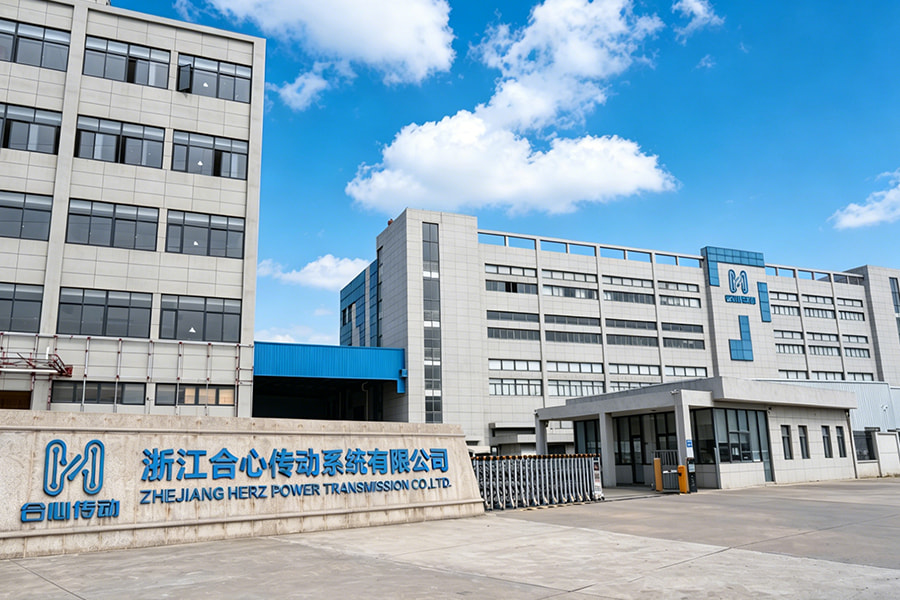
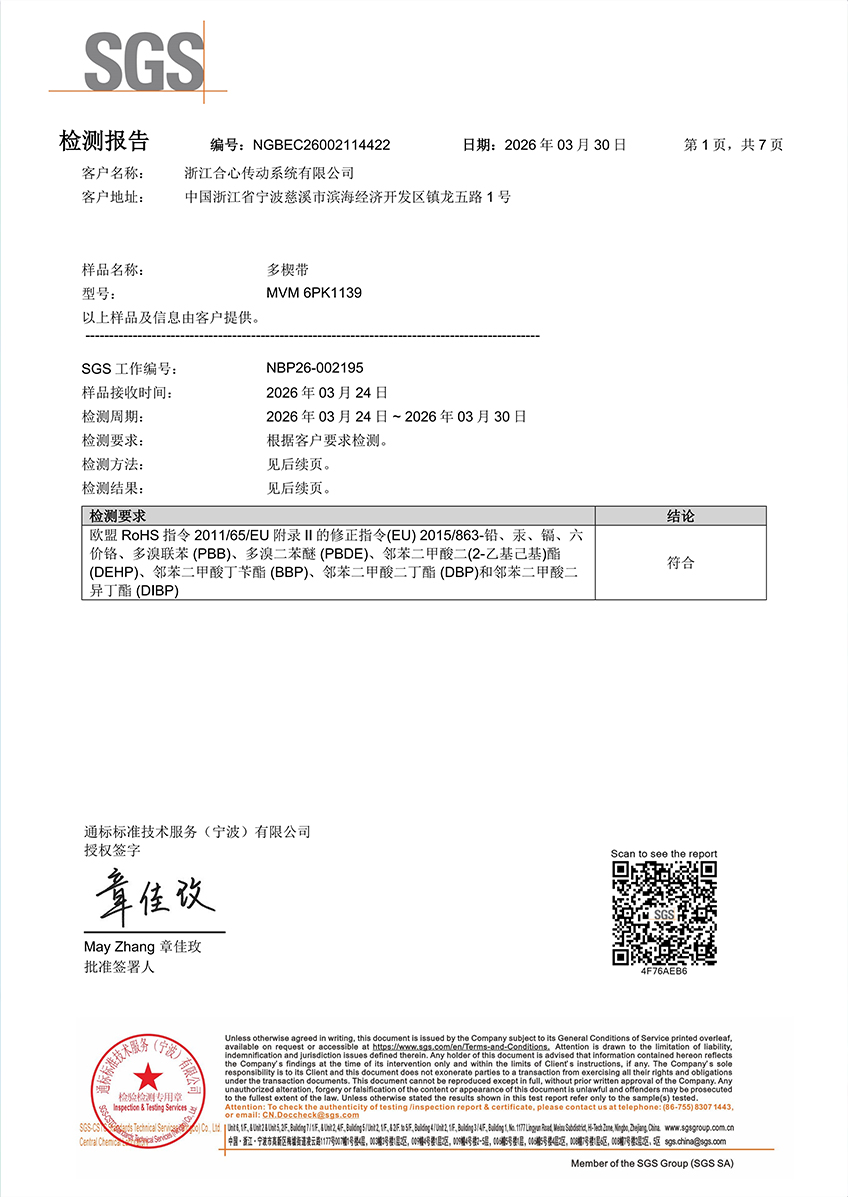
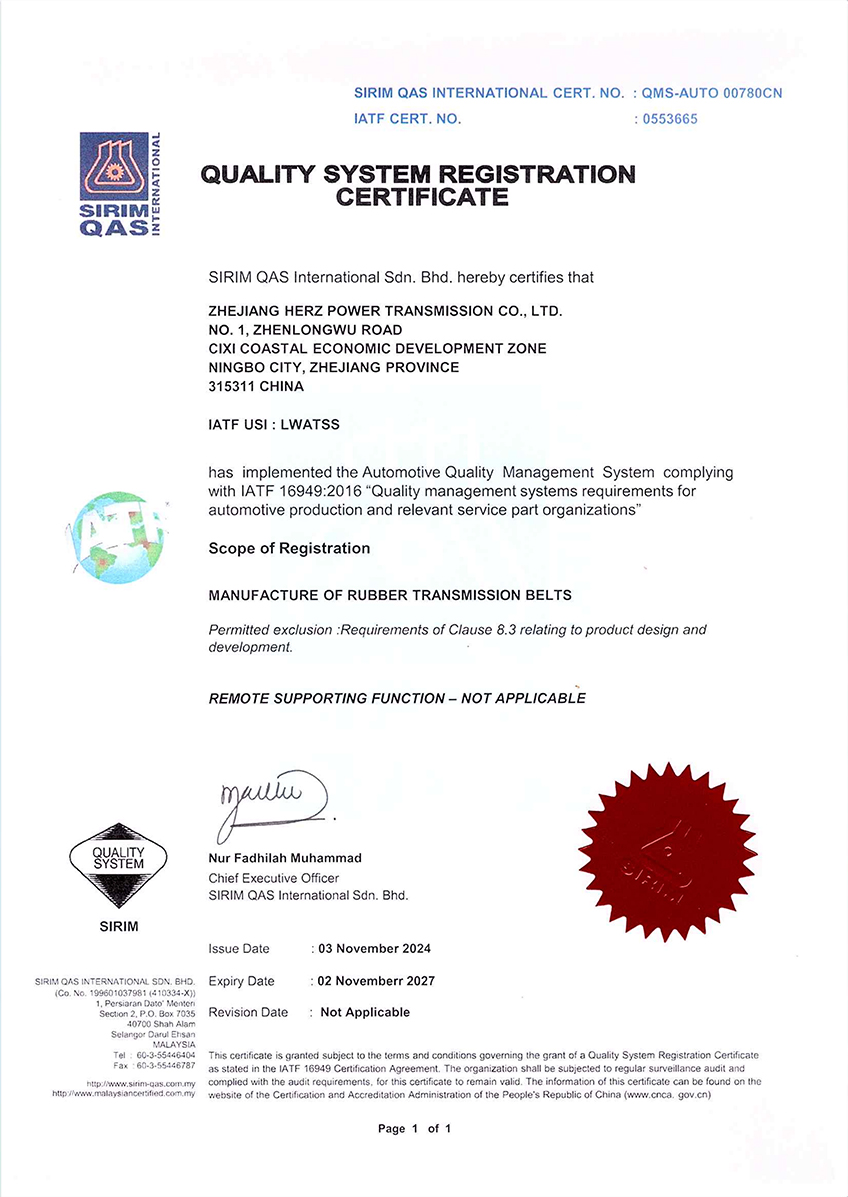
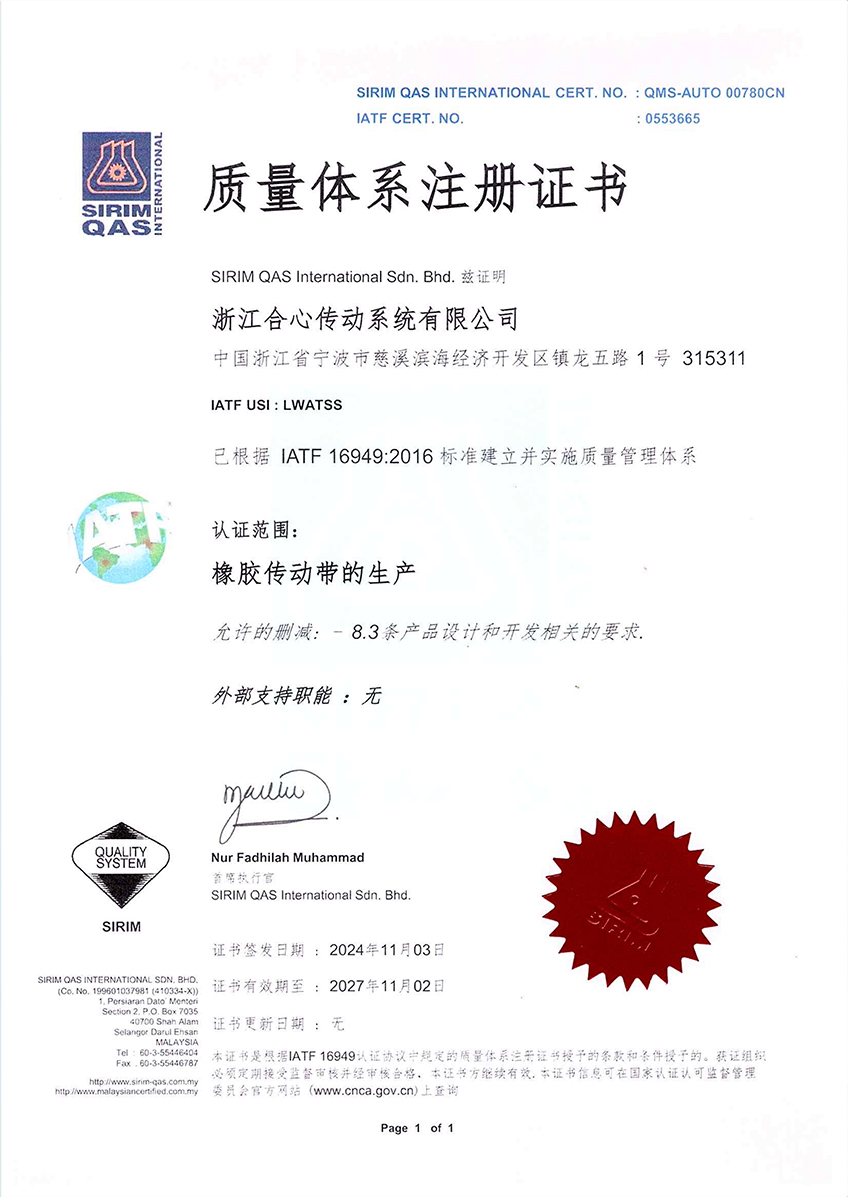
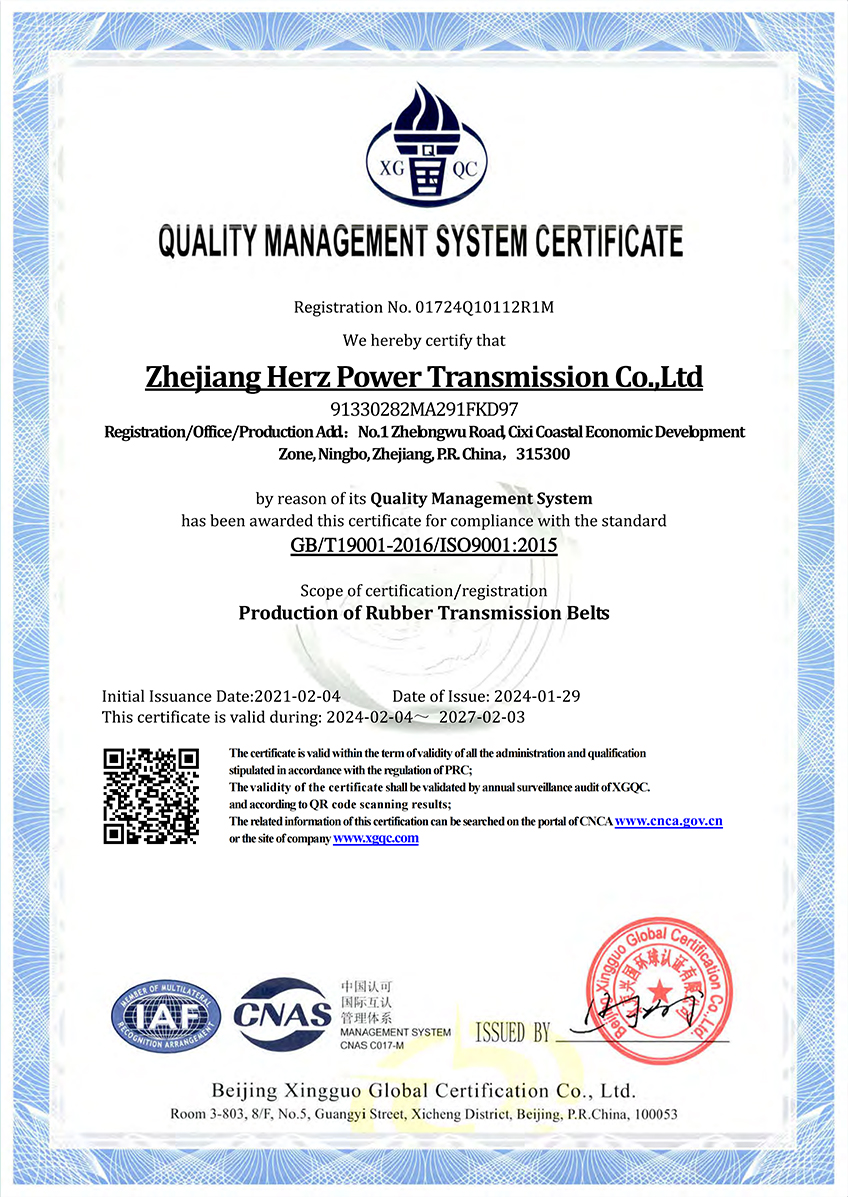
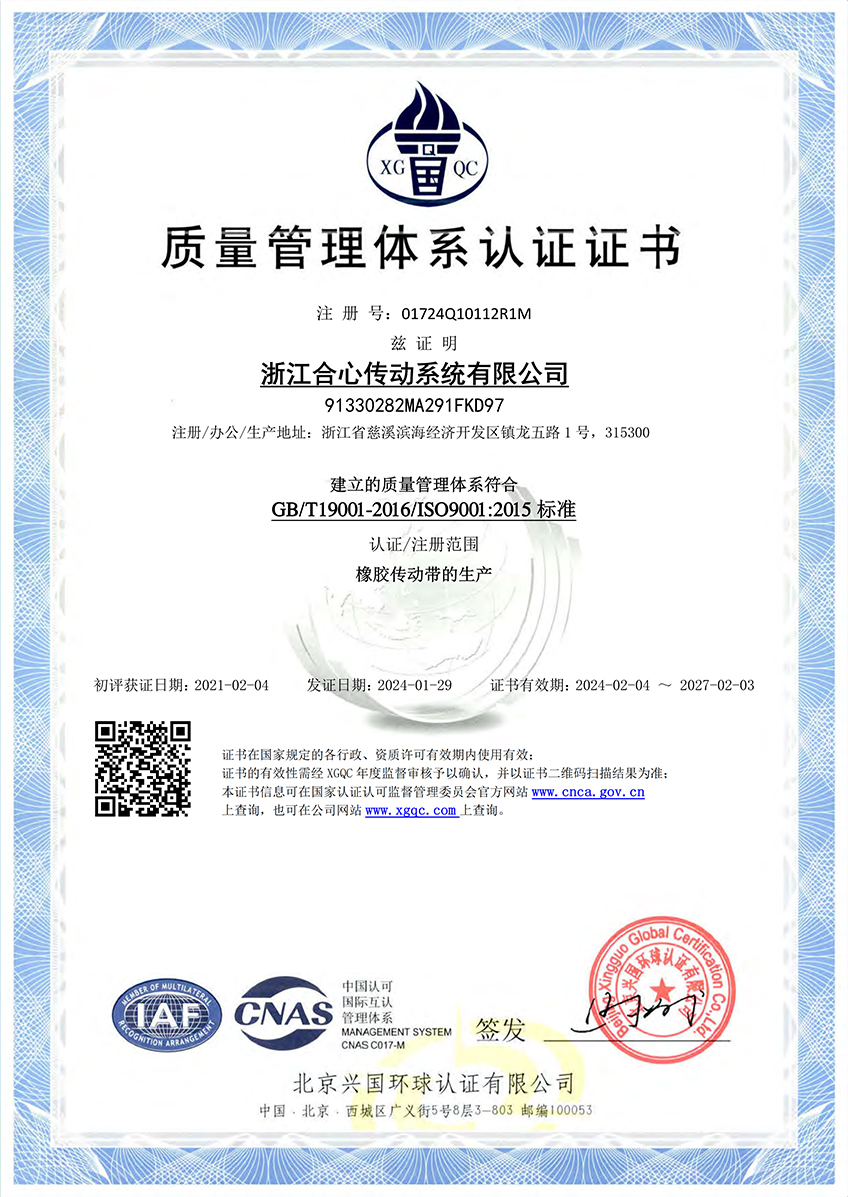
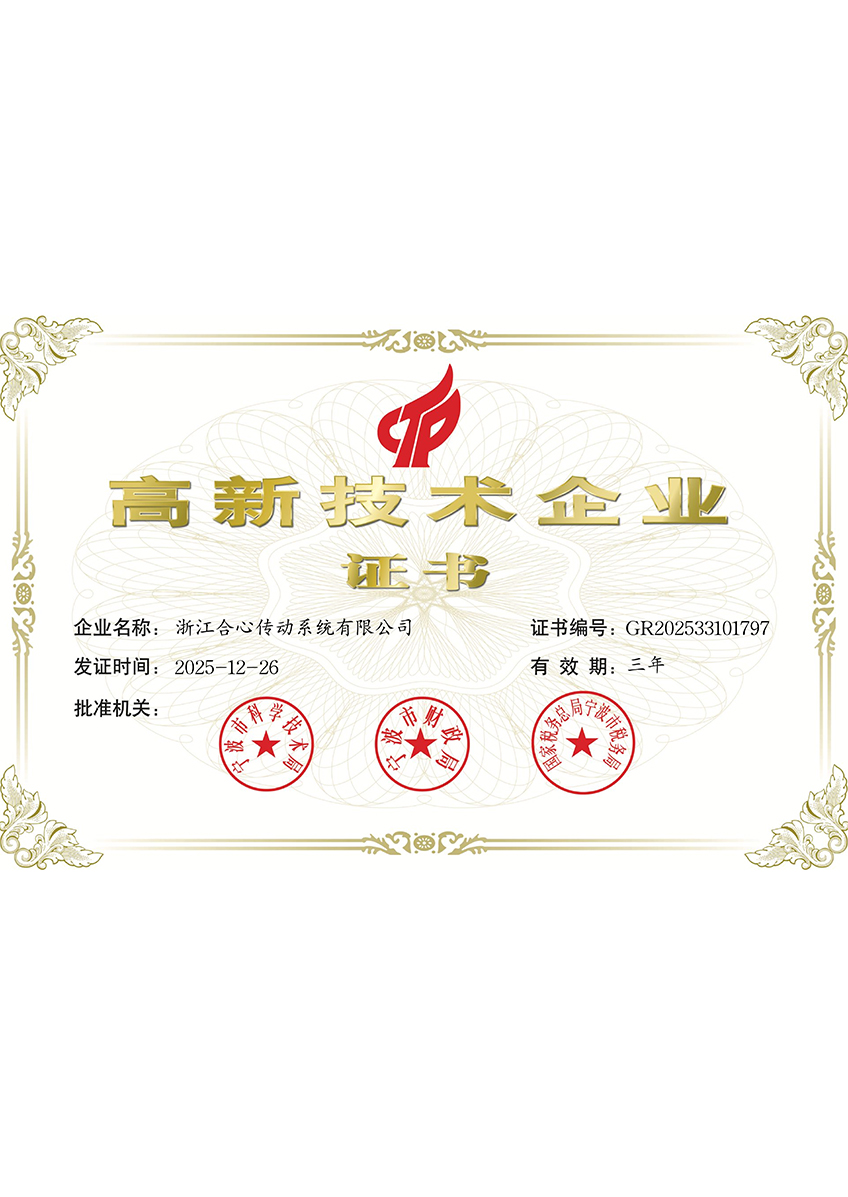
Precision in dynamic power transmission requires strict manufacturing standards and rigorous testing. As a subsidiary of Zhejiang Hexin Transmission System Co., Ltd. (founded in 1995), Ningbo Herz Technology Co., Ltd. operates from a production base covering over 40,000 square meters in the Cidong Industrial Development Zone, Cixi City, Zhejiang Province. Equipped with world-class manufacturing equipment and precision testing instruments, the enterprise manufactures automotive timing belts, rubber timing belts, poly-V belts, industrial V-belts, PU timing belts, and related transmission components with an annual capacity of 10 million pieces. Driven by a mission to continuously provide competitive transmission system products and contribute to the advancement of power transmission technology, manufacturing tolerances for timing chain components are held to sub-millimeter precision to prevent pitch elongation and rotational slip.
When the timing chain operates correctly:
- Intake Valves open precisely as the piston moves downward during the intake stroke, maximizing air-fuel mixture volume.
- Exhaust Valves open right before the piston reaches the bottom dead center (BDC) during the power stroke, cleanly evacuating combustion gases.
- Peak Cylinder Pressure occurs at the ideal crank angle, providing optimal engine torque and fuel economy.
1.2 Complete Timing Chain Kit vs. Single Chain Replacement
A timing chain does not work in isolation. It relies on an interconnected assembly of precision components to maintain stable tension, minimize vibration, and guide chain travel. Replacing only a worn timing chain while leaving aged companion components in place is a common cause of premature failure.
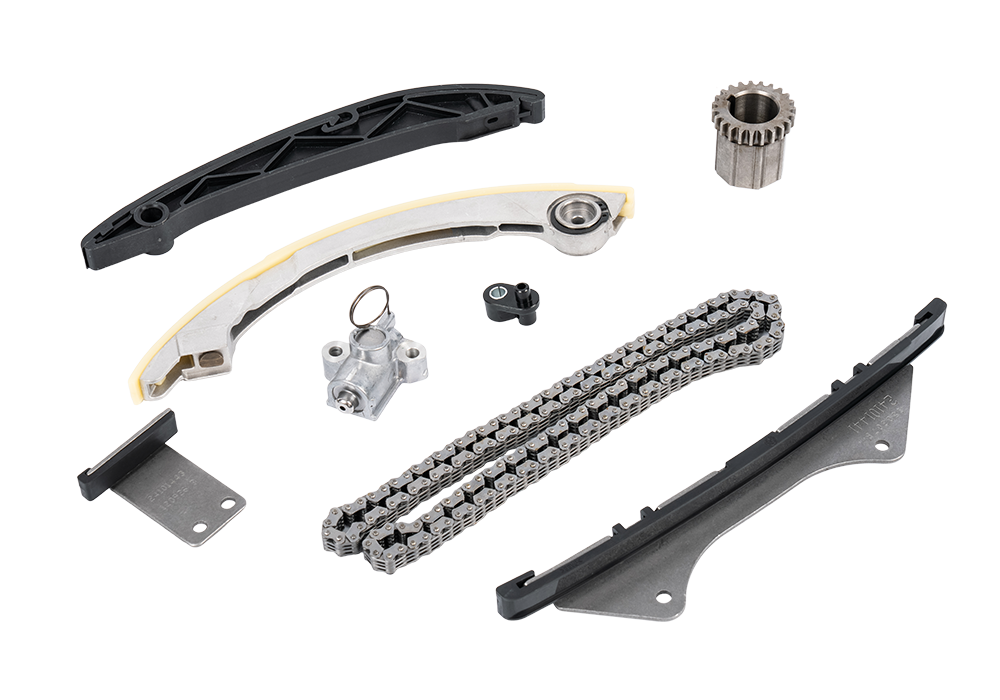
A complete timing chain kit consists of five critical engineering components:
- Timing Chain: Multi-link alloy steel chain (roller or silent/inverted-tooth design) heat-treated for fatigue resistance and high tensile strength.
- Hydraulic / Mechanical Tensioner: Utilizes engine oil pressure and internal spring force to maintain optimal tension against the chain, taking up mechanical slack during engine load changes.
- Guide Rails & Tensioner Arms: Composite or polyamide (PA66) wear surfaces backed by rigid aluminum or steel brackets to suppress chain whip and damp operational vibration.
- Crankshaft & Camshaft Sprockets: Precision-machined gear teeth matched strictly to the chain pitch diameter to transfer rotational torque without slippage or localized wear patterns.
- Gaskets, Oil Seals & Hardware: Front timing cover seals, crank seals, and mounting hardware required to maintain a leak-free environment and proper torque retention.
Engineering Comparison: Single Component vs. Full Kit Replacement
| Parameter / Metric |
Single Timing Chain Replacement |
Complete Timing Chain Kit Replacement |
| Wear Uniformity |
Uneven (New chain runs on worn, grooved sprocket teeth) |
Uniform (All mating surfaces match zero-wear tolerances) |
| System Service Life Expectancy |
Reduced by 40%–60% due to accelerated meshing friction |
100% full design life restored |
| Chain Pitch Matching |
Mismatched against worn gear profiles, causing vibration |
Exact mechanical pitch alignment |
| Tension Stability |
Compromised if hydraulic tensioner seals or check valves are worn |
Fully restored oil pressure retention and damping force |
| Risk of Chain Skipping (Jumped Timing) |
Moderate to High |
Minimal / Zero under standard service intervals |
| Labor Cost Efficiency |
Low (Requires repeating tear-down labor if old tensioner/guide fails later) |
High (Single disassembly covers all wear-susceptible parts) |
2. Timing Chain vs. Timing Belt: Key Differences and Advantages
Internal combustion engine designs rely on two primary methods for synchronizing camshaft and crankshaft rotation: metallic timing chains and synthetic rubber timing belts. While both perform the exact same kinetic function, their material composition, structural behavior, and operational characteristics differ significantly.
2.1 Material, Structure, and Longevity Comparison
A timing chain is constructed from heat-treated alloy steel links, pins, and bushings configured into either roller chain or inverted-tooth (silent) chain layouts. Housed entirely within the engine block and front cover, it operates in a continuous bath of engine oil, which provides both cooling and hydrodynamic lubrication across all articulating joints.
In contrast, a traditional timing belt is molded from Hydrogenated Nitrile Butadiene Rubber (HNBR) or Ethylene Propylene Diene Monomer (EPDM) elastomers, reinforced internally with high-tensile fiberglass or aramid cords. Timing belts operate externally or under lightweight protective covers, running dry across smooth and toothed pulleys.
From a structural longevity perspective, metal timing chains offer superior mechanical fatigue endurance:
- Service Life: Timing chains are engineered to match the structural lifespan of the engine itself, frequently exceeding 150,000 to 200,000 miles without structural failure under proper oil maintenance.
- Elongation Resistance: High-tensile steel construction minimizes cumulative stretch under rapid acceleration and high-rpm load cycling.
- Timing Belt Wear: Synthetic rubber belts suffer continuous mechanical flexing, chemical attack from ambient ozone or oil mist, and thermal hardening, requiring mandatory replacement every 60,000 to 100,000 miles to prevent sudden snapping.
2.2 Maintenance Costs and Reliability under Extreme Heat
Modern high-output, turbocharged engines produce elevated crankcase temperatures and rapid torque modulation. Timing chains maintain dimensional stability across extreme thermal spectrums (from -40°C winter cold starts to sustained internal operating temperatures exceeding 140°C). Metallic chain links eliminate the risk of tooth shearing—a failure mode where high transient torque strips rubber teeth off a timing belt.
Achieving high operational reliability across both flexible and rigid automotive transmission systems requires advanced material science and stringent manufacturing controls. Backed by the extensive R&D foundation of its parent company, Zhejiang Hexin Transmission System Co., Ltd., Ningbo Herz Technology Co., Ltd. applies precision testing and automated production standards across its power transmission lines. Operating out of a 40,000-square-meter production base in the Cidong Industrial Development Zone, Cixi City, Zhejiang Province, the enterprise produces automotive timing belts, rubber timing belts, poly-V belts, industrial V-belts, and specialized transmission components. By leveraging high-precision manufacturing equipment, power transmission systems are engineered to resist thermal flexing, dynamic fatigue, and mechanical shear.
Evaluating the Total Cost of Ownership (TCO) reveals a distinct economic trade-off between the two drive mechanisms:
- Timing Belt TCO: Lower initial component cost, but requires recurring maintenance expenses every few years. Neglecting belt replacement risks complete valve-to-piston impact in interference engines.
- Timing Chain TCO: Higher initial manufacturing and component cost, but drastically reduces scheduled vehicle downtime over the vehicle lifecycle—provided engine oil is changed at recommended intervals to preserve hydraulic tensioner function and chain pin surfaces.
Engineering Parameter Comparison: Timing Chain vs. Timing Belt Systems
| Technical Parameter / Feature |
Timing Chain System |
Timing Belt System |
| Primary Material Construction |
Alloy steel (Chromium-Manganese / Alloy Steels) |
HNBR / EPDM elastomer with fiberglass or aramid cords |
| Operational Environment |
Internal (Engine oil bath / pressurized lubrication) |
External (Dry compartment or sealed wet-belt enclosure) |
| Design Service Life |
150,000 – 200,000+ miles (Engine lifetime design) |
60,000 – 100,000 miles (Scheduled wear item) |
| Tensile Load Strength |
High (>15 kN – 25 kN ultimate tensile strength) |
Moderate (Dependent on internal cord density) |
| Continuous Temperature Limit |
Up to 150°C (302°F) inside crankcase |
100°C – 120°C (212°F – 248°F) ambient dry heat |
| Primary Failure Mode |
Pitch elongation (stretch), noise, guide rail wear |
Rubber cracking, tooth shearing, tensile cord snap |
| Noise & Vibration (NVH) |
Moderate (Suppressed via composite guide rails) |
Very Low (Silent tooth meshing on composite pulleys) |
| Maintenance Impact |
Dependent on engine oil cleanliness & oil pressure |
Mandatory periodic replacement of belt and tensioner |
3. What Are the Common Symptoms of a Failing Timing Chain Kit?
Because a timing chain operates enclosed inside the engine, visual inspection requires partial engine teardown. Consequently, mechanical diagnostic cues and electronic warning signals serve as the primary indicators that a timing chain kit is approaching mechanical failure. Identifying these symptoms early prevents small tolerances from evolving into catastrophic engine damage.
+-------------------------------------------------------------------------------+
|                       PROGRESSION OF TIMING CHAIN FAILURE                     |
+-------------------------------------------------------------------------------+
| STAGE 1: Pin Wear & Pitch Elongation  --> Slight Metallic Rattle (Cold Start) |
| STAGE 2: Hydraulic Tensioner Defect   --> Persistent Idling Noise & CEL Code  |
| STAGE 3: Guide Rail Failure / Slag    --> Rough Idle, Misfires & Oil Debris   |
| STAGE 4: Timing Tooth Jump / Snap     --> Valve-to-Piston Impact (Fatal)      |
+-------------------------------------------------------------------------------+
3.1 Metallic Rattling Sounds on Cold Starts or Idle
One of the earliest audible indicators of timing chain degradation is a distinct metallic rattling or chatter emanating from the engine's front cover.
- Cold Start Noise: When an engine sits overnight, oil drains out of the hydraulic tensioner body. Upon a cold start, if the internal check valve or seal inside the tensioner is worn, or if the chain has elongated past the tensioner's stroke limit, the chain slaps against the timing cover or composite guide rail for a few seconds until engine oil pressure builds up.
- Persistent Idling Chatter: If the rattling sound persists after the engine reaches normal operating temperature, the chain slack exceeds the maximum extension limit of the tensioner arm, or the composite guide rail face has worn away.
3.2 Check Engine Light (CEL) and Engine Fault Codes
Modern engines monitor rotational synchronization using high-precision Crankshaft Position (CKP) and Camshaft Position (CMP) sensors. When the electronic control unit (ECU) detects a phase discrepancy between camshaft rotation and crankshaft angle exceeding preset threshold limits (typically 3° to 6° out of phase), it illuminates the Check Engine Light and logs specific Diagnostic Trouble Codes (DTCs).
Common fault codes indicating timing chain sync issues include:
- P0011 / P0012: Camshaft Position "A" - Timing Over-Advanced or Over-Retarded.
- P0016 / P0017: Crankshaft Position - Camshaft Position Correlation (Bank 1 Sensor A / Sensor B).
- P0300 - P0308: Random or cylinder-specific engine misfire codes caused by improper valve timing during combustion.
3.3 Engine Misfires, Rough Idling, and Loss of Power
When a timing chain elongates—commonly referred to as "chain stretch"—the actual physical distance between individual chain pins increases due to micro-wear on internal pin and bushing contact surfaces.
This pitch elongation causes delayed intake and exhaust valve operation relative to piston motion:
- Late Intake Valve Opening: Reduces cylinder air filling efficiency, causing hesitation under acceleration and loss of engine torque.
- Incomplete Exhaust Evacuation: Traps hot exhaust gases inside the combustion chamber, leading to rough idling and incomplete air-fuel combustion (misfires).
To minimize pitch elongation and prevent wear-induced timing drift, Ningbo Herz Technology Co., Ltd. enforces strict metallurgical heat treatment and dimensional testing across its transmission manufacturing lines. Operating as a subsidiary of Zhejiang Hexin Transmission System Co., Ltd. (founded in 1995) within a 40,000-square-meter facility in Cixi City, Zhejiang Province, the company applies rigorous quality control protocols to ensure high tensile strength and anti-stretch durability across its automotive timing belts and power transmission products.
3.4 Metal Shavings Found in Engine Oil
As timing chain slack increases, the loose chain physically contacts internal aluminum surfaces of the timing cover or steel mounting brackets. This abrasive contact grinds fine metallic particles off the engine case.
During routine oil changes, finding fine metallic dust, metallic sheen, or small plastic fragments in the oil pan or oil filter housing indicates advanced failure:
- Fine Shimmer / Metal Flakes: Caused by chain links grinding against the inner timing cover or worn gear teeth.
- Black / Brown Plastic Bits: Caused by aging composite guide rails fracturing under violent chain whipping action.
Diagnostic Parameter & Failure Symptom Comparison
| Failure Symptom |
Primary Mechanical Cause |
Sensor / Signal Output |
Damage Severity Level |
| Cold Start Metallic Rattle (1–3 Sec) |
Hydraulic tensioner pressure bleed-down / minor chain slack |
None or temporary correlation fluctuation |
Low – Moderate (Early indicator; inspect tensioner) |
| Sustained Idle Noise |
Chain pitch elongation past tensioner stroke limit; worn guide face |
Intermittent P0011 / P0016 codes |
High (Immediate inspection required) |
| Check Engine Light (CEL) |
Camshaft/crankshaft phase shift exceeding 3°–6° correlation limit |
Diagnostic Codes: P0016, P0017, P0011 |
High (System out of timing sync threshold) |
| Engine Misfires & Power Loss |
Retarded valve timing affecting cylinder pressure & fuel burn |
Codes: P0300, P0301–P0308 |
Critical (Risk of unburnt fuel destroying catalytic converter) |
| Plastic / Metal Fragments in Oil Pan |
Disintegrated polyamide guide rail; chain contacting timing cover |
Reduced oil pressure due to pickup screen clogging |
Severe (Risk of total oil starvation and immediate engine lockup) |
4. Why Replacing the Entire Kit Is Essential for Engine Longevity
A timing chain drive is an interconnected mechanical loop. When one component within the timing cover undergoes dimensional wear, it imposes uneven dynamic loads on every adjacent component. Attempting a piecemeal repair—such as installing a new chain over old sprockets or keeping a high-mileage hydraulic tensioner—disrupts systemic equilibrium and accelerates mechanical failure.
+-------------------------------------------------------------------------------+
|                       CASCADING COMPONENT FAILURE MATRIX                      |
+-------------------------------------------------------------------------------+
| Worn Tensioner  --> Reduced Chain Tension --> Chain Whip & Vibration          |
| Chain Whip      --> Impact Loads on Guides --> Guide Fractures & Debris in Oil  |
| Guide Debris    --> Clogged Oil Passages  --> Tensioner Oil Starvation        |
| Loose Chain     --> Point Loading         --> Tooth Hooking on Sprockets      |
+-------------------------------------------------------------------------------+
4.1 Hydraulic Tensioner Wear and Oil Pressure Dependence
The hydraulic tensioner relies on pressurized engine oil routed through a fine oil metering jet, combined with an internal return spring and a one-way check valve assembly. It maintains a constant dampening force against the tensioner arm, absorbing high-frequency rotational spikes from camshaft lobes.
Over time, three distinct wear mechanisms compromise tensioner function:
- Internal Seal & O-Ring Degradation: Allows pressurized oil to leak past the piston cylinder, resulting in insufficient holding force at low engine RPM (idling).
- Check Valve Varnish / Contamination: Microscopic oil sludge prevents the internal ball check valve from sealing, causing the tensioner piston to collapse when exposed to transient chain slap.
- Piston Bore Wear: Reduces hydraulic pressure retention, allowing the chain to lose tension during cold starts before oil pressure normalizes. A collapsed tensioner is the primary cause of a "jumped chain," where the chain skips one or more teeth on the sprocket, causing instant timing desynchronization.
4.2 Guide Rail Degradation and Sprocket Tooth Wear
Guide rails and tensioner arms feature composite wear faces (typically glass-fiber reinforced Polyamide PA66) mounted on cast aluminum or stamped steel backings. Continuous exposure to high-temperature engine oil and friction gradually degrades the polymer structure:
- Thermal Embrittlement: Long-term thermal cycling causes the plastic face to become brittle, leading to micro-cracking and eventual plastic detachment.
- Sprocket Tooth Hooking: Sprocket teeth undergo subtle metal migration under continuous chain contact. Worn gear teeth develop a curved, asymmetrical "hooked" profile. If a new chain is installed onto worn, hooked sprockets, the pitch mismatch causes extreme stress concentrations on individual chain pins, leading to rapid chain stretch within a few thousand miles.
Achieving complete mechanical harmony across transmission drive components requires stringent material selection and system-level manufacturing standards. Operating out of a 40,000-square-meter facility in Cidong Industrial Development Zone, Cixi City, Zhejiang Province, Ningbo Herz Technology Co., Ltd.—a subsidiary of Zhejiang Hexin Transmission System Co., Ltd. (founded in 1995)—leverages world-class manufacturing equipment and testing instruments to engineer precision transmission components. With an annual capacity of 10 million pieces spanning automotive timing belts, rubber timing belts, poly-V belts, industrial V-belts, and specialized transmission systems, the company prioritizes matched tolerance limits across all drive components to eliminate localized stress concentrations and extend total system service life.
4.3 Avoiding Double Labor Costs
Accessing an engine's timing chain assembly is a labor-intensive procedure requiring the removal of engine accessories, front engine mounts, valve covers, harmonic balancers, and the sealed front timing cover.
In automotive repair economics, shop labor accounts for 70% to 85% of the total repair cost for a timing system service. Replacing only a single component (such as a stretched chain) while leaving an aged tensioner or worn guide rail in place creates high financial exposure: if the unreplaced tensioner fails 10,000 miles later, the engine must undergo the exact same multi-hour disassembly process, doubling the overall maintenance expenditure.
Engineering Impact: Partial Repair vs. Complete Kit Replacement
| Engineering Parameter |
Partial Repair (Chain Only) |
Complete Kit Replacement |
| Sprocket-to-Chain Pitch Match |
Mismatched (Old hooked teeth stress new pins) |
Perfectly Matched (100% nominal pitch alignment) |
| Hydraulic Pressure Retention |
Unchanged (Risk of pressure bleed-down) |
Restored (New internal check valve & seals) |
| Guide Rail Structural Integrity |
Compromised (Brittle polymer at risk of cracking) |
Fully Restored (High-tensile composite material) |
| Systemic Wear Acceleration |
Up to 300% faster chain wear on worn sprockets |
Standard nominal wear rate across full service life |
| Labor-to-Parts Cost Efficiency |
Poor (High risk of secondary tear-down labor) |
Optimal (Single labor charge covers all wear items) |
| Risk of Catastrophic Timing Jump |
Moderate to High |
Minimal / Zero |
5. Step-by-Step Selection Guide: How to Choose the Right Timing Chain Kit
Selecting a timing chain kit requires precise alignment with engine specifications, metallurgical standards, and operational demands. Because internal combustion engines operate under tight mechanical tolerances, installing an incorrectly configured or sub-standard timing kit can lead to immediate mechanical interference or accelerated wear.
+-------------------------------------------------------------------------------+
|                        TIMING CHAIN SELECTION FLOWCHART                       |
+-------------------------------------------------------------------------------+
|  STEP 1: Verify Engine VIN & OE Part Numbers (Match VVT / Non-VVT Specs)      |
|                                     │                                         |
|  STEP 2: Inspect Metallurgy & Heat Treatment (Shot Peening & Pre-Stretching)  |
|                                     │                                         |
|  STEP 3: Evaluate Guide Rail Composite & Hydraulic Tensioner Build Quality     |
|                                     │                                         |
|  STEP 4: Select Service Class (Standard OE Spec vs. Heavy-Duty Performance)   |
+-------------------------------------------------------------------------------+
5.1 Matching OEM Specifications and Engine VIN/Codes
Automotive manufacturers frequently update engine designs within the same vehicle generation. A single engine family may feature variations in timing chain pitch, sprocket tooth count, or guide rail mounting locations depending on the model year, displacement, or presence of Variable Valve Timing (VVT) actuators.
To ensure exact mechanical compatibility:
- Engine Code & VIN Verification: Identify the specific engine code (e.g., stamped on the engine block) and cross-reference the 8th digit of the vehicle identification number (VIN), which typically designates the engine variant.
- VVT Gear Integration: Determine whether the kit includes VVT phasers/actuators or standard sprockets. Installing a kit without required VVT oil channels or signal rotors will cause immediate electronic correlation errors.
- Superseded Part Numbers: Check for manufacturer updates where updated timing kits feature revised guide rail profiles or thicker chain links designed to address known factory wear issues.
5.2 Assessing Material Quality and Heat Treatment Standards
The operational life of a timing chain kit depends directly on its metallurgical properties and manufacturing precision. High-quality chains undergo specialized heat treatments and mechanical conditioning during production to maximize fatigue resistance:
- Induction Hardening & Pin Coatings: Chain pins and bushings receive surface hardening (such as chromium carbide or vanadium carbide coatings) to reduce micro-abrasion at the pivot points.
- Shot Peening: Blasting chain link plates with fine spherical media introduces compressive residual stress, which significantly improves resistance to fatigue cracking under cyclic tension.
- Factory Pre-Stretching (Proof Loading): High-grade chains are pre-stretched under calibrated load conditions during assembly. This process eliminates initial plastic deformation ("break-in stretch"), ensuring the chain maintains stable pitch dimensions immediately upon installation.
Maintaining these manufacturing standards requires extensive technical infrastructure. Backed by the long-standing engineering foundation of its parent company, Zhejiang Hexin Transmission System Co., Ltd. (founded in 1995), Ningbo Herz Technology Co., Ltd. utilizes world-class production equipment and precision testing instruments across its 40,000-square-meter facility in the Cidong Industrial Development Zone, Cixi City, Zhejiang Province. Producing an annual capacity of 10 million pieces across automotive timing belts, rubber timing belts, poly-V belts, and specialized power transmission components, the enterprise applies rigorous quality assurance processes to guarantee dimensional accuracy, high tensile capacity, and reliable fatigue endurance across demanding mechanical drive applications.
5.3 OE-Quality vs. Aftermarket Performance Upgrades
Depending on the operational demands of the vehicle, selection generally falls into two engineering categories:
- Standard OE-Quality Replacement: Built to mirror original factory dimensions, material specifications, and tensile strength. Ideal for stock daily-driven vehicles adhering to standard service intervals.
- Heavy-Duty / Performance Upgraded Kits: Designed for high-load, turbocharged, or commercial applications. These kits feature high-tensile alloy link plates, reinforced composite guide rail backings (such as cast aluminum instead of stamped steel), and upgraded hydraulic tensioner springs that maintain higher holding force under rapid RPM acceleration.
Specification Comparison: Standard OE-Spec vs. Heavy-Duty Timing Kits
| Engineering Specification |
Standard OE-Spec Replacement |
Heavy-Duty / Upgraded Kit |
| Primary Chain Material |
Standard Alloy Steel (Cr-Mn Steel) |
Premium High-Chromium Alloy Steel |
| Pin Surface Treatment |
Gas Nitriding / Standard Case Hardening |
Vanadium / Chromium Carbide Diffusion Coating |
| Fatigue Resistance Process |
Standard Link Stamping & Heat Treat |
Shot-Peened Link Plates & Proof-Loaded Assembly |
| Guide Rail Support Structure |
Stamped Steel / Reinforced PA66 |
Cast Aluminum / Reinforced Heavy-Wall PA66 |
| Tensile Load Rating |
100% of OEM Baseline Rating (~15–18 kN) |
120% – 140% of OEM Baseline Rating (>22 kN) |
| Target Application |
Stock Passenger Vehicles & City Driving |
Turbocharged Engines, Towing, Heavy Commercial Use |
6. Essential Installation Guidelines and Maintenance Best Practices
Proper installation technique and routine engine oil maintenance directly dictate whether a newly installed timing chain kit achieves its full engineering lifespan. Because timing drive systems operate under high dynamic loads and strict rotational tolerances, small errors during assembly can lead to severe mechanical engine damage.
+-------------------------------------------------------------------------------+
|                       CRITICAL INSTALLATION SEQUENCE                          |
+-------------------------------------------------------------------------------+
|  STEP 1: Set Engine to Top Dead Center (TDC) on Cylinder 1                    |
|  STEP 2: Align Camshaft & Crankshaft Timing Marks with Chain Timing Links     |
|  STEP 3: Install Composite Guide Rails & Torque Mounting Bolts to OEM Spec    |
|  STEP 4: Mount Hydraulic Tensioner & Release Locking Retaining Pin            |
|  STEP 5: Manually Rotate Crankshaft 720° (2 Full Turns) to Confirm Alignment  |
+-------------------------------------------------------------------------------+
6.1 Critical Steps During Installation
- Top Dead Center (TDC) Alignment: Prior to removing the old chain, rotate the engine manually until Cylinder 1 reaches TDC on its compression stroke. Align all factory timing marks on the camshaft sprockets, crankshaft gear, and engine block casing. Most high-grade replacement chains feature colored alignment links (bright or dark plated links) that must match up directly with the timing marks on the sprockets.
- Torque Specifications and Thread Locking: Always use a calibrated torque wrench to tighten guide rail mounting bolts, sprocket bolts, and tensioner fasteners to exact OEM torque values. Over-tightening can strip aluminum engine threads or crack polymer guide backings, while under-tightening allows bolts to back out under continuous vibration.
- Releasing the Tensioner Pin: Install the hydraulic tensioner with its retaining pin intact. Once the chain and guides are secured, pull the pin to deploy the tensioner arm against the chain guide.
- The 720-Degree Manual Rotation Test: Before reinstalling the timing cover and starting the vehicle, manually rotate the crankshaft clockwise by hand for two complete revolutions (720 degrees). If the crankshaft locks or hits resistance, stop immediately—this indicates improper timing alignment and impending valve-to-piston contact. Re-verify all timing marks before proceeding.
6.2 The Impact of Clean Engine Oil on Timing Chain Life
Because hydraulic tensioners rely on pressurized oil feed lines with tiny internal orifices (often under 1.0 mm in diameter), oil cleanliness is the single most critical factor in timing chain longevity:
- Sludge Prevention: Infrequent oil changes lead to thermal oil breakdown and sludge formation. Sludge blocks oil feed channels, starving the hydraulic tensioner and causing instant loss of chain tension.
- Pin Micro-Abrasion: Contaminated oil carries microscopic carbon particles that act as an abrasive grit, accelerating pin and bushing wear, which directly causes premature "chain stretch."
Ensuring mechanical endurance across automotive drive components requires strict precision manufacturing and material testing. Operating from a 40,000-square-meter production base in the Cidong Industrial Development Zone, Cixi City, Zhejiang Province, Ningbo Herz Technology Co., Ltd.—a subsidiary of Zhejiang Hexin Transmission System Co., Ltd. (founded in 1995)—leverages world-class manufacturing equipment and testing instruments. Producing an annual capacity of 10 million pieces spanning automotive timing belts, rubber timing belts, poly-V belts, industrial V-belts, and specialized power transmission components, the enterprise applies rigorous quality management systems to deliver high-performance transmission products engineered to withstand demanding operational conditions.
Key Installation & Maintenance Parameter Checklist
| Parameter / Procedure |
Standard Operational Guideline |
Technical Risk of Non-Compliance |
| Engine Positioning |
Top Dead Center (TDC) Cylinder 1 |
Phase misalignment causing valve-to-piston impact |
| Manual Engine Rotation |
2 Full Revolutions (720° Crankshaft) |
Undetected mechanical interference causing starter motor failure |
| Fastener Torque Tightening |
Calibrated torque wrench to OEM Nm specs |
Fastener backing out or guide rail mounting hole fracture |
| Engine Oil Viscosity & Spec |
OEM-recommended full synthetic oil grade |
Incorrect pressure response in hydraulic tensioner piston |
| First Oil Change Post-Install |
500 – 1,000 miles post-installation |
Initial seating debris remaining in timing cover oil circuit |
7. Frequently Asked Questions (FAQ) About Timing Chain Kits
Q1: How long does a timing chain kit usually last?
Under standard driving conditions and strict oil change intervals, a high-quality timing chain kit is designed to last 120,000 to 200,000 miles (approximately 190,000 to 320,000 km). In many well-maintained engines, the timing chain assembly lasts the entire operational life of the engine block. However, extended oil change intervals or low engine oil levels can shorten this lifespan significantly.
Q2: Can I drive my car with a loose or rattling timing chain?
No. Driving with a loose or rattling timing chain carries extreme risk. A loose chain can skip teeth on the timing sprockets (jump timing), causing the camshaft and crankshaft to lose synchronization. On an interference engine, jumped timing results in the pistons striking open valves, causing bent valves, damaged cylinder heads, and total engine destruction within seconds.
Q3: What causes a timing chain to stretch or fail prematurely?
Premature timing chain failure is primarily driven by three factors:
- Low or Dirty Engine Oil: Lack of lubrication accelerates friction across the thousands of chain pin joints, while sludge clogs the hydraulic tensioner.
- Incorrect Oil Viscosity: Using oil that is too thick or too thin affects the pressure build-up inside the hydraulic tensioner, leading to chain slack.
- Extreme Thermal & Dynamic Stress: Frequent low-RPM lugging, aggressive towing beyond vehicle ratings, or engine overheating breaks down oil viscosity and weakens metal heat treatment over time.
Q4: Why does my new timing chain kit still make noise after installation?
If a new timing kit makes noise immediately after installation, common technical causes include:
- Trapped Air in the Hydraulic Tensioner: The tensioner may require a short run-in period or manual bleed process to fill its inner chamber completely with oil pressure.
- Unlocks / Retention Pin Not Disengaged: The tensioner locking pin was not fully removed during assembly.
- Incorrect Chain Guide Alignment: A guide rail bolt was improperly torqued, allowing the rail to flex or touch the timing cover.
- Low Engine Oil Pressure: The engine oil pump or oil pickup screen is clogged, preventing adequate oil pressure from reaching the timing cover feed.
Q5: Is it necessary to replace the oil pump or water pump at the same time?
If the oil pump or water pump is driven directly by the timing chain inside the front timing cover, replacing them during the timing chain kit installation is highly recommended. Because accessing these components requires removing the entire front timing cover, replacing them simultaneously eliminates redundant labor costs and prevents a worn pump from causing secondary failure later on.


 English
 Español
 Português
 عربى
عربى