


A serpentine belt rarely falls off by accident. By the time it leaves its pulleys, something in the accessory drive has already changed: a tensioner that has lost its spring, a pulley that has drifted out of line, or a bearing that has begun to seize. Because one belt drives the alternator, the power steering pump, the air conditioning compressor and often the water pump, the first sign is usually a noise rather than a breakdown. Learning to read those early signs is the simplest way to avoid being stranded.
A serpentine belt is a single ribbed belt that snakes around several pulleys at once, which is where the name comes from. Its ribs sit inside matching grooves on every pulley, and a spring-loaded tensioner keeps the whole loop under constant load. Idler pulleys take no drive load at all; they simply guide the belt and hold it at the right angle of wrap.
Three conditions keep that belt where it belongs: correct tension, correct alignment, and clean, undamaged pulley grooves. When any one of them changes, the belt begins to walk sideways. Once the edge of the belt reaches the edge of a pulley, it rolls off, and the engine loses everything the belt was driving at that same moment.
The tensioner is the most frequent culprit. Inside it sits a spring and a damping mechanism, and both wear with heat and age. A tired spring can no longer take up slack, so the belt runs loose and flaps on a cold start or under hard acceleration. Worn pivot bushings let the tensioner pulley tilt, which feeds the belt sideways. If the tensioner arm has reached the end of its travel, the belt is effectively running with no tension at all, even though nothing looks broken.
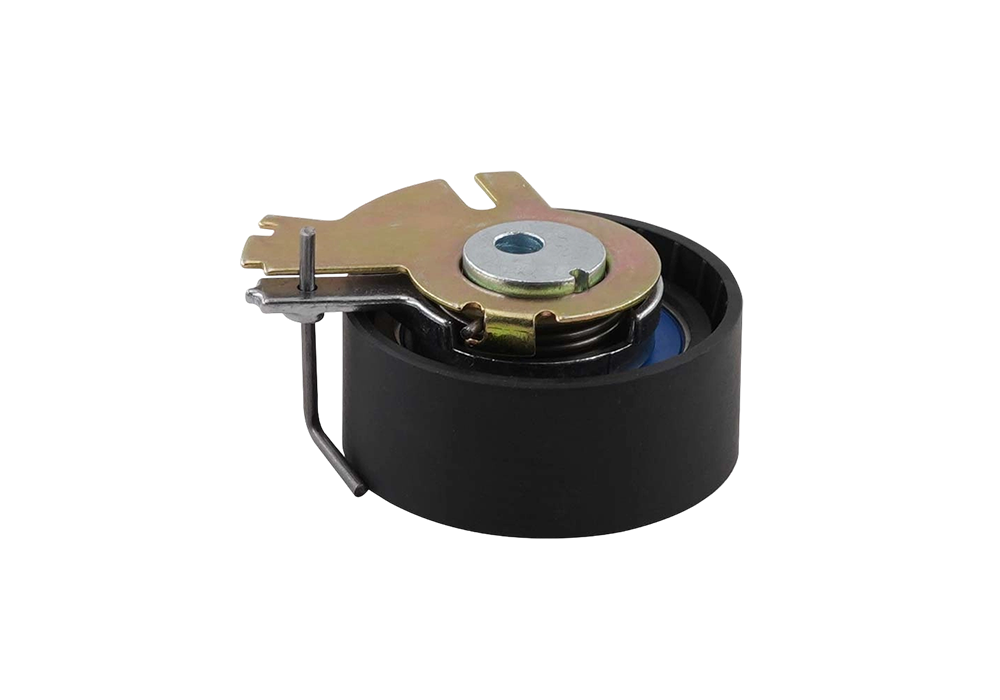 HERZ Drive Belt Tensioner Ball BearingThis tensioner component uses high-end molded ball bearings and wear-resistant materials for smooth low-friction rotation, dimensional stability, and longer service life in high-speed applications.View Product →
A healthy tensioner holds steady pressure and returns smoothly when you move the arm by hand. If it feels gritty, rattles, or springs back unevenly, it is finished.
Pulleys have to sit in the same plane. A bracket that has been bent, a worn accessory bushing, a missing spacer, or an alternator that was tightened down at an angle after a repair can shift one pulley forward or back by a millimetre or two, and that is enough. The belt tracks toward the side with less resistance and eventually walks off the edge. Misalignment is the cause most often missed, because every part looks perfectly normal until you lay a straightedge across the pulley faces.
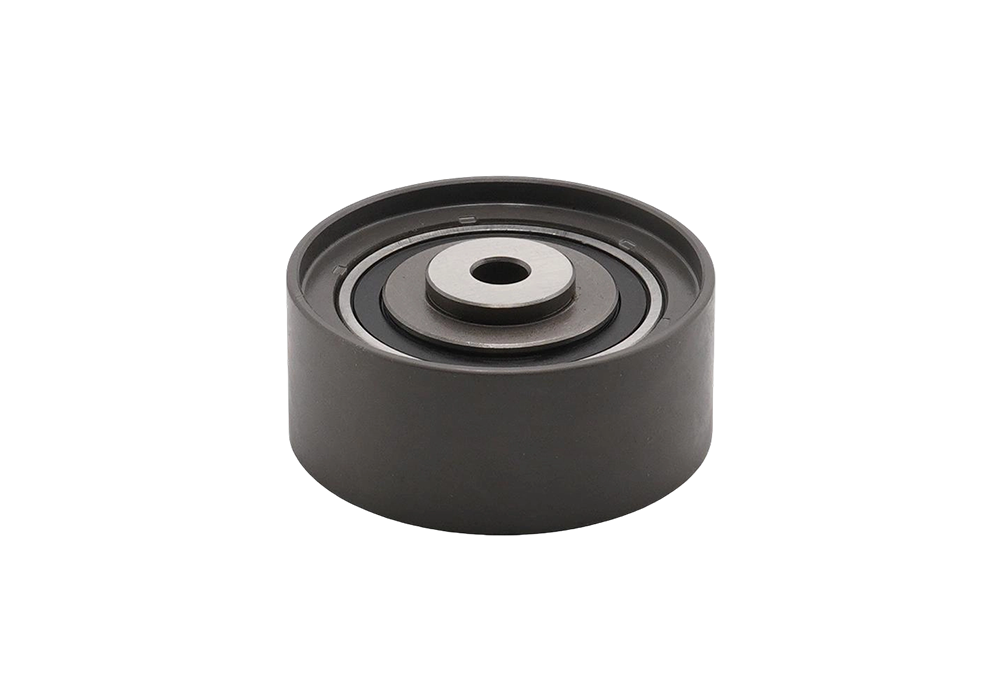
Idler pulleys spin freely and carry no drive load, so their bearings are easy to forget. When a bearing runs dry, the pulley wobbles and the belt tracks in and out with every rotation. A rough idler also heats the belt, which softens the rubber ribs and accelerates wear on the whole system.
 Glass Fiber Reinforced Nylon Drive Belt Idler PulleyWhen an idler feels rough or wobbly, this glass fiber reinforced nylon pulley with molded ball bearings offers stable, quiet rotation.View Product →
Spin each idler by hand with the belt removed. It should turn quietly with slight resistance. Any grinding, roughness, or side-to-side play means it needs replacing.
Serpentine belts do stretch slightly with age, which is exactly why a tensioner exists. An old belt, however, can stretch beyond the point where the tensioner can compensate, and then it is simply too long for the loop. A wrong belt causes the same problem faster: the wrong number of ribs, the wrong length, or a rib profile that does not match the pulley grooves. A belt that rides on top of the grooves instead of seating inside them will not stay put for long.
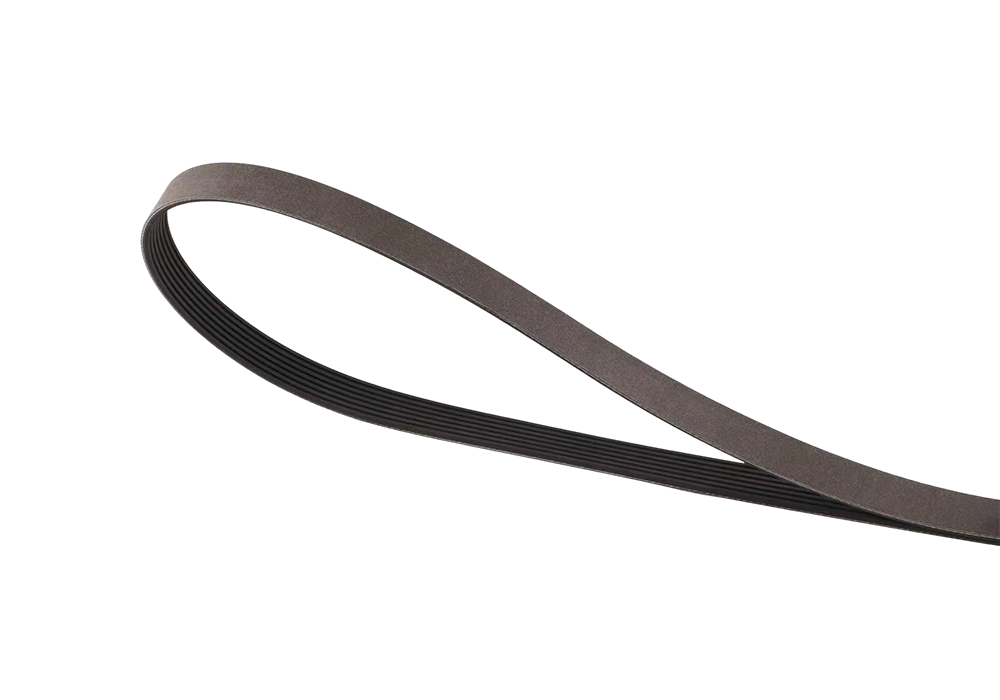 Custom EPDM Serpentine Drive BeltMade with imported EPDM for wear resistance and -40°C to 130°C operation, this serpentine belt uses a noise-reducing formula for long service.View Product →
Choosing a belt built for the heat and ozone inside an engine bay matters as much as choosing the right size. EPDM constructions resist cracking and rib loss far better than older rubber compounds.
Rubber needs friction to stay seated in the grooves. A leaking front seal, a weeping water pump, a power steering drip, or even heavy road spray reduces that friction dramatically. Drivers often notice the pattern: the belt stays on in dry weather and slips off in the rain. Contamination rarely ruins a belt on its own, but it exposes a tensioner or pulley that was already marginal, and it will destroy a new belt just as quickly if the leak is never fixed.
An alternator, air conditioning compressor, or power steering pump with a failing bearing drags on the belt. The belt gets hot, stretches locally, and can be pulled off the pulley by the resistance. This type of failure usually sounds worse than it looks: a screech that changes with engine speed, a burning smell, and a belt with a polished, glazed surface.
The crank pulley is often a two-piece unit bonded with rubber. When that bond fails, the outer ring drifts out of line or wobbles, and the belt is thrown off no matter how good the tensioner is. Look for a pulley that appears to run out of true while the engine idles, and for rubber dust around the pulley hub.
A surprising number of belts fall off within a few hundred kilometres of being fitted. Common errors include routing the belt the wrong way around one pulley, prying the belt over a pulley edge instead of releasing the tensioner, and reusing a tensioner that was already at the end of its travel. A belt that has been forced into place is usually damaged on its very first day.
| Symptom | Most Likely Cause | Check First |
|---|---|---|
| Belt rolls off during a cold start | Weak tensioner spring or a stretched belt | Tensioner travel and spring resistance |
| Belt walks sideways but stays on | Pulley misalignment | Straightedge across pulley faces |
| Belt shreds along one edge | Misalignment or a rough idler bearing | Edge wear pattern and idler runout |
| Chirp or squeal that never stops | Glazed belt or dry idler bearing | Spin idlers by hand, inspect the ribs |
| Belt falls off only when wet | Contamination plus a tired tensioner | Seals, water pump and hose connections |
| New belt off within weeks | Wrong belt or incorrect routing | Routing diagram and rib count |
Most belts announce their intentions well in advance. Watch and listen for:
Any one of these is a reason to open the hood rather than wait for the next service interval.
Losing the belt means losing power steering assist, the charging system, and usually the water pump, so coolant temperature climbs quickly. The symptoms arrive as a cluster: heavy steering, a battery warning light, and a temperature gauge moving toward the red.
Never refit a belt that has come off. Ribs that have been dragged across a pulley are permanently damaged, and a shredded belt can take out a hose or a sensor wire on its way out.
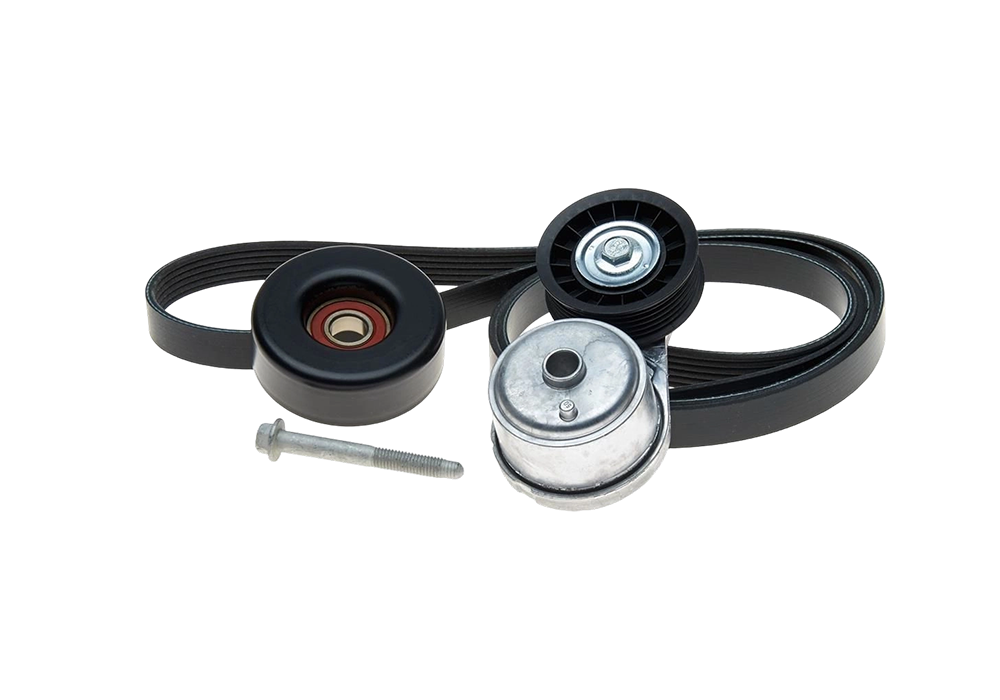
The parts in the accessory drive wear at similar rates, so treating them as a set is the practical approach. If a tensioner has covered the same distance as the belt, a new belt alone will simply run against a tired spring. Our notes on belt tension explain how much deflection a correctly tensioned belt should show and why the tensioner must be released properly rather than forced.
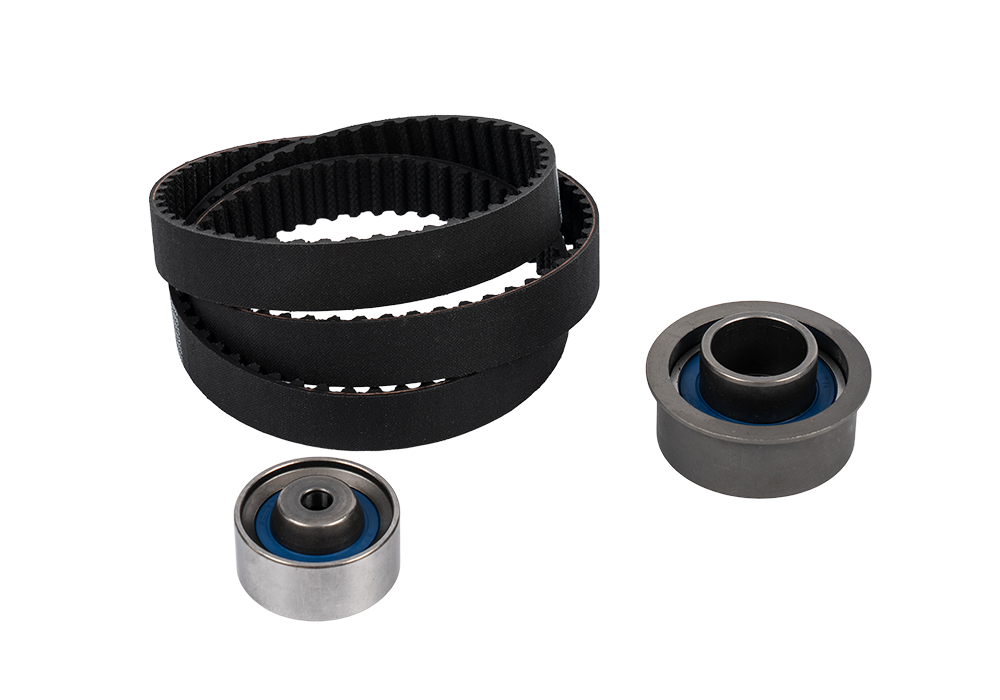
Two habits make the biggest difference over the life of a vehicle: fix the leak that contaminated the belt, and replace the tensioner and idler pulleys whenever the belt is replaced. Complete kits are often the simplest answer, because every part is matched to the same application and nothing is left to guesswork.
A belt that falls off is a symptom, not the problem itself. Find the worn tensioner, the misaligned bracket, the rough idler bearing, or the leak that started it, and the new belt will stay exactly where it belongs. If you are unsure which part of the loop is at fault, our FAQ covers the questions technicians ask us most often, and we are always glad to look at photos of your setup.


 English
 Español
 Português
 عربى
