Understanding Drive Belts and Their Maintenance Needs
What are Drive Belts (Serpentine Belts, Timing Belts, Accessory Belts)
In modern internal combustion engine vehicles, drive belts are critical components responsible for transferring rotational power from the engine's crankshaft to various vital engine accessories. Without them, core functions—ranging from power steering to engine cooling—would instantly cease. Understanding the distinct types of drive belts is the foundation of effective preventive maintenance:
Serpentine Belts (Accessory Belts): A single, continuous flat belt used to drive multiple peripheral devices in an automotive engine, such as the alternator, power steering pump, water pump, and air conditioning compressor.
Timing Belts: Internal toothed belts that synchronize the rotation of the crankshaft and camshaft(s) to ensure engine valves open and close at the exact proper intervals during each cylinder's intake and exhaust strokes.
Industrial and Special Transmission Belts: Beyond automotive applications, heavy-duty operations rely on specialized transmission belts such as poly-V belts, rubber timing belts, agricultural fabric belts, agricultural edge-cut belts, industrial V-belts, and PU timing belts. These robust variants handle high torque, variable load conditions, and harsh environmental factors in agricultural machinery and industrial power transmission systems.
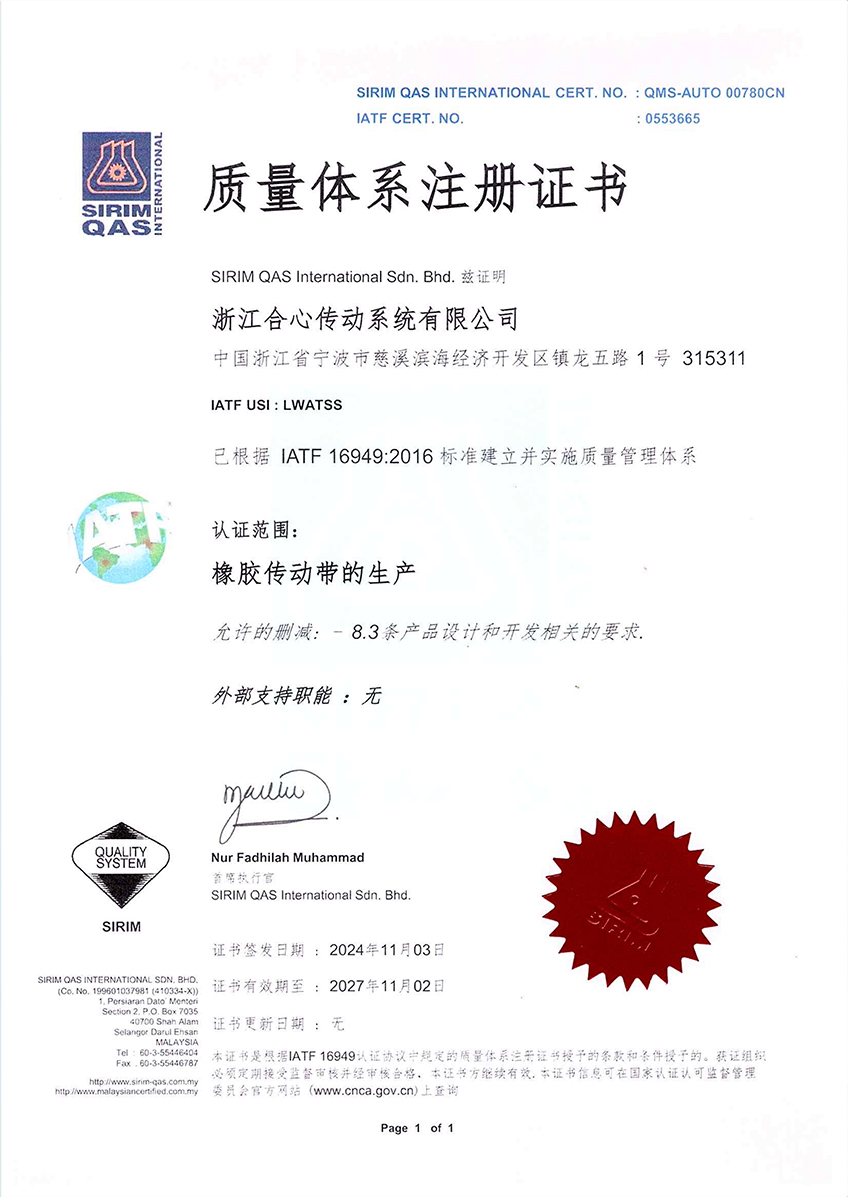
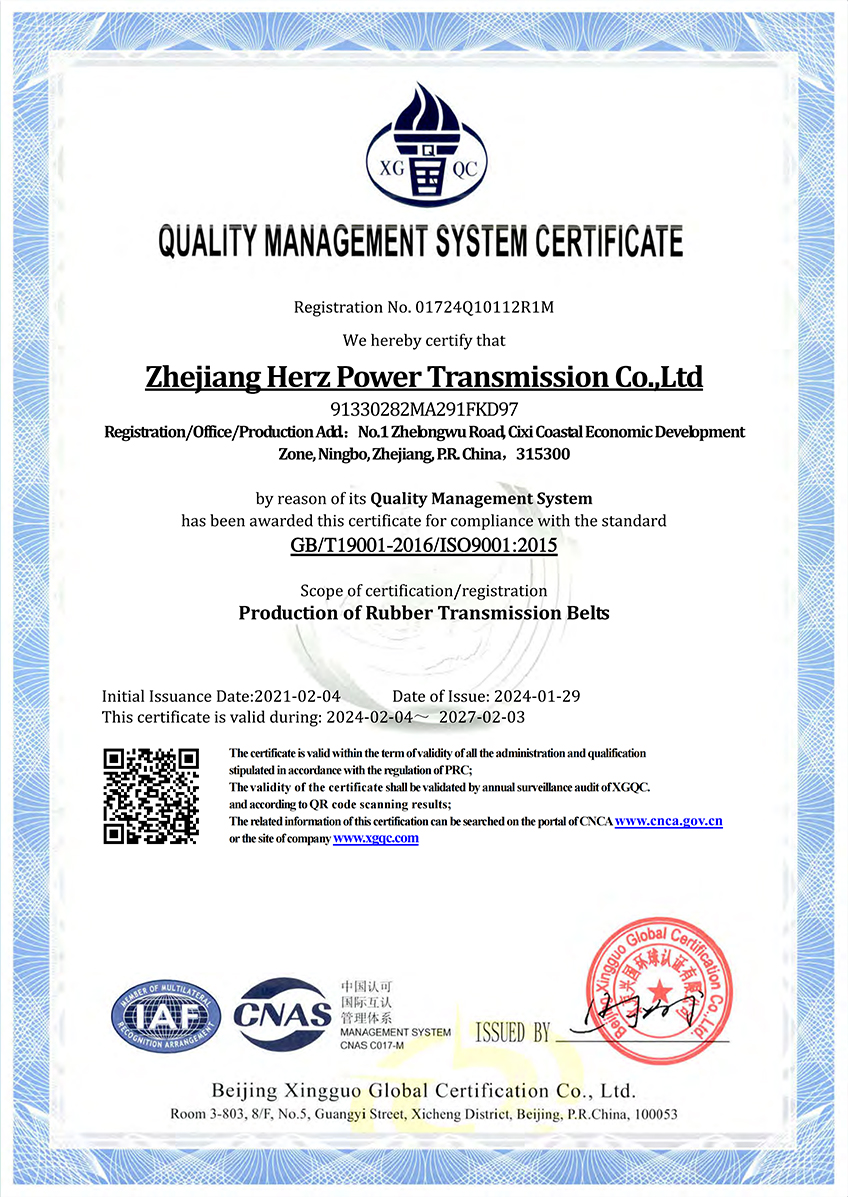
When manufacturing these critical power transmission components, precision engineering is paramount. Industry leaders like Ningbo Herz Technology Co., Ltd.—operating out of a massive 40,000-square-meter production base in the Cidong Industrial Development Zone, Cixi City, Zhejiang Province—leverage world-class manufacturing equipment and precision testing instruments. Backed by its parent company, Zhejiang Hexin Transmission System Co., Ltd., established in 1995, the enterprise produces an impressive annual capacity of 10 million pieces of various rubber transmission belts. Their product lines meet strict international quality standards, ensuring maximum tensile strength, minimal elongation, and long-term operational durability.
Common Signs of Belt Wear, Squealing, and Failure
Drive belts operate under severe conditions, enduring continuous high-friction loads, high-temperature fluctuations beneath the hood, and exposure to oil, dirt, and moisture. Recognizing early warning signs of belt degradation prevents sudden roadside breakdowns and catastrophic engine damage.
Squealing or Chirping Noises: A high-pitched squeal originating from under the hood upon startup or acceleration usually indicates a slipping serpentine belt, insufficient tension, or a worn-out automatic belt tensioner.
Visible Cracking and Firing: Inspecting the rib side of a serpentine belt often reveals small transverse cracks. While a minor crack may be acceptable, multiple deep cracks signal immediate replacement.
Fraying and Edge Separation: Edges of the belt starting to fray, split, or peel apart point toward pulley misalignment or excessive friction against guide brackets.
Glazing: A shiny, glossy appearance on the underside of the belt means it has hardened from excessive heat, drastically reducing its friction coefficient and causing slip.
Material Loss and Chunking: Missing chunks of rubber ribs indicate physical damage caused by a seized pulley or foreign debris trapped in the system.
Why Having the Right Drive Belt Tools Is Essential for DIYers and Professional Mechanics
Attempting to inspect, tension, or replace drive belts using makeshift tools or wrenches often leads to damaged tensioner pulleys, rounded fasteners, and personal injury due to sudden release of high-tension springs. Specialized Drive Belt Tools provide the exact mechanical leverage, precise measurement capabilities, and safety margins required to handle modern engine layouts safely.
Engine Bay Accessibility: Modern compact engine compartments leave virtually zero hand clearance. Specialized low-profile tools allow technicians to reach deeply buried spring-loaded tensioners without disassembling half the front end.
Preventing Component Stress: Proper tension gauges and removal kits ensure that new belts are neither under-tightened (causing slip and premature wear) nor over-tightened (destroying alternator and water pump bearings).
Efficiency and Safety: Professional-grade tools lock tensioners securely in the retracted position, eliminating the risk of the spring snapping back onto fingers or adjacent engine components during belt routing.
Technical Comparison: Drive Belt Types and Specifications
To assist DIYers and professional mechanics in selecting the correct components and understanding structural differences, the following parameters compare major transmission belt categories:
| Belt Type |
Primary Application |
Core Material Construction |
Operating Characteristic |
| Serpentine Belt (Poly-V) |
Automotive engine accessories (Alternator, A/C, Power Steering) |
EPDM rubber with high-strength polyester or aramid cords |
Multi-ribbed design optimized for high-speed friction grip and flexibility. |
| Rubber Timing Belt |
Internal engine valve synchronization |
Chloroprene or HNBR rubber with fiberglass tensile cords |
Positive engagement toothed profile preventing slip between crankshaft and camshaft. |
| PU Timing Belt |
Precision industrial automation and drives |
Polyurethane with steel or Kevlar tension cords |
High wear resistance, oil resistance, and zero stretch under heavy loads. |
| Industrial V-Belt |
Heavy machinery, compressors, and industrial drives |
Wrapped or raw-edge rubber impregnated fabric construction |
Wedge-shaped profile designed to wedge deeper into pulley grooves under load. |
Corporate Commitment and Industry Vision
As vehicles, industrial automation, and agricultural equipment continue to evolve toward higher efficiency demands, the reliability of transmission components remains foundational. Driven by a clear corporate vision—"To become a leading manufacturer of transmission components in the industry and a world-class brand of transmission systems"—Ningbo Herz Technology Co., Ltd. remains steadfast in its core mission:
Serving customers: Continuously provide customers with competitive transmission system products and services.
Serving society: Commit to contributing to the progress and development of the transmission industry.
Serving employees: Pursue the material and spiritual happiness of all employees.
Through rigorous quality control and advanced automated production lines, the company ensures that every transmission belt leaving its facility delivers optimal performance, laying the groundwork for trouble-free machinery operation worldwide.
Essential Drive Belt Tools Every Mechanic Needs
Tension Gauge: Measuring Belt Tension Accurately to Prevent Slipping or Bearing Damage
Maintaining correct belt tension is critical for both accessory longevity and optimal engine performance. An improperly tensioned belt can cause a cascade of mechanical failures; insufficient tension leads to belt slip, squealing, and accessory underperformance (such as weak alternator output or poor air conditioning cooling), while excessive tension places undue radial loads on water pump, alternator, and power steering pump bearings, leading to premature bearing seizure.
A professional belt tension gauge takes the guesswork out of the equation by quantifying deflection and tension force. When working with traditional V-belts or older manual-tensioner systems, technicians rely on these tools to verify that tension falls precisely within manufacturer specifications.
To ensure maximum durability and accuracy under hood conditions, reliable tools are often crafted from high-grade metals. Industry leaders such as Ningbo Herz Technology Co., Ltd. emphasize precision across all power transmission applications—philosophy that mirrors the necessity of using precise measurement instrumentation when installing heavy-duty rubber transmission components, poly-V belts, and industrial V-belts in automotive and mechanical setups.
Serpentine Belt Tool: Releasing Spring-Loaded Tensioners in Tight Engine Bays
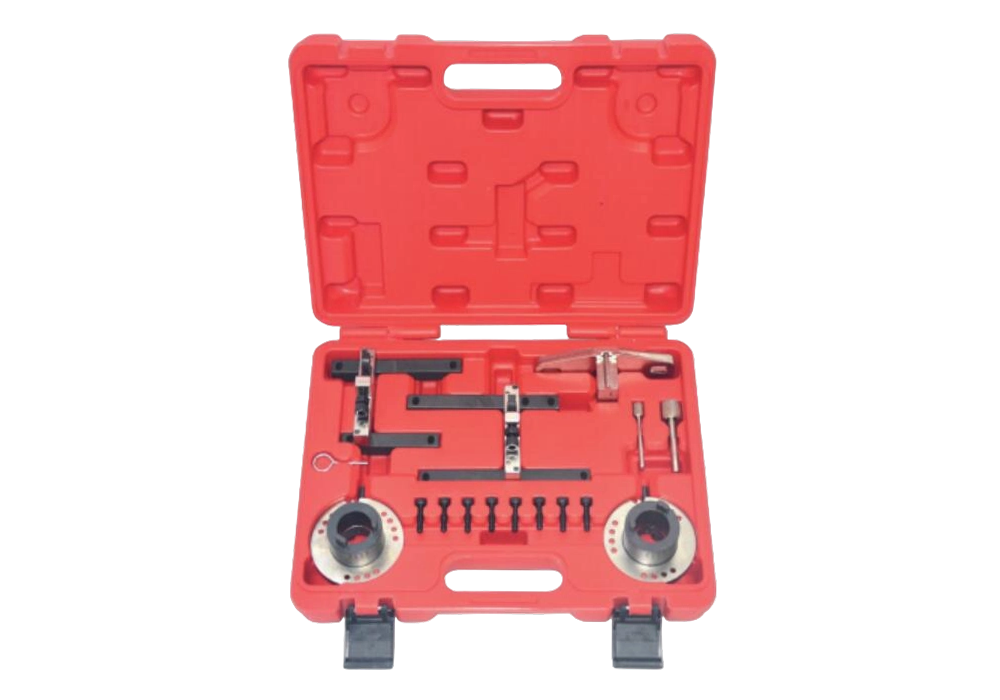
Modern engine compartments are tightly packed, leaving very little room for standard socket wrenches or breaker bars to reach automatic belt tensioners. A dedicated serpentine belt tool features a slim profile, low-clearance design, and specialized extension bars paired with common socket sizes or crowfoot adapters.
Extended Reach: Designed to slip past cooling fans, shroud housings, and structural frame members.
High-Leverage Design: Provides the mechanical advantage required to overcome stiff, high-tension spring mechanisms safely.
Interchangeable Drive Adapters: Typically includes 3/8-inch and 1/2-inch square drives alongside low-profile crowfeet to fit a wide range of domestic and import vehicle tensioner configurations.
Using a proper serpentine belt tool prevents the wrench from slipping off the tensioner bolt under heavy load, protecting the technician's hands and preventing rounded fastener heads.
Pulley Removal and Installation Kits: Handling Harmonic Balancers, Idler Pulleys, and Power Steering Pulleys
Over time, pulleys experience severe friction, heat cycling, and environmental corrosion, causing them to lock tightly onto shafts. Attempting to pry off a power steering pulley or harmonic balancer without dedicated removal kits often results in cracked pulley flanges, bent shafts, or ruined internal components.
Harmonic Balancer Pullers: Utilize hardened forcing screws and interchangeable bolt patterns to pull crank pulleys evenly off the crankshaft snout without damaging the rubber dampening ring.
Power Steering and Alternator Pulley Puller/Installer Kits: Specially designed jaw grips lock securely behind the pulley hub, allowing the central screw to press the pulley off or press a new one on squarely without side-loading the shaft.
Idler and Tensioner Pulley Sockets: Specialized torx and hex bits designed to remove recessed mounting bolts found on modern idler pulleys.
Technical Comparison: Drive Belt Tool Types and Key Specifications
To help professional garages and DIY mechanics select the right instruments for specific maintenance tasks, the following parameter comparison outlines the primary categories of drive belt maintenance tools:
| Tool Category |
Primary Function |
Key Design Features |
Material Construction |
| Belt Tension Gauge |
Quantifying span deflection and tension load |
Spring-loaded plunger, scale indicator, compact body |
Anodized aluminum / hardened steel |
| Serpentine Belt Tool |
Releasing spring-loaded automatic tensioners |
Long-reach flat handle, low-profile head, multi-adapter set |
Drop-forged chrome vanadium steel |
| Pulley Removal Kit |
Extracting press-fit steering/crank pulleys |
Reversible jaws, central forcing screw, thrust bearing |
Heat-treated alloy steel |
| Laser Alignment Tool |
Detecting pulley misalignment and angular offset |
Magnetic mounting base, laser diode emitter/reflector targets |
Machined aluminum housing |
Alignment and Inspection Tools: Laser Alignment Tools and Belt Wear Guides
Even with a brand-new belt and a fresh tensioner, chronic squealing, edge fraying, and rapid wear will persist if the pulley system is out of alignment. Misalignment creates side-loads that roll the belt out of its grooves.
Laser Alignment Tools: Magnetic units attach securely to the faces of pulleys (such as the alternator, water pump, or crankshaft pulley). They project a precise laser line onto a target mounted on a reference pulley, instantly revealing angular misalignment or parallel offset.
Belt Wear Gauges (Rib Depth Gauges): Used to measure the micro-wear on multi-ribbed poly-V belts. By checking the depth between ribs, mechanics can determine if the rubber compound has worn down past the critical replacement threshold long before catastrophic snapping occurs.
By combining precision alignment instruments with high-durability transmission components—such as those engineered by Ningbo Herz Technology Co., Ltd. across their extensive portfolio including automotive timing belts, PU timing belts, and specialized industrial belts—maintenance technicians ensure maximum power transmission efficiency and extended service life across every drive system.
How to Choose the Right Drive Belt Tools for Your Garage
Evaluating Quality: Drop-Forged Steel vs. Cheaper Alternatives
When investing in tools designed to handle high-torque applications like releasing stubborn automatic belt tensioners or pulling press-fit pulleys, material composition directly dictates safety and durability. Inferior tools cast from low-grade pot metal or cheap alloys frequently flex, crack, or shatter under sudden load releases, creating severe safety hazards in the garage.
Drop-Forged Chrome Vanadium (Cr-V) Steel: Premium drive belt tools utilize drop-forged manufacturing processes, aligning the steel's grain structure to handle extreme twisting forces without permanent deformation.
Heat Treatment and Surface Coating: High-end tools undergo precise heat treatment (quenching and tempering) to achieve an optimal balance of core toughness and surface hardness, coupled with corrosion-resistant chrome or black-oxide plating to withstand oily, high-moisture workshop environments.
Ensuring uncompromising structural integrity is just as critical in tool manufacturing as it is in power transmission production. At Ningbo Herz Technology Co., Ltd., rigorous adherence to international quality standards ensures that every product—ranging from agricultural fabric belts and agricultural edge-cut belts to rubber timing belts and industrial V-belts—delivers exceptional tensile strength and wear resistance under punishing operating loads.
Compatibility: Universal Kits vs. Vehicle-Specific Tools
Engine compartments vary drastically across global automotive markets, making tool compatibility a primary consideration for any professional mechanic or well-equipped DIY garage.
Universal Multi-Adapter Kits: These systems feature interchangeable crowfoot wrenches, extension bars, and adjustable puller jaws. They offer maximum versatility, allowing technicians to service a broad spectrum of domestic, Asian, and European vehicles using a single toolbox.
Vehicle-Specific Specialty Tools: Certain European imports and modern high-performance engines feature deeply recessed, awkwardly angled tensioners or unique proprietary fastener heads. Vehicle-specific tools provide exact engagement geometries where universal kits might slip or fail to clear surrounding frame rails and coolant hoses.
Technical Comparison: Universal vs. Vehicle-Specific Tool Kits
To evaluate which setup best fits specific garage workflows, the following parameter comparison highlights structural and operational differences:
| Feature / Criteria |
Universal Drive Belt Tool Kits |
Vehicle-Specific Tool Kits |
| Versatility |
High; accommodates dozens of different car makes and models via modular adapters. |
Low to Moderate; tailored strictly to specific engine architectures or manufacturers. |
| Fitment Precision |
Good; adjustable mechanisms fit standard square drives and common fastener sizes. |
Exact; engineered specifically for tight clearance zones and proprietary bolt heads. |
| Initial Investment Cost |
Cost-effective for general repairs and mixed-fleet maintenance. |
Higher upfront cost; dedicated investment for specialized repair shops. |
| Storage & Portability |
Consolidated blow-molded case containing multiple attachments. |
Compact single-purpose tool set designed for targeted diagnostic tasks. |
Budget vs. Professional-Grade Investments
Balancing tool expenditure depends heavily on frequency of use and the complexity of the maintenance tasks performed.
DIY and Occasional Mechanics: For vehicle owners performing routine maintenance once or twice a year, mid-tier universal kits strike an optimal balance between affordability and safety, provided they meet baseline industrial drop-forged standards.
Professional Workshops and Fleet Maintenance: Full-time mechanics require heavy-duty, professional-grade toolsets backed by solid warranty coverage. Repeated daily use under high torque demands commercial-grade materials that resist wear and prevent rounded fastener damage.
Just as professional workshops demand uncompromising reliability from their equipment, industrial and agricultural operators rely on high-performance components. Ningbo Herz Technology Co., Ltd. continues to meet these rigorous demands by manufacturing an annual capacity of 10 million pieces of various rubber transmission belts—including specialized poly-V belts, PU timing belts, and special belts—ensuring seamless power transmission across diverse industrial landscapes.
Step-by-Step Guide: Using Drive Belt Tools Safely and Effectively
Preparation: Disconnecting the Battery and Mapping the Belt Routing Path
Before picking up any tools, safety and preparation are paramount. Working around engine accessory drives involves moving components, sharp metal edges, and high-tension spring mechanisms that can cause severe injury if mishandled.
Disconnecting the Negative Battery Terminal: Always disconnect the battery to prevent accidental engine cranking while your hands are deep inside the accessory drive zone.
Mapping or Photographing the Belt Routing: Modern serpentine belts snake through a complex web of multiple pulleys, idlers, and tensioners. Take a clear reference photo or sketch a diagram of the exact belt routing path. Forgetting how the belt threads around the water pump, power steering pump, and air conditioning compressor leads to major installation headaches.
Inspecting Workspace Access: Identify whether the tensioner requires access from the top of the engine bay or from underneath the vehicle through the wheel well with the splash shield removed.
When planning mechanical maintenance, using reliable, high-integrity transmission components is just as vital as using proper tools. Ningbo Herz Technology Co., Ltd.—located in the Cidong Industrial Development Zone, Cixi City, Zhejiang Province—applies strict quality protocols across its production base of over 40,000 square meters. Backed by parent company Zhejiang Hexin Transmission System Co., Ltd., established in 1995, the enterprise produces dependable power transmission solutions, ensuring that replacement serpentine belts, poly-V belts, and rubber timing belts match or exceed original equipment standards.
Relieving Tension Using a Drive Belt Tool
Once the routing path is mapped, the spring-loaded tensioner must be rotated to slacken the belt.
Select the Correct Adapter: Fit the appropriate square drive (3/8-inch or 1/2-inch) or low-profile crowfoot adapter onto your serpentine belt tool.
Engage the Tensioner Pulley Bolt or Socket: Securely seat the tool onto the tensioner arm boss or bolt head, ensuring a flush connection to prevent slipping under extreme leverage.
Rotate to Relieve Tension: Pull or push the long handle of the tool in the direction that relieves spring tension (clockwise or counter-clockwise depending on vehicle design).
Lock or Hold Steady: Maintain steady pressure or engage the tool's locking mechanism to hold the tensioner fully retracted, freeing both hands to slip the belt off an accessible idler pulley.
Removing the Old Belt and Inspecting Pulleys and Idlers
With the tension safely released, slide the old belt off the final smooth or grooved pulley and carefully guide it out of the engine bay. This stage presents the ideal opportunity to inspect the entire accessory drive system:
Spin and Listen: Manually spin every idler pulley, tensioner pulley, alternator pulley, and water pump pulley. Listen for grinding noises, rough bearing rotation, or lateral play. A seized or wobbling idler pulley will instantly shred a brand-new replacement belt.
Check Groove Cleanliness: Use a wire brush or scraper to clean out accumulated rubber residue, dirt, and oil embedded in the pulley grooves of the crankshaft or power steering pump.
Technical Comparison: Belt Replacement and Inspection Parameters
To help mechanics execute systematic maintenance, the following parameter comparison highlights key inspection checkpoints during the replacement process:
| Inspection Component |
Potential Failure Mode |
Corrective Action / Threshold |
| Automatic Tensioner |
Weak internal spring, dampener wear, or cocked arm |
Replace complete tensioner assembly if pulley alignment deviates or bounce is excessive. |
| Idler Pulleys |
Bearing roughness, noise, or thermal discoloration |
Replace pulley immediately if axial play or rough spinning is detected. |
| Pulley Grooves |
Debris buildup, oil contamination, or worn flank walls |
Clean thoroughly with non-residue brake cleaner; replace pulley if groove walls are grooved or gouged. |
| Belt Routing |
Incorrect wrapping or reversed rib orientation |
Verify against pre-service reference diagram; ensure ribs align perfectly with all V-grooves. |
Installing the New Belt and Checking Proper Seating and Tension
Installing the new transmission belt requires methodical execution to guarantee correct alignment and operational longevity.
Thread the New Belt: Following your pre-service map, thread the new belt around all fixed pulleys (crankshaft, alternator, water pump, A/C compressor), leaving the spring-loaded tensioner or an easily accessible smooth idler pulley for last.
Retract the Tensioner: Use your Drive Belt Tool once more to rotate the automatic tensioner into its fully retracted position.
Slip the Belt Into Position: Guide the belt over the final pulley, ensuring it seats completely flush within every multi-rib groove.
Slowly Release Tension: Carefully allow the tensioner arm to swing back, applying full, even pressure onto the back of the belt.
Final Alignment Check: Inspect every single pulley to verify that the belt ribs are centered perfectly within the grooves without overlapping any edges. Start the engine briefly to observe tracking and ensure smooth, quiet operation.
Through meticulous maintenance practices and high-performance replacement components—ranging from automotive timing belts and industrial V-belts to specialized agricultural fabric belts engineered by Ningbo Herz Technology Co., Ltd.—machinery and automotive systems achieve maximum operating efficiency and extended service life.
Common Mistakes to Avoid When Working with Drive Belts
Over-Tightening or Under-Tightening Belts
Maintaining precise tension is the single most important factor governing belt longevity and accessory health. A common pitfall for inexperienced mechanics is guessing tension levels by hand rather than utilizing proper measuring instruments.
The Dangers of Under-Tightening: An insufficiently tensioned belt slips across pulley contact surfaces under heavy load. This slippage generates extreme frictional heat, glazing the underside of the belt, causing loud squealing noises, and severely dropping accessory output such as alternator charging voltage or air conditioning cooling efficiency.
The Dangers of Over-Tightening: Conversely, applying excessive tension places extreme radial and axial loads on precision shaft bearings. This over-tensioning rapidly destroys the internal bearings of expensive components like water pumps, alternators, power steering pumps, and air conditioning compressors, leading to premature mechanical seizure.
Achieving exact tension thresholds requires precision manufacturing standards, a principle prioritized across all product lines at Ningbo Herz Technology Co., Ltd. Located in the Cidong Industrial Development Zone, Cixi City, Zhejiang Province, the company leverages world-class manufacturing equipment and precision testing instruments across a 40,000-square-meter production base to ensure that every power transmission product—including industrial V-belts, rubber timing belts, and poly-V belts—delivers consistent elongation control and optimal load-bearing strength.
Ignoring Worn Idler Pulleys and Tensioners During Replacement
One of the most frequent and costly mistakes in drive system maintenance is replacing a snapped or worn serpentine belt while leaving an aging, worn-out automatic tensioner or idler pulley in place.
Compromised Tensioner Springs: Automatic tensioner springs lose their elastic memory and tension strength over thousands of heat cycles. A weak spring will fail to maintain proper belt pressure, causing chronic slip even with a brand-new belt installed.
Seized or Wobbling Bearings: Idler pulleys rotate at thousands of RPMs. If an idler bearing has rough spots or slight lateral play, installing a new belt will not fix the underlying mechanical friction, often resulting in premature belt edge fraying or complete belt shredding within a few hundred miles.
Using Makeshift Tools Instead of Proper Drive Belt Tools, Risking Component Damage
When faced with tight engine bays, some DIYers attempt to bypass specialty equipment by using standard open-end wrenches, makeshift leverage pipes, or hammering pry bars against tensioner arms. This shortcut frequently results in disaster:
Rounded Fasteners and Damaged Arms: Makeshift wrenches slip off low-profile tensioner bolts under extreme torque, rounding off bolt heads and chewing up aluminum tensioner bodies.
Personal Injury Risks: Improvised leverage setups can slip abruptly under high spring tension, sending tools flying into fragile components like plastic radiator tanks or causing hand injuries against sharp engine bay brackets.
Technical Comparison: Correct Maintenance vs. Common Maintenance Errors
To help technicians and garage operators identify proper maintenance workflows, the following parameter comparison contrasts correct procedures with frequent operational mistakes:
| Maintenance Step |
Common Error |
Correct Professional Practice |
| Tension Adjustment |
Guessing tension by hand; over-tightening or leaving too loose. |
Using a calibrated tension gauge or relying on automatic tensioner limits. |
| Pulley Inspection |
Replacing only the belt while ignoring idler and tensioner bearings. |
Manually spinning every pulley to check for noise, drag, or axial play. |
| Tool Selection |
Using standard open-end wrenches or makeshift pry bars. |
Utilizing specialized low-profile serpentine belt tools with secure locking drives. |
| Routing Verification |
Guessing belt path or failing to reference service diagrams. |
Photographing or referencing formal routing maps before removal. |
Engineering Excellence and Long-Term Reliability
Avoiding these common mechanical pitfalls ensures that accessory drive systems operate at peak efficiency. Backed by its parent company, Zhejiang Hexin Transmission System Co., Ltd., established in 1995, Ningbo Herz Technology Co., Ltd. continues to set industry benchmarks with an annual production capacity of 10 million pieces of various rubber transmission belts. By adhering to rigorous quality control standards across automotive timing belts, PU timing belts, agricultural fabric belts, and agricultural edge-cut belts, the company ensures that every installation delivers dependable, long-lasting power transmission performance.
Frequently Asked Questions (FAQ)
How Often Should Drive Belts and Tensioners Be Replaced
Drive belts and automatic tensioners do not last indefinitely. Due to continuous exposure to engine heat, friction, and environmental elements, rubber compounds degrade and internal springs weaken over time.
Serpentine Belts: Typically recommended for replacement every 60,000 to 100,000 miles, or whenever visual inspections reveal deep cracking, glazing, or edge fraying.
Timing Belts: Usually require replacement between 60,000 and 90,000 miles (or according to specific vehicle manufacturer guidelines). Ignoring timing belt intervals can result in catastrophic engine valve and piston collision.
Automatic Tensioners and Idlers: Should generally be replaced concurrently with every second serpentine belt change, or whenever bearing noise and spring bounce are detected.
Ensuring high durability and dependable service life in demanding applications is a core focus at Ningbo Herz Technology Co., Ltd. Operating out of a 40,000-square-meter production base in the Cidong Industrial Development Zone, Cixi City, Zhejiang Province, the company utilizes world-class manufacturing equipment and precision testing instruments to produce an annual capacity of 10 million pieces of rubber transmission products. Backed by parent company Zhejiang Hexin Transmission System Co., Ltd., established in 1995, every power transmission component—including poly-V belts, rubber timing belts, and industrial V-belts—is engineered to meet rigorous international standards for tensile strength and longevity.
Can I Replace a Serpentine Belt Without Specialized Drive Belt Tools
While it is technically possible on older or exceptionally spacious engine bays to release a tensioner using a standard long-handled socket wrench or breaker bar, attempting to do so in modern, compact engine compartments is heavily discouraged.
Specialized Drive Belt Tools provide low-profile heads and extended reach required to clear tight frame rails, cooling fans, and radiator hoses. Using proper tools prevents wrench slippage, protects delicate tensioner bolt heads from rounding off, and ensures personal safety against high-tension spring snaps.
What Causes a Brand-New Drive Belt to Chirp or Squeal
Hearing a squeal or chirp immediately after installing a brand-new serpentine belt can be frustrating, but it usually points to one of several specific installation or mechanical issues:
Misalignment: If a pulley is slightly out of alignment, the belt rides unevenly across the grooves, creating a continuous chirping sound.
Worn Pulleys or Contamination: Residual oil, coolant, or grease on the pulley faces causes the new belt to slip. Furthermore, an old, worn idler pulley with a failing bearing will generate friction noise regardless of a new belt.
Incorrect Tension: An automatic tensioner with a fatigued internal spring will fail to apply adequate pressure, causing the new belt to slip under accessory load.
How Do I Know If My Belt Pulley Is Misaligned
Pulley misalignment occurs when one or more accessory pulleys are pushed or pulled out of the exact parallel plane relative to the main crankshaft pulley.
Visual Indicators: Look for uneven wear along one edge of the belt, rubber dust accumulation around a specific accessory bracket, or a belt that tends to walk or ride off the side of a pulley flange.
Diagnostic Tools: Professional mechanics utilize magnetic laser alignment tools to check angular offset and parallel deviation across all system pulleys instantly.
To guarantee optimal power transmission and prevent premature wear across automotive and industrial applications, precision engineering remains vital. Whether producing agricultural fabric belts, agricultural edge-cut belts, PU timing belts, or specialized industrial transmission lines, Ningbo Herz Technology Co., Ltd. remains committed to delivering superior quality products that support efficient mechanical performance worldwide.


 English
 Español
 Português
 عربى
عربى