Overview of Industrial Transmission Systems and the Role of Specialty Belts
Brief introduction to mechanical power transmission and why selecting the right belt matters for efficiency and longevity.
Mechanical power transmission represents the backbone of modern industrial engineering, serving as the critical conduit through which mechanical energy is transferred from a prime mover—such as an electric motor or internal combustion engine—to various driven machinery. In any industrial ecosystem, the overarching goal of a transmission system is to achieve maximum mechanical efficiency, precise speed coordination, and high reliability under continuous operational cycles. Selecting the right power transmission belt is paramount; improper selection leads to slippage, excessive heat generation, premature component wear, and catastrophic energy losses that cripple facility throughput.
At Ningbo Herz Technology Co., Ltd., drawing upon decades of manufacturing expertise rooted in our parent company established in 1995, we recognize that power transmission is not merely about moving torque from point A to point B. It is about optimizing the delicate balance between tensile strength, friction coefficients, and operational flexibility. Located in the Cidong Industrial Development Zone, Cixi City, Zhejiang Province, our state-of-the-art production base spans over 40,000 square meters, where we engineer high-performance transmission components designed to minimize energy dissipation and maximize service life across demanding industrial environments.
The evolution of belt designs to meet modern industrial demands.
Over the past several decades, industrial machinery has experienced a dramatic shift toward higher speeds, compact layouts, heavier shock loads, and automated synchronization. Traditional flat leather or early canvas belts, while revolutionary for their time, proved insufficient for modern high-torque, high-speed applications due to limitations in grip, flexibility, and tensile stability. This pressure for higher performance catalyzed the evolution of specialized elastomeric formulations, high-modulus cord reinforcements, and complex multi-surface geometries.
Modern industrial facilities operate under strict energy-efficiency mandates and require components capable of withstanding aggressive chemical exposure, high temperatures, and continuous flexing. To address these rigorous demands, advanced manufacturing protocols integrate premium rubber and polyurethane compounds with polyester, aramid, or fiberglass tensile cords. This evolution allows modern power systems to achieve efficiency ratings exceeding 95% to 98% while significantly extending maintenance intervals.
To contextualize the performance characteristics of modern transmission media, engineers evaluate multiple mechanical parameters. Below is a detailed technical comparison of standard transmission technologies utilized in contemporary industrial machinery:
| Transmission Type |
Typical Efficiency (%) |
Slip Characteristics |
Center Distance Flexibility |
Primary Industrial Applications |
| Flat Belts |
96% - 98% |
Low to Moderate |
High |
High-speed, long-center-distance drives, woodworking |
| Classical V-Belts |
94% - 96% |
Low (Wedge Action) |
Moderate |
General industrial machinery, HVAC units, pumps |
| Synchronous Timing Belts |
98% - 99% |
Zero (Positive Drive) |
Low to Moderate |
Robotics, CNC machinery, precision textile units |
| Double Sided Drive Belts |
96% - 98% |
Zero/Low (Depending on profile) |
Moderate |
Complex multi-shaft serpentine layouts, agricultural equipment |
Double Sided Drive Belt: Definition, basic mechanics, and how simultaneous top-and-bottom power transmission works in complex pulley layouts.
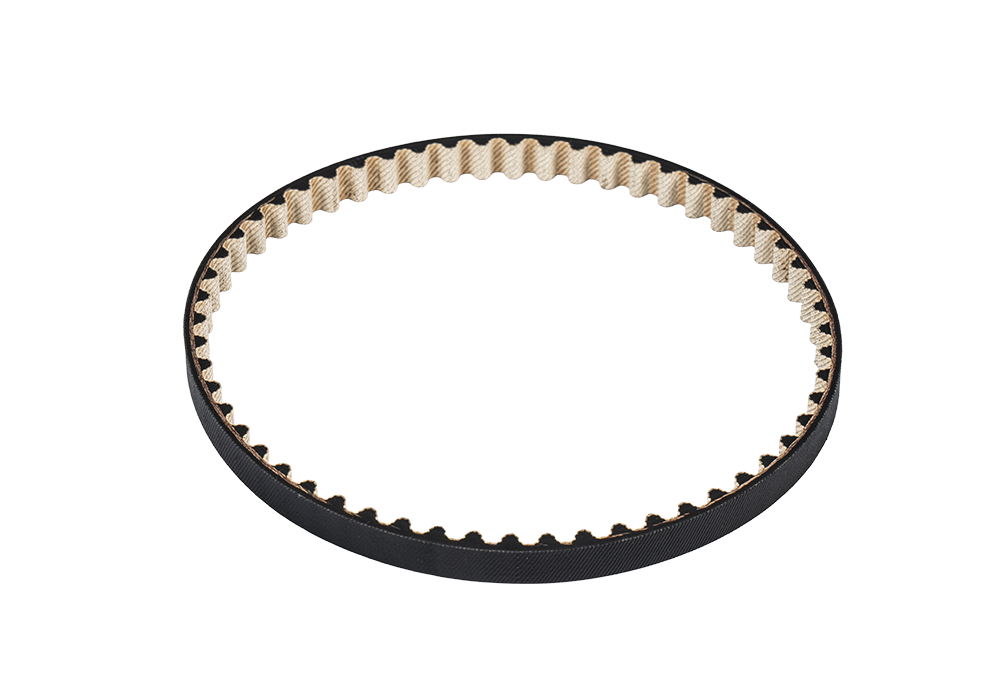
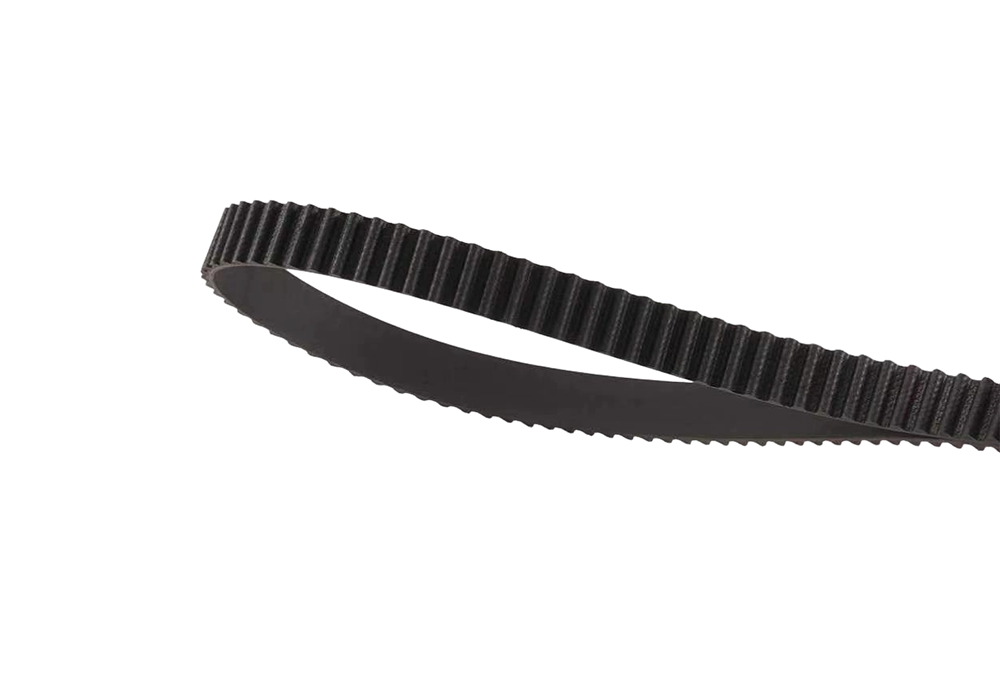
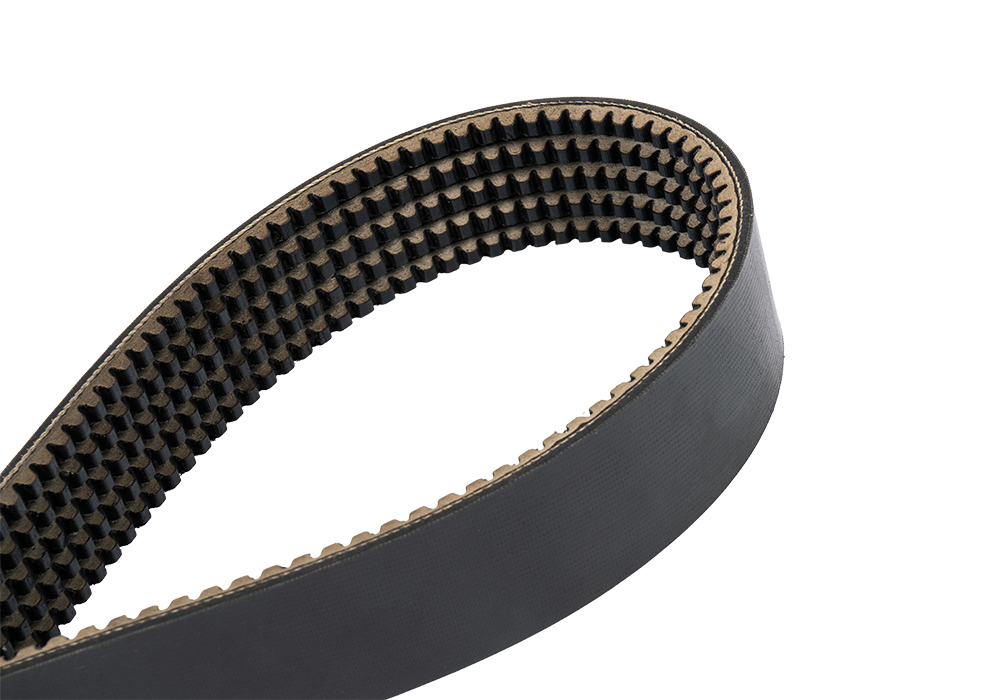
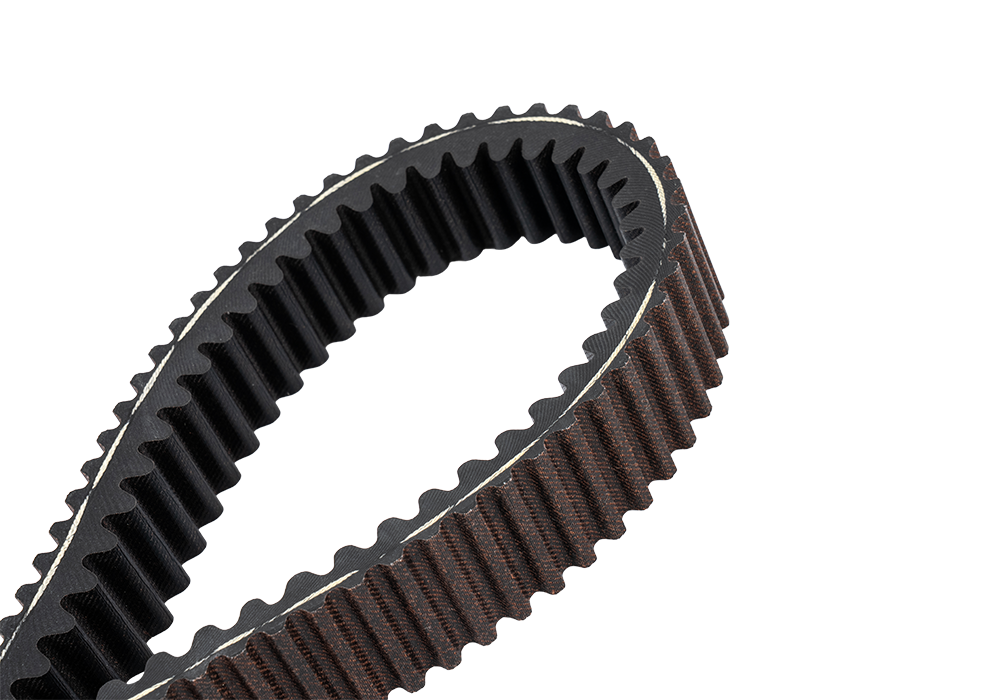
As machinery configurations have grown more compact and mechanically complex, traditional single-surface transmission options have encountered spatial and directional limitations. This gave rise to the Double Sided Drive Belt, a specialized engineering solution engineered with power-transmitting profiles on both its top and bottom surfaces. Unlike conventional belts that transfer torque exclusively via their bottom contact face, dual-surface configurations allow a single continuous loop to drive multiple pulleys rotating in both clockwise and counter-clockwise directions simultaneously.
Engineering Principle: In complex serpentine drives, the capacity of a Double Sided Drive Belt to engage pulleys on alternating sides optimizes spatial envelopes, reduces overall gearbox complexity, and eliminates the need for redundant secondary drive motors.
The fundamental mechanics governing simultaneous top-and-bottom power transmission rely on balanced tensile member positioning. Because tensile cords (the core strength members) experience stress from reverse-bending cycles, manufacturers must utilize symmetrical cord placement and resilient compound layers. At Ningbo Herz Technology Co., Ltd., our advanced production lines—part of our 10 million pieces annual capacity—utilize precision vulcanization and high-tension cord embedding to ensure that both top and bottom working surfaces maintain equal load-bearing capability and wear resistance, delivering unmatched reliability in intricate industrial layouts.
Understanding the Fundamentals of Industrial Belts
The core physics of friction, tension, and power transfer in mechanical drives.
The mechanics of power transmission rely heavily on friction, tension, and precise energy transformation across dynamic interfaces. At the core of every industrial drive system is the physical interaction between the belt's flank or teeth and the pulley grooves. Standard single-sided belts depend primarily on wedge-action friction (in V-belts) or positive engagement (in timing belts) along a single working face. In contrast, multi-surface systems expand this capability by utilizing external contact zones to manage auxiliary loads or reverse-rotation demands.
As a professional manufacturer of high-quality transmission products in China, Ningbo Herz Technology Co., Ltd. emphasizes the critical role of material science in mastering these fundamentals. Utilizing our 40,000-square-meter production infrastructure in Cixi City, Zhejiang Province, we engineer Machinery Drive Belts using advanced high-modulus rubber matrices, tear-resistant fabric backings, and high-tensile core cords. These materials ensure optimal friction coefficients, minimal elongation under load, and exceptional thermal stability across heavy-duty industrial environments.
Standard single-sided belts vs. multi-surface systems.
Standard single-sided belts transmit mechanical power exclusively through their inner contact surface, relying on frictional wedge contact or positive tooth meshing. While highly efficient for conventional two-pulley or simple multi-pulley open drives, they require additional idlers, counter-shafts, or separate drive loops when auxiliary components or reverse rotations are required. Multi-surface systems—such as dual-sided synchronous or V-ribbed configurations—integrate functional profiles on both sides of the belt body, enabling continuous power delivery to secondary loads without increasing the primary drive footprint.
Machinery Drive Belts: General classification, materials (rubber, polyurethane, cord reinforcements), and standard operational parameters.
Industrial machinery relies on a diverse ecosystem of Machinery Drive Belts tailored to specific mechanical duties. Understanding their classifications and evaluation metrics is vital for system designers.
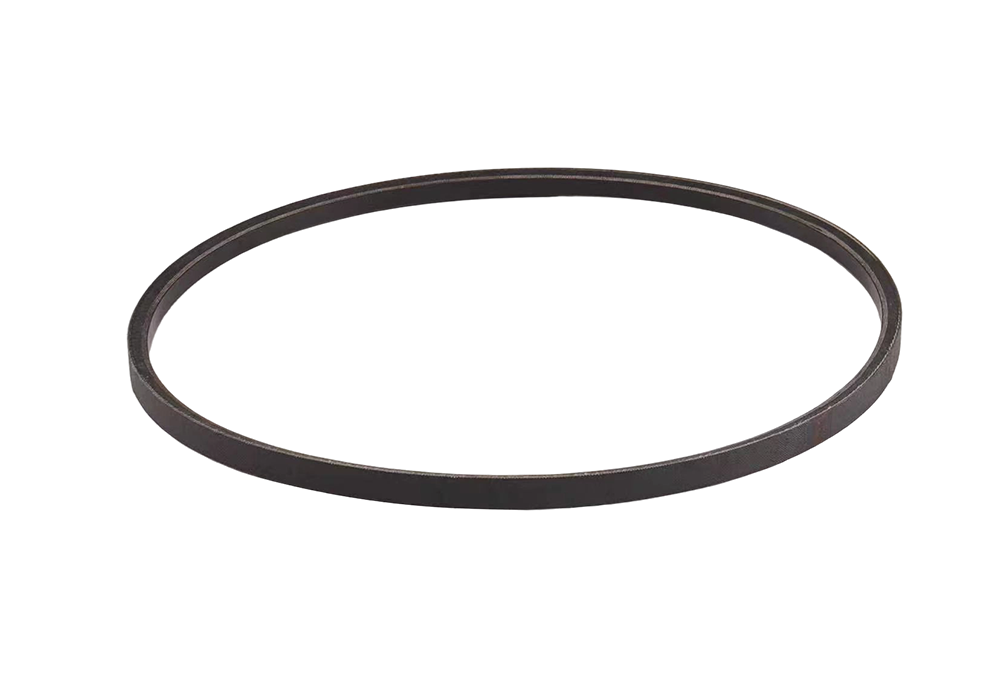
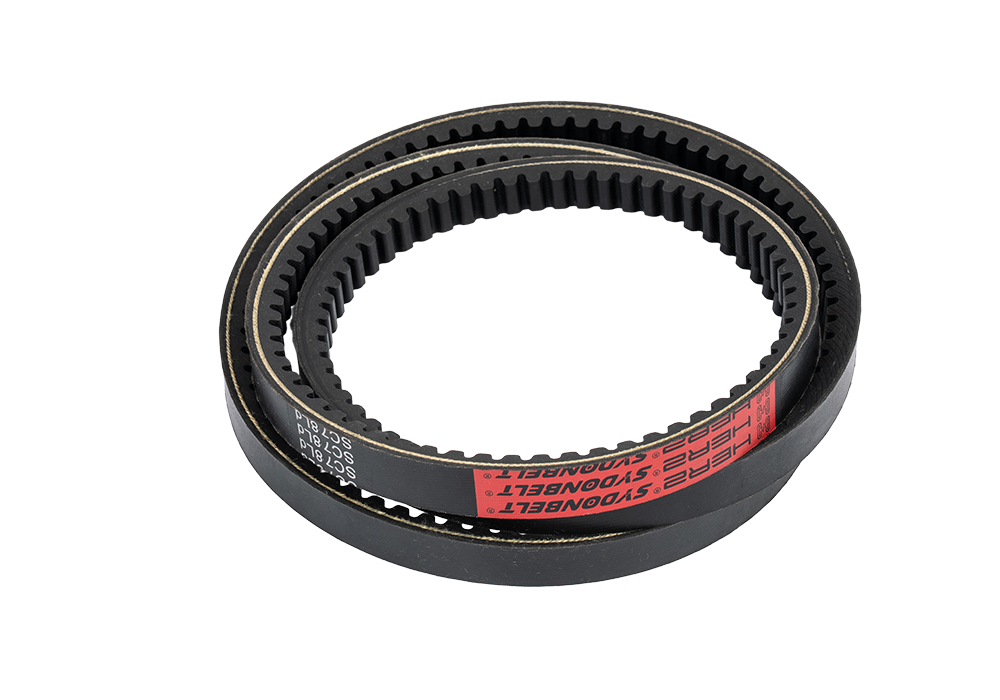
- V-Belts (Classical, Narrow, and Banded): Designed for high friction grip and high-torque shock load capacity.
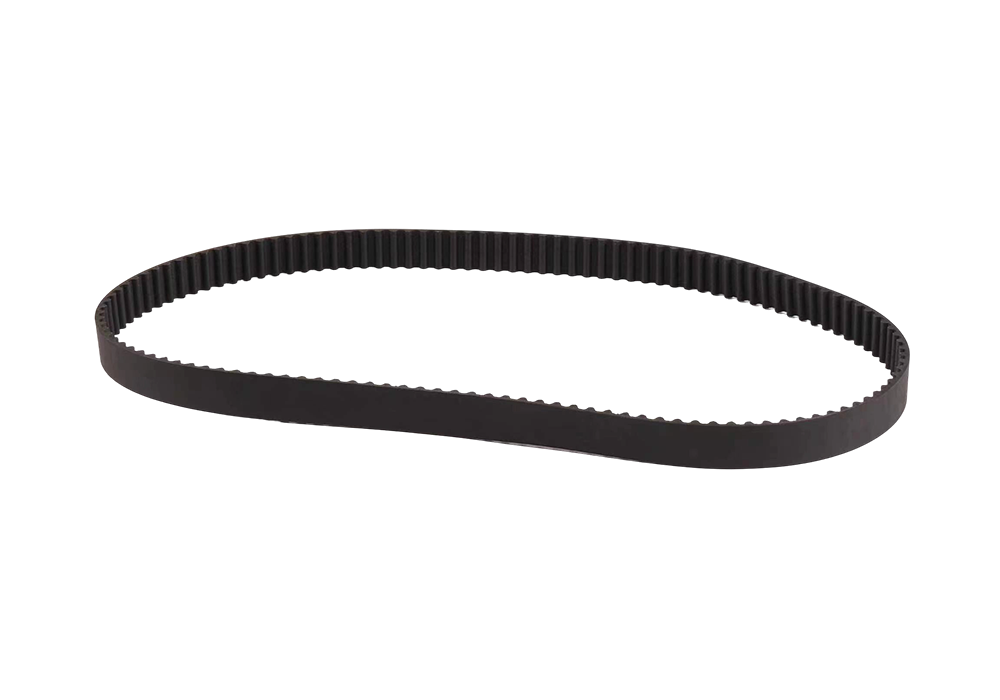
- Synchronous/Timing Belts: Utilize tooth-to-groove engagement for slip-free, exact speed ratios.
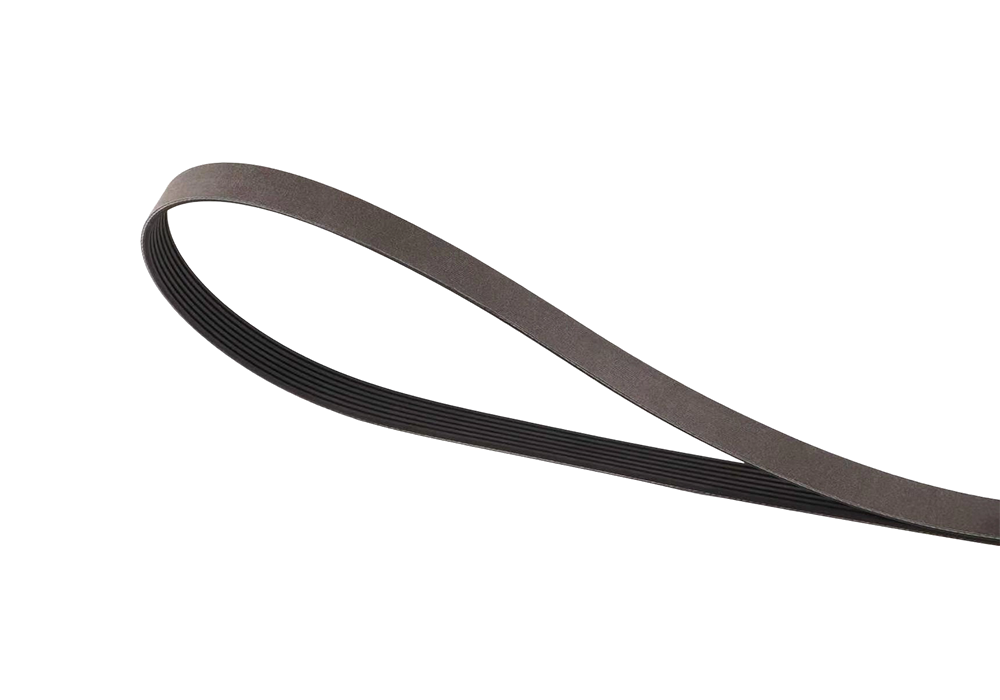
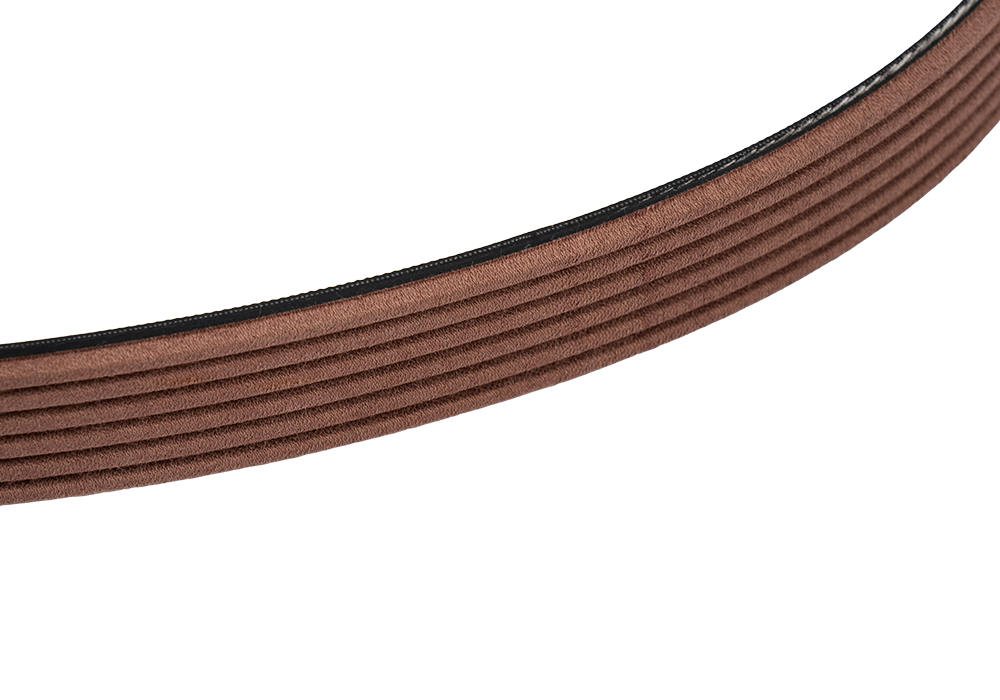
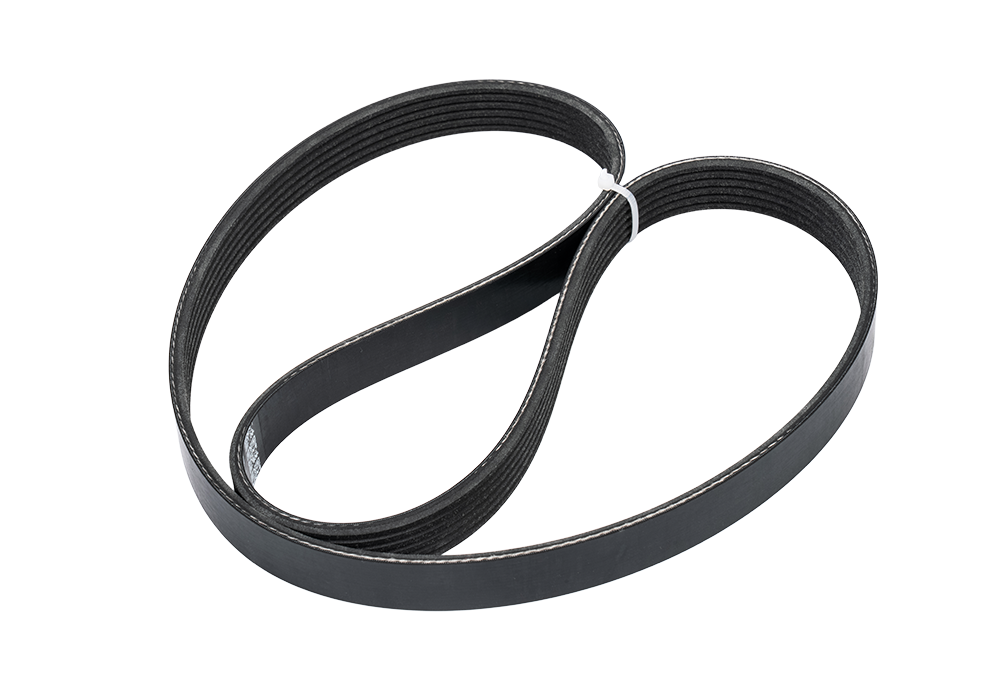
- Flat and Ribbed/Serpentine Belts: Ideal for high-speed, multi-pulley flat contact drives with low vibration profiles.
| Belt Classification |
Max Peripheral Speed |
Torque Transmission Capacity |
Synchronization Capability |
Primary Failure Mode |
| Classical V-Belts |
Up to 30 m/s |
High |
None (Slip permitted) |
Flank wear, sidewall cracking |
| Synchronous Belts |
Up to 50 m/s |
Moderate to High |
Absolute (Positive) |
Tooth shear, cord fatigue |
| Double-Sided Belts |
Up to 40 m/s |
Moderate to High |
High (Dual-toothed variants) |
Reverse-bending fatigue, uneven wear |
| Ribbed / Poly-V Belts |
Up to 60 m/s |
Moderate |
None |
Rib splitting, thermal degradation |
Deep Dive into Double-Sided Drive Belts
Structural anatomy: Internal tensile cords, cushion rubber, fabric backing, and dual-toothed or dual-V profiles.
Analyzing the internal structural anatomy of a Double Sided Drive Belt reveals a sophisticated arrangement designed to handle bidirectional stress. Unlike standard single-sided configurations, dual-profile belts incorporate tensile cords positioned precisely at the neutral pitch line, sandwiched between upper and lower cushion rubber layers and protected by durable wear-resistant fabric surfaces.
Key engineering advantages: Reverse rotation capabilities, synchronized timing, and space-saving layouts.
- Reverse Rotation Capabilities: Enables driven pulleys to rotate in opposing directions using a single continuous loop, drastically simplifying complex mechanical layouts.
- Synchronized Timing from Both Surfaces: Dual-toothed profiles ensure slip-free, synchronized power delivery on both top and bottom engagement arcs.
- Space-Saving Compactness: Eliminates the need for multiple independent drives or intermediate gear trains, reducing overall machine footprint and weight.
Common industrial applications (textile machinery, printing presses, agricultural equipment, and packaging lines).
Common industrial applications span across high-precision textile machinery, heavy-duty printing presses, automated packaging lines, and complex agricultural harvesting equipment where multi-shaft synchronization is mandatory.
Comprehensive Guide to Machinery Drive Belts
Overview of standard belt types used in heavy-duty and light industrial equipment.
Industrial applications demand specialized engineering to cope with varying loads, speeds, and environmental hazards. Classical and narrow V-belts handle heavy industrial shock loads; synchronous timing belts provide exact positioning in automated machinery; flat and ribbed belts deliver high-speed efficiency in long-span drives.
How to evaluate load capacity, speed ratios, center distance, and pulley diameter requirements.
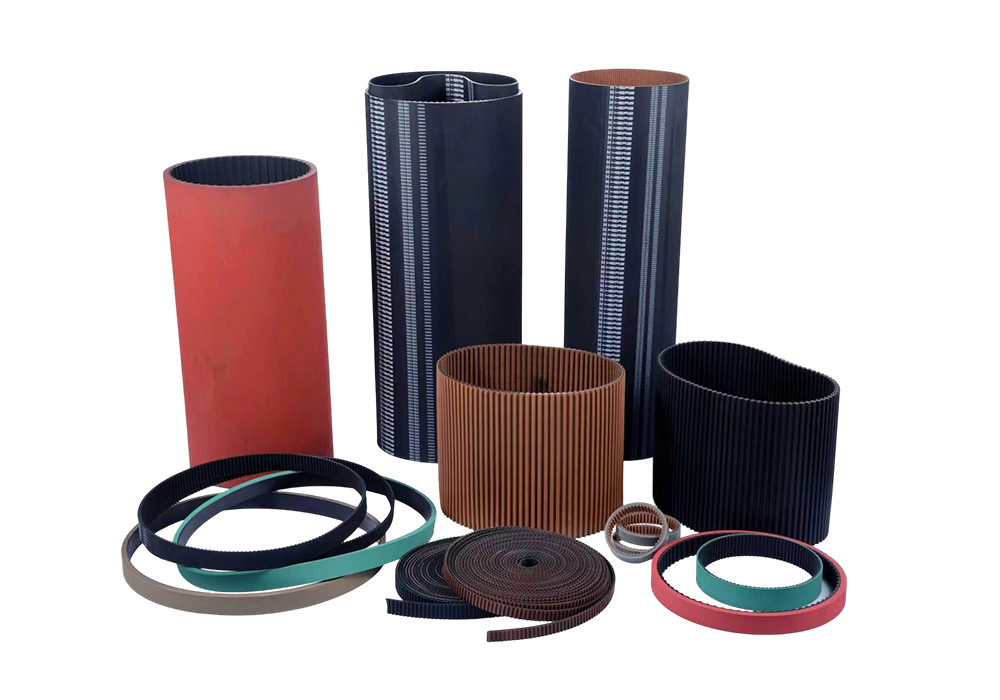
When evaluating these components, engineers must carefully assess load capacity, operating speed ratios, center distance tolerances, and pulley diameter minimums. At Ningbo Herz Technology Co., Ltd., our extensive portfolio—including rubber timing belts, poly-V belts, agricultural fabric belts, and industrial V-belts—is engineered to meet rigorous international standards, ensuring peak performance across diverse operational thresholds.
Key Differences, Selection Criteria, and Comparative Analysis
Side-by-side comparison of standard solutions versus specialized dual-sided configurations.
| Decision Factor |
Standard Single-Sided Belts |
Double-Sided Specialized Belts |
| Pulley Engagement |
Single face only (Inner radius) |
Both top and bottom faces simultaneously |
| System Complexity |
Requires idlers or multiple belts for reverse rotation |
Streamlined layout with fewer pulleys and idlers |
| Bending Stress |
Standard single-direction flexing |
Reverse-bending stress (requires specialized cord placement) |
| Maintenance Complexity |
Multiple belts to inspect and tension |
Single consolidated belt management |
Factors to consider when choosing components for your equipment (Environment, Torque, Maintenance).
Operational environment factors—such as ambient temperature, oil exposure, abrasive dust, and continuous horsepower demands—further dictate material selection. Whether deploying standard industrial drives or specialized Double Sided Drive Belt systems, partnering with an experienced manufacturer like Ningbo Herz Technology Co., Ltd. ensures customized technical support, superior product reliability, and an annual capacity of 10 million precision-crafted transmission units to support long-term operational success.
Installation, Maintenance, and Troubleshooting Best Practices
Step-by-step installation guidelines to prevent premature wear and cord damage.
- Drive Isolation and Safety: Always lock out and tag out electrical power sources before inspecting or replacing drive components.
- Pulley Alignment and Inspection: Verify that drive and driven pulleys are coplanar within precision tolerances. Inspect pulley grooves for burrs, wear, or debris.
- Controlled Tensioning: Never pry or force a belt onto a pulley using screwdrivers or sharp tools, as this damages internal tensile cords. Always retract motor mounts or tensioning idlers.
- Initial "Run-In": Operate the system under low load for a brief period to allow the belt seating correctly into the pulley profiles before applying full operational torque.
Proper tensioning techniques (avoiding over-tensioning and under-tensioning).
Proper tensioning is vital. Under-tensioning leads to slippage and friction burn, while over-tensioning creates excessive radial bearing loads and snaps internal tensile cords prematurely.
Diagnostic guide for common failure modes (Edge wear, slip, heat buildup, tooth shear).
| Failure Symptom |
Primary Root Cause |
Corrective Action |
| Edge Wear & Fraying |
Misaligned pulleys or flange interference |
Re-align shafts using laser tools; inspect pulley flanges |
| Squeal and Slips |
Under-tensioning or oil/grease contamination |
Adjust tension to manufacturer specs; clean pulleys |
| Excessive Heat Buildup |
Over-tensioning or restricted ambient ventilation |
Reduce static tension; check housing airflow |
| Premature Tooth Shear |
Shock loads, sudden jamming, or improper tooth mesh |
Inspect driven load inertia; verify correct profile match |
At Ningbo Herz Technology Co., Ltd., we combine world-class manufacturing equipment with rigorous quality testing to ensure every product—from industrial V-belts to precision timing units—delivers robust durability. Operating from our 40,000-square-meter production base in the Cidong Industrial Development Zone, Cixi City, Zhejiang Province, our expert technical team provides comprehensive support to help clients optimize maintenance schedules and minimize facility downtime.
Frequently Asked Questions (FAQ)
Q1: What is the primary advantage of using a double-sided drive belt over a standard single-sided belt?
The primary advantage is the ability to transmit power and drive multiple pulleys from both the top and bottom surfaces simultaneously. This enables reverse rotation of driven shafts and streamlines complex serpentine layouts without requiring secondary motors or complicated gear trains.
Q2: How often should machinery drive belts be inspected and replaced in heavy industrial settings?
Routine visual and tension checks should be performed every 500 to 1,000 operating hours, or quarterly in heavy-duty environments. In high-cycle agricultural and manufacturing applications, preventative replacement is typically scheduled annually or based on measured elongation and surface wear indicators.
Q3: Can a double-sided belt be used to change the direction of rotation for driven pulleys?
Yes. Because the dual-toothed or dual-profile surfaces engage pulleys on alternating sides of the loop, pulleys in contact with the back side of the belt will rotate in the opposite direction of those driven by the inside face, allowing for efficient multi-directional power distribution.
Q4: What are the signs that a power transmission belt is improperly tensioned?
Under-tensioning typically results in audible squealing, slippage, speed loss, and accelerated flank wear due to friction. Conversely, over-tensioning causes excessive radial load on bearings, rapid heat buildup, premature shaft fatigue, and snapping of internal tensile cords.
Q5: Are polyurethane or rubber materials better for high-torque machinery drive applications?
Both materials offer distinct advantages. High-grade rubber compounds provide excellent shock absorption, flexibility, and cost-effectiveness for general and agricultural uses. Polyurethane offers superior tensile strength, abrasion resistance, and oil tolerance, making it ideal for high-precision, high-torque synchronization tasks.


 English
 Español
 Português
 عربى
عربى