


Some car parts announce their trouble loudly. Worn brake pads squeal. A tired battery leaves you stranded with a single click. The timing belt does neither. It hides behind plastic covers at the front of the engine, works silently every time you drive, and usually offers only subtle hints before it lets go. That quiet nature is exactly why so many drivers and workshop owners ask us, as belt manufacturers, how do you know when timing belt is bad. Below we share the warning signs we would look for ourselves, drawn from more than three decades of manufacturing and testing drive belts.
The timing belt is the link between your crankshaft and your camshaft, or camshafts. As the pistons pump up and down, the belt keeps the valves opening and closing at precisely the right moment. When that synchronization holds, the engine runs smoothly and efficiently. When the belt slips or snaps, valves and pistons can collide in ways the engine was never designed to tolerate. In many modern engines, known as interference engines, that collision means bent valves, damaged pistons, and a repair bill that can approach the value of an older vehicle. So the real question is not whether the belt matters. It is how to recognize trouble while it is still cheap to fix.
No single symptom guarantees the belt is the culprit, but each of the following signs justifies a prompt look by a qualified technician.
Most manufacturers set the replacement interval between 60,000 and 100,000 miles, but mileage is only half of the story. Rubber also ages with heat cycles, ozone, and plain time, so a belt on a lightly driven weekend car can be just as tired at ten years old as one at 80,000 miles. The table below reflects the guidance we give our distribution and workshop partners.
| Driving situation | Typical guidance | What we recommend |
|---|---|---|
| Normal mixed driving in a moderate climate | Replace at the interval in the owner's manual, usually 60,000 to 100,000 miles | Book the job slightly early rather than late |
| Frequent short trips, extreme heat or cold | Aging accelerates in both conditions | Inspect the belt at every major service |
| Belt older than five to seven years | Rubber hardens and cracks with age | Replace on schedule regardless of mileage |
| Used car with unknown service history | No reliable record exists | Inspect immediately and budget for a new belt |
When in doubt, a belt inspection is quick work for a trained technician and removes all the guesswork from the decision.
In a non-interference engine, a snapped timing belt usually means a car that simply will not run: an inconvenience and a tow bill, nothing worse. In an interference engine the outcome is far harsher. The camshaft stops mid-cycle, the pistons keep moving under crankshaft momentum, and valves bend on contact. Typical repairs involve cylinder head removal, new valves, machining work, and labor that can easily reach four figures. A belt that is merely worn creates slower damage. A jumped tooth steadily degrades performance and fuel economy, while a failing tensioner bearing can shred a belt within minutes. Replacing the belt at the scheduled interval costs a small fraction of repairing the engine it protects.
You cannot judge a timing belt by looking under the hood, because the belt sits behind covers. A proper inspection means removing the upper timing cover, and often the lower one as well. An experienced eye then checks for the telltale problems: cracks along the tooth roots, chipped or missing teeth, a glazed and shiny surface, fraying cord edges, and any oil contamination from a leaking seal. The technician will also twist a section of belt gently between finger and thumb, since a sound belt resists twisting without separating, and will spin the idler and tensioner pulleys by hand to feel for roughness or play. With the covers off, it makes sense to check the water pump and crankshaft seals at the same time, because so much of the labor is shared.
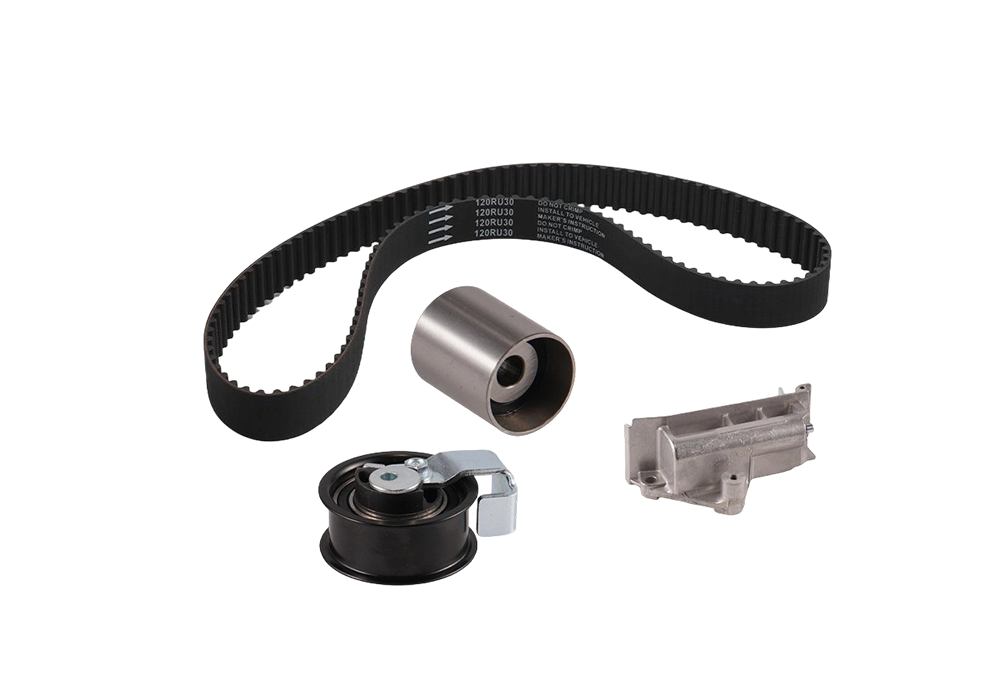
Here is the advice we give every workshop and distributor we supply: a timing belt is only as good as the components around it. The tensioner keeps proper belt tension, the idler pulleys guide the belt's path, and if any one of them wears out, the belt pays the price. That is why we always recommend replacing the belt, tensioner, and idlers together as a matched set.
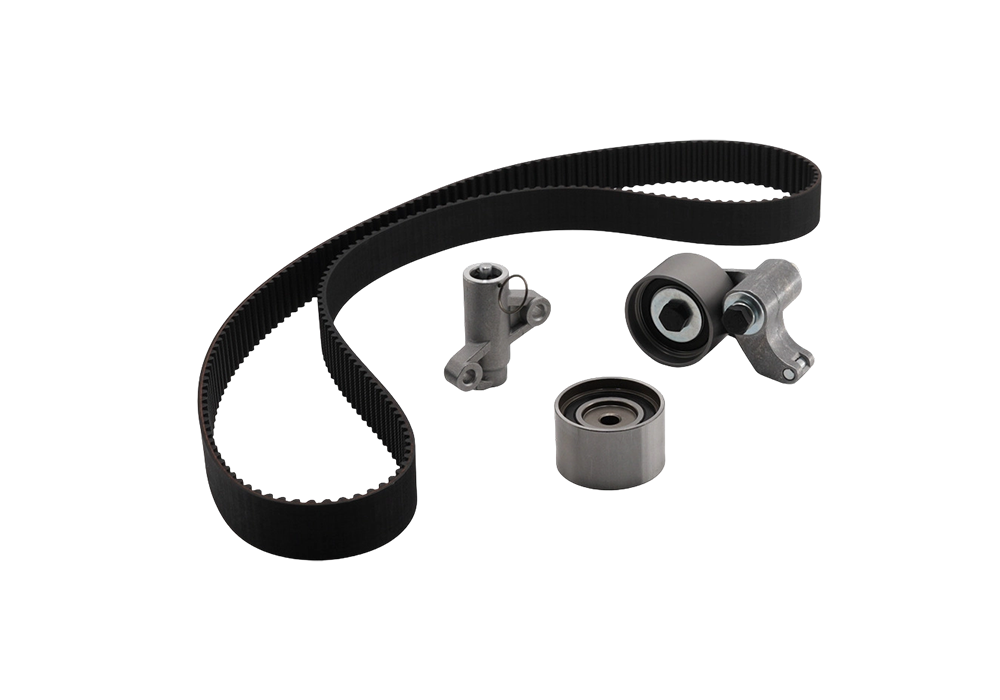 System Matching Timing Drive Belt KitsThese kits pair the timing belt with correctly matched tensioners and idler pulleys for specific engine applications. Since worn tensioners or idlers quickly damage a new belt, replacing all components together as a matched set is the reliable approach.View Product →
Our system-matching timing belt kits pair the belt with the correct tensioners and pulleys for specific engine applications, so every component arrives with tolerances designed to work together. Correct installation matters just as much, so follow proper tensioning instructions for rubber timing belts instead of judging by feel. An over-tight belt loads the bearings, while a loose one can skip a tooth within days.
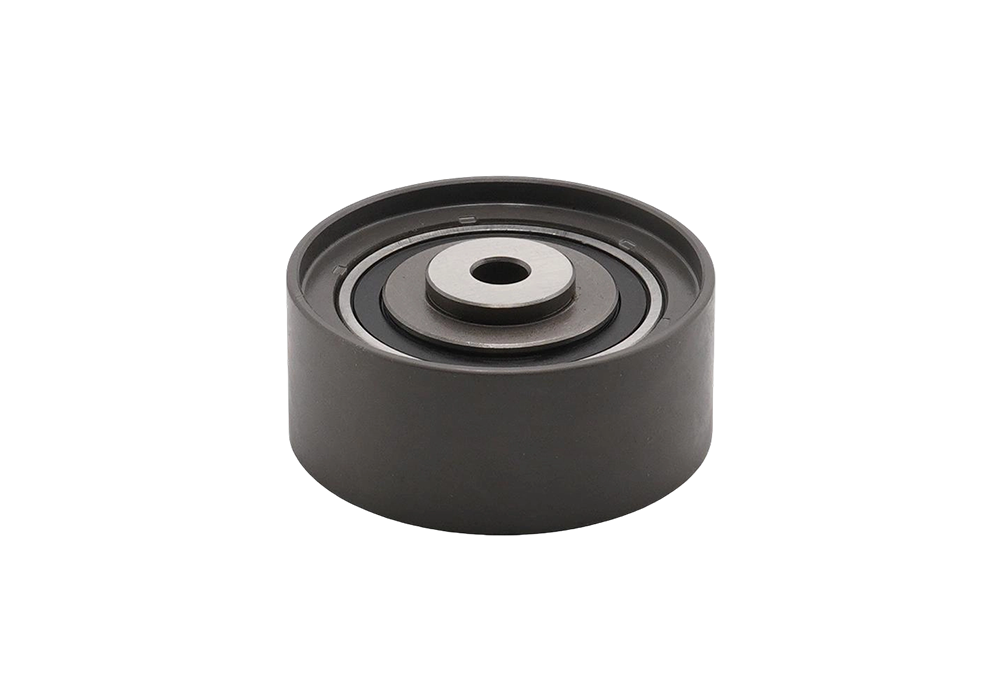
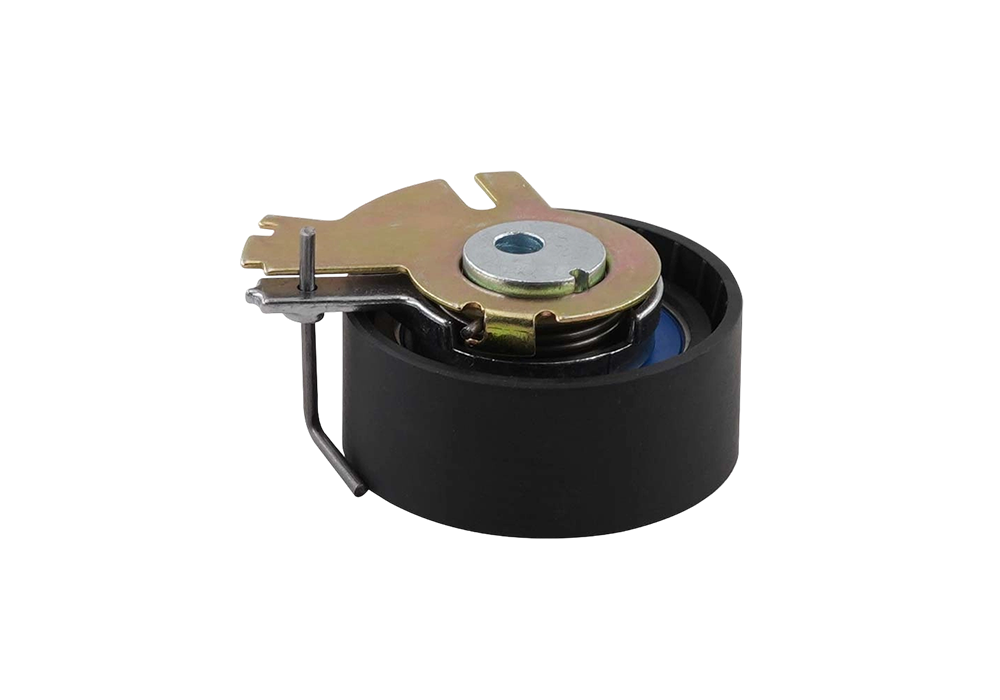 HERZ Drive Belt Tensioner Ball BearingThis tensioner uses built-in molded ball bearings and wear-resistant materials for smooth, low-friction rotation at high speeds. Proper tension is critical, since an over-tight or loose belt leads to bearing load or tooth skipping.View Product →
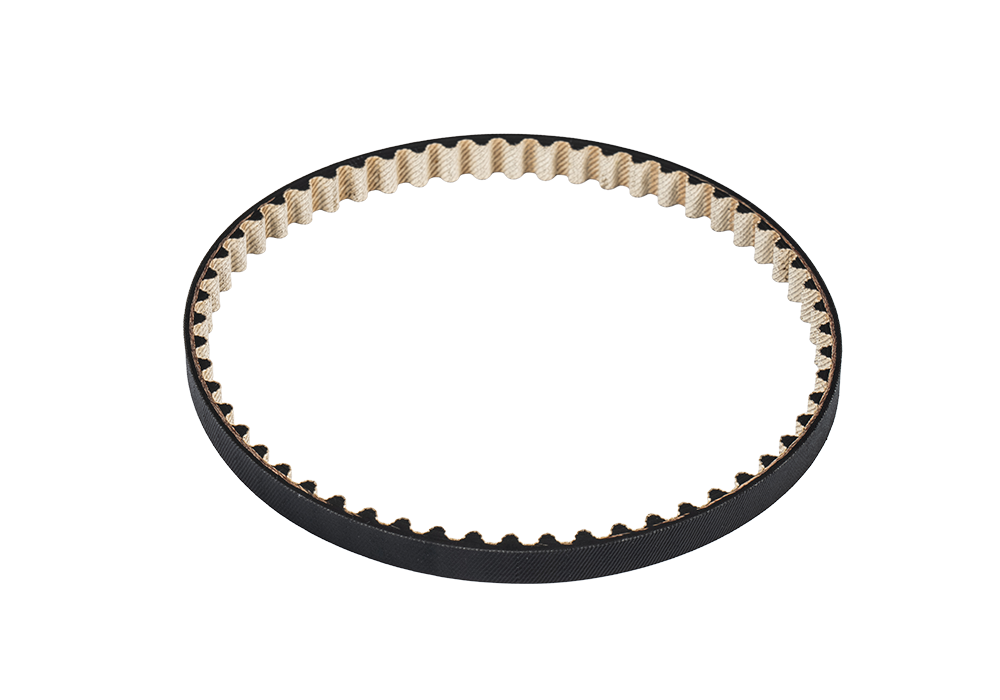
Belt material matters too. Our HNBR timing belts use a hydrogenated nitrile compound that resists heat, aging, and oil exposure far better than standard rubber, which makes a real difference in hot climates and crowded, high-temperature engine bays.
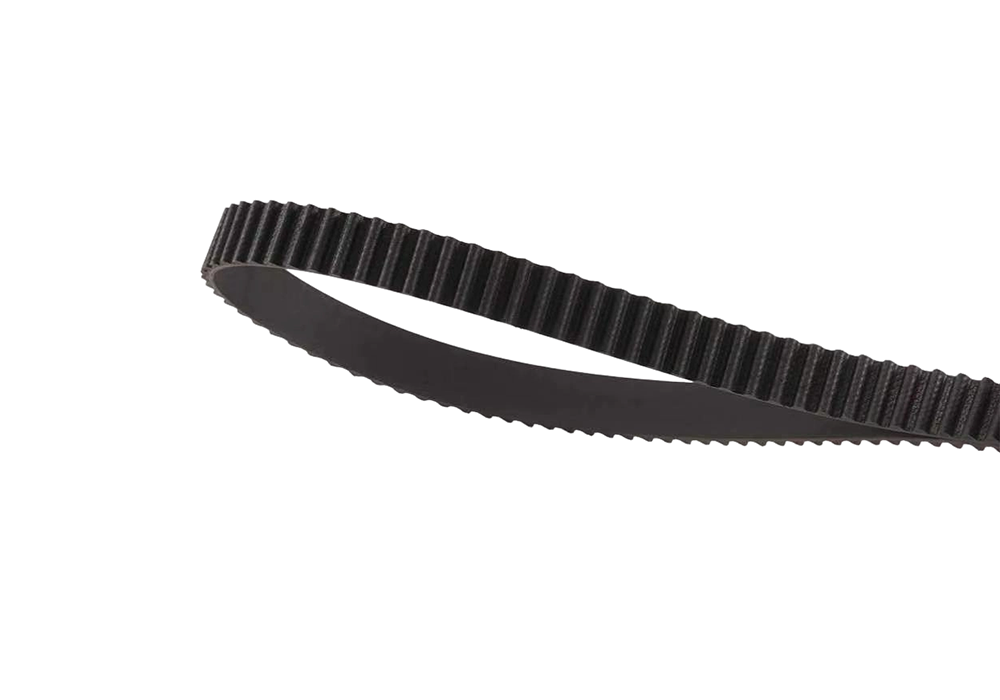 HNBR Timing Drive BeltMade from hydrogenated nitrile rubber, this belt resists heat, aging, and oil far better than standard rubber. It performs reliably in hot engine bays and harsh climates, making it a strong choice when replacement day arrives.View Product →
So, how do you know when timing belt is bad? Watch for the tick that changes with engine speed, misfires with no other explanation, oil tracking down the front of the engine, and a check engine light that points toward cam timing. Above all, respect the mileage and age limits, because the quietest symptom of a failing timing belt is simply a lot of miles with no service record. If any of these signs sound familiar, arrange an inspection now. When replacement day arrives, choose a belt and matching components from a manufacturer that builds them for a living. You can explore our full range of timing drive belts or contact our team for application guidance. A modest, on-schedule replacement is the cheapest engine insurance you will ever buy.


 English
 Español
 Português
 عربى
