Content
The timing belt warning light is one of those dashboard messages that many drivers prefer to ignore. When it first appears, the same question comes up again and again: how long can you drive with the timing belt light on before real damage occurs? It is a reasonable question, especially when you are far from home. But it is also a question that carries more risk than most drivers realize.
The timing belt is one of the hardest-working components in your engine. It keeps the crankshaft and camshaft perfectly synchronized so that every valve opens and closes at exactly the right moment. When it fails, the engine does not simply lose power. It can damage itself from the inside. As a manufacturer of timing belts and complete transmission components, we have seen what happens when this warning is taken lightly.
First, a key clarification: in most vehicles, the timing belt warning light is not a real-time sensor warning like the check engine or oil pressure light. It is a mileage-based service reminder. When the vehicle reaches a specific interval - usually between 60,000 and 100,000 miles - the light comes on to remind you that the timing belt is due for inspection and replacement.
This matters because a service reminder does not mean the belt is about to snap at any second. It means the manufacturer's recommended service window has arrived. Some belts survive thousands more miles; others fail far sooner, especially after oil contamination or extreme temperature cycling. It is also worth remembering that the timing belt is distinct from the accessory drive belt that runs your alternator and air conditioning compressor. We explain the difference in our article on drive belt vs timing belt. Understanding what the warning light is telling you is the first step toward a safe decision.
The safest answer is: as little as possible. A more practical figure is a few hundred miles at most - and only if the belt is still in reasonable condition. That number is not a guarantee. It is a rough estimate based on how timing belts typically behave in the final stage of their service life.
Here is a summary of how the risk changes with your situation:
| Situation | How far you can safely drive | Risk level |
|---|---|---|
| Light just appeared, belt replaced on schedule | Drive directly to a workshop | Moderate |
| Light on, replacement history unknown | Tow to the nearest facility | High |
| Visible wear, cracking, or engine noise | Stop driving immediately | Critical |
| Interference engine, any condition | Stop and arrange a tow | Critical |
Even in the best scenario, treat those miles as a short bridge to a repair shop, not a normal driving window. If the belt has already started to deteriorate, every mile increases the chance that it will snap or jump teeth.
Whether you can safely drive on a worn belt depends on the engine design. In an interference engine, pistons and valves occupy the same space at different moments of the cycle. If the belt slips or breaks, the pistons can hit open valves, bending them and sometimes cracking the cylinder head. Repairs can easily run into thousands of dollars - far more than a preventive belt replacement.
In a non-interference engine, pistons and valves do not share space, so a broken belt usually just stops the engine. You will be stranded, but you avoid the worst internal damage. For an interference engine, stop when the light comes on and arrange a tow rather than gamble on a much larger repair.
A timing belt failure is rarely a quiet event. The belt can snap, lose teeth, or jump position on the sprockets. Valve timing is lost, the engine stalls, and it will not restart. At highway speed, you may also lose power-assisted steering and braking before you can pull over, turning a mechanical problem into a safety concern.
Inside the engine, the consequences depend on the design. On an interference engine, bent valves, damaged pistons, and scored cylinder walls are typical. In severe cases, the cylinder head is permanently damaged. These failures turn routine maintenance into a major engine overhaul - and exactly why manufacturers recommend replacing the belt on schedule.
The timing belt warning light is the formal reminder, but your engine often gives informal hints that the belt needs attention first. Watch for these signs:
Catching any of these signs early lets you replace the belt on your own schedule. Ignoring them means planning around an unexpected breakdown - and in the worst case, a repair bill that dwarfs the cost of regular maintenance.
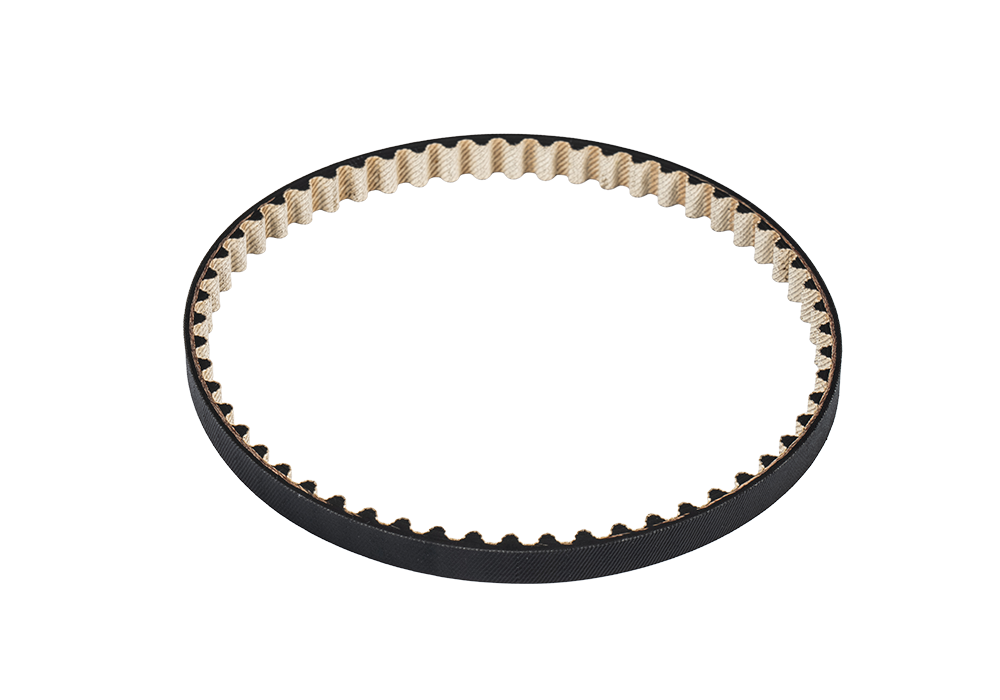
When the time comes to replace the timing belt, quality matters more than price. A timing belt is a precision component that must hold exact dimensions under intense heat, constant flexing, and high tensile load. Choosing a belt from a manufacturer that specializes in transmission products gives you the best chance of a long, dependable service life.
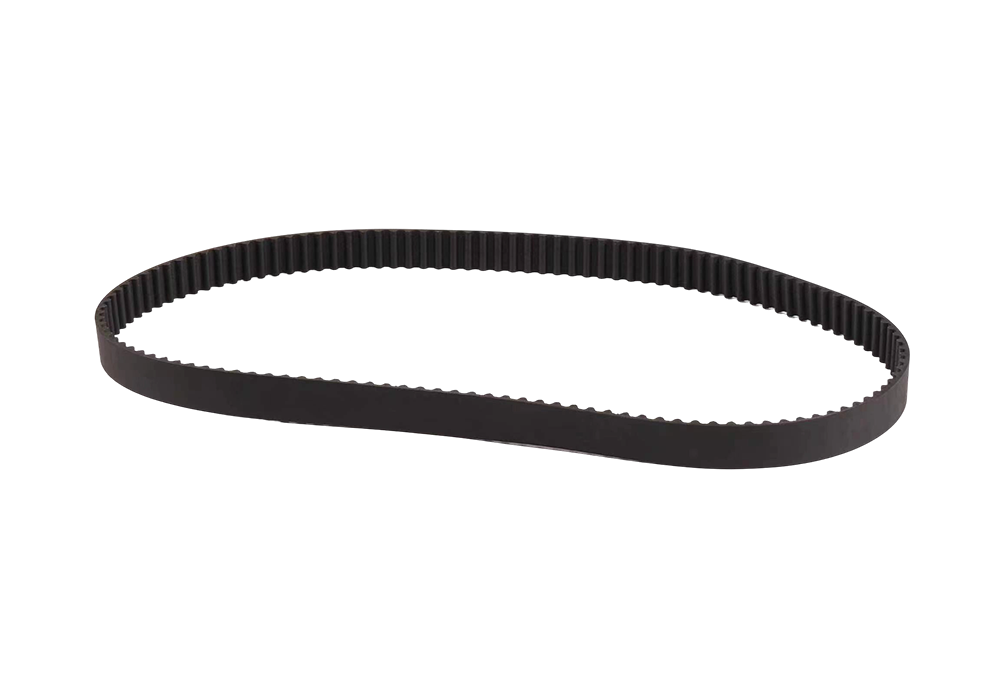 CR Timing Drive Belt from a Specialist ManufacturerA precision timing belt made with stable chloroprene rubber and glass fiber, engineered by a transmission specialist for reliable 60,000-kilometer service and minimal after-sales risk.View Product →
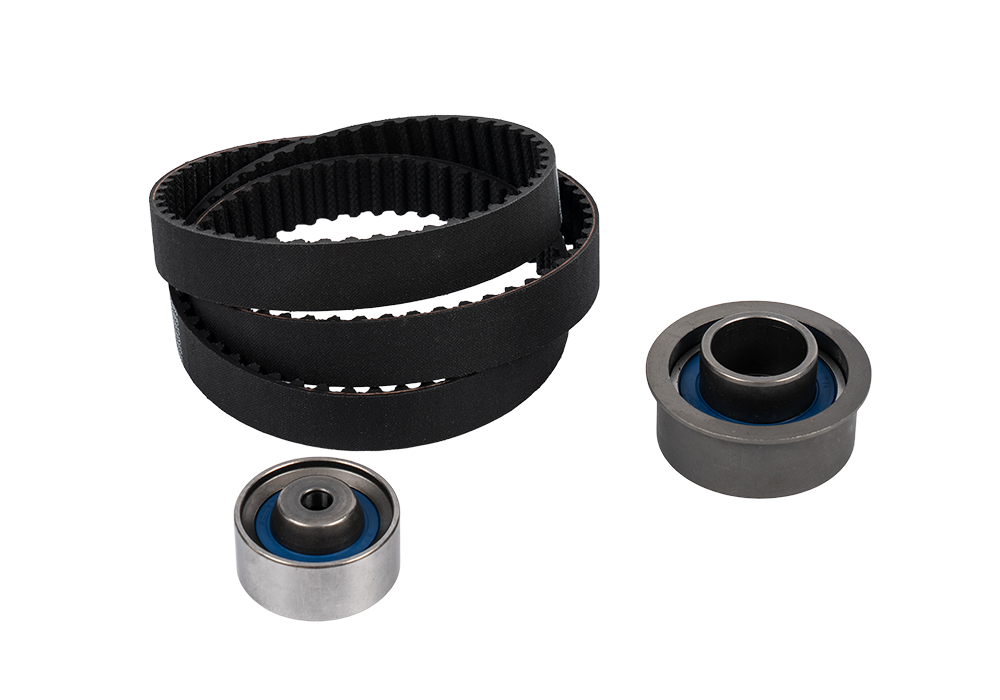
A responsible service also looks beyond the belt itself. The other wear parts in the system age at a similar rate, so replacing them together is the professional standard. A complete timing belt job typically includes:
Doing the job once with quality parts is almost always cheaper than doing it twice with budget parts. A complete timing belt kit is the simplest way to ensure the belt, tensioner, and pulleys are properly matched instead of guessing through a catalog.
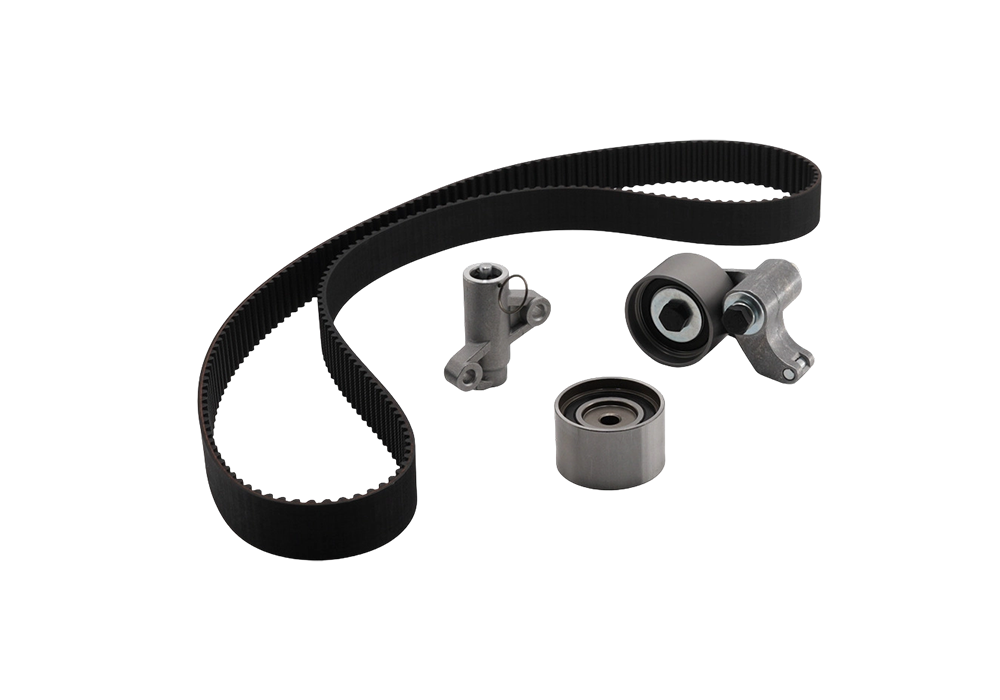 System-Matched Timing Belt Kits for Complete ReplacementA full kit combining belt, tensioner, and pulleys with water pump compatibility, covering over 1,900 SKUs to fit most vehicles and eliminate guesswork during a single timing job.View Product →
Here is a step-by-step plan for the moment the warning appears:
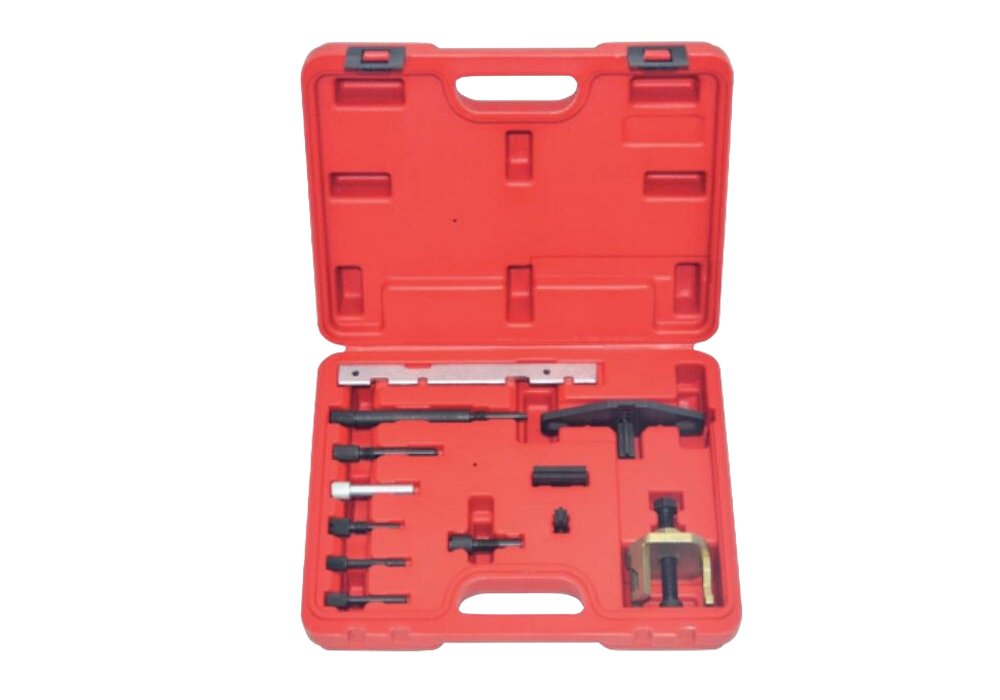
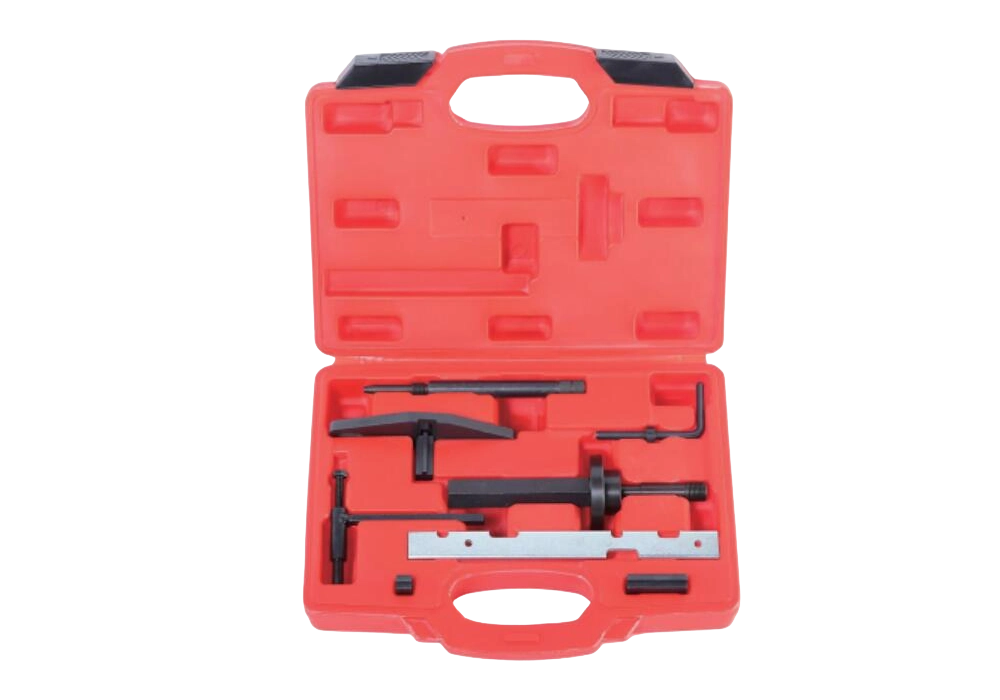
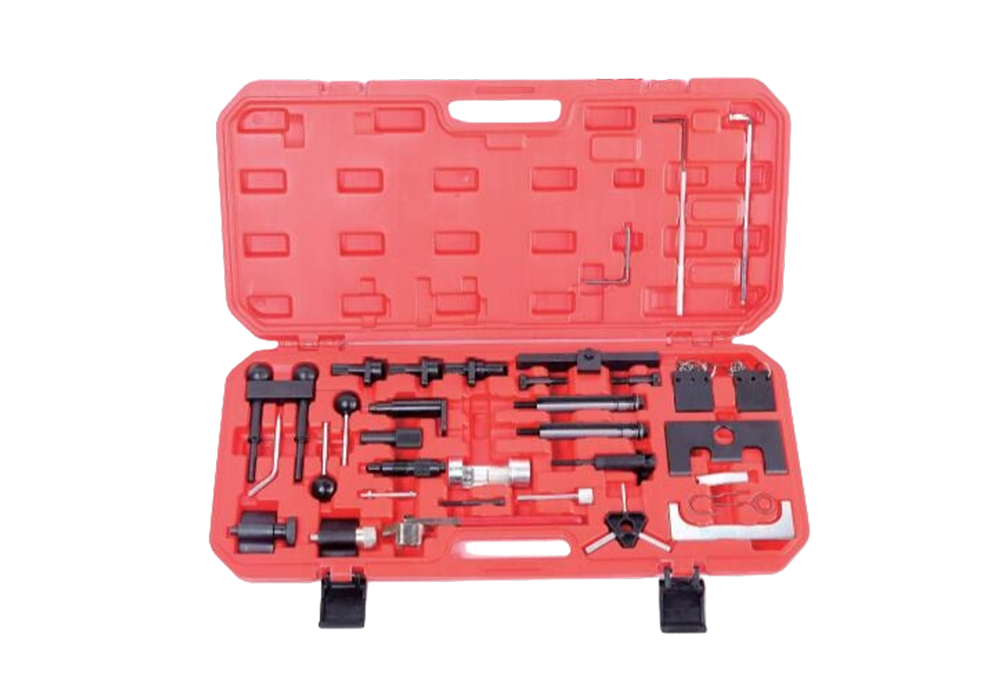
For workshop owners and fleet managers, the same principle applies on a larger scale. A vehicle arriving with the timing belt light on should be treated as a priority job. Having the right tools on hand makes the work faster and more accurate. Many modern engines require specific locking tools to hold the crankshaft and camshafts in position, and correct tooling is the difference between a clean install and a costly mistake.
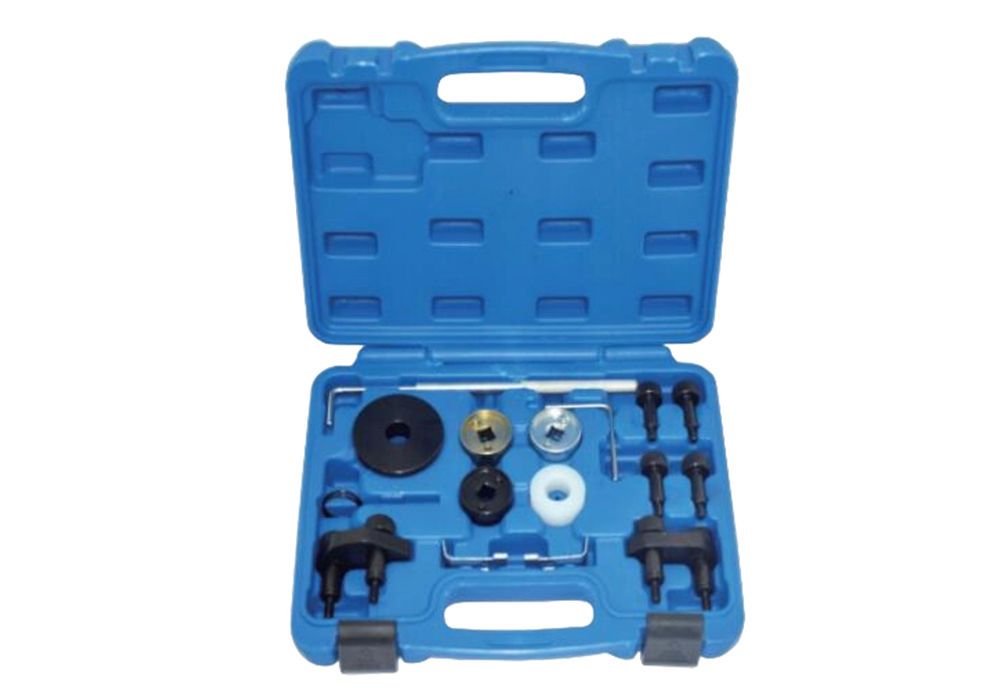 VAG EA888 Engine Timing Tool SetSpecialized high-strength alloy steel tools for locking camshafts and crankshafts on 2006–2013 VAG 1.8/2.0 TSI/TFSI engines, ensuring accurate timing alignment and preventing valve damage.View Product →
So, how long can you drive with the timing belt light on? The only honest answer is: as short a distance as possible. A few hundred miles may pass without a problem, but every mile is a gamble. The timing belt has a finite service life, and the cost of ignoring its replacement schedule is far higher than the cost of doing the job on time.
Choose components that give you confidence rather than the cheapest option on the shelf. Here at Herz, we manufacture timing belts, tensioners, idler pulleys, and complete timing belt kits for a broad range of vehicles. We build these parts for the long haul because we know what is at stake when the light comes on. For answers to common maintenance questions, visit our FAQ section. The best time to deal with a timing belt warning is the moment it appears.




 English
 Español
 Português
 عربى