


Content
A noisy timing belt is not a question mark you should try to drive through. It is a component that has already started to fail, and every mile you cover on it is a bet against an engine failure you may not be able to afford. If you are asking how long you can drive on a noisy timing belt, the honest answer is “not long,” and the wiser answer is “not at all.”
The timing belt is the precision rubber component that keeps your crankshaft and camshaft perfectly synchronized. Unlike the serpentine belt that runs your alternator or air-conditioning compressor, a timing belt controls whether the pistons and valves move in harmony. When it starts to wear—cracked rubber, chipped teeth, or frayed cords—it rarely announces itself with a dashboard light. The first sign is often a sound.
Different noises point to different problems. A light ticking usually means the belt teeth are worn and no longer meshing cleanly with the sprockets. A slapping sound often indicates the belt has stretched and lost its correct tension. A rumbling or grinding tone is more typical of a failing tensioner or idler pulley bearing than of the belt itself. Here is the part that matters regardless of which noise you hear: the component is operating outside its designed tolerances. In our own production experience, tolerance is everything. Once it is gone, remaining life is measured in a few hundred miles at best—and sometimes in minutes.
There is no certified mileage figure for a noisy timing belt, and any mechanic who promises you one is guessing. Each failure progresses differently. A belt with mild surface wear may continue for a few hundred gentle miles. A belt with visible cracks or frayed edges can break within the next block. A worn tensioner can seize without warning and strip the belt in an instant.
| Noise you hear | Most likely cause | How far you could go | What to do |
|---|---|---|---|
| Light ticking | Worn or chipped belt teeth | A few kilometres at low speed, only to reach a workshop | Replace the belt and inspect the sprockets |
| Squealing or slapping | Stretched belt or incorrect tension | Avoid driving entirely | Replace the belt and check the tensioner |
| Grinding or rumbling | Failing tensioner or idler bearing | Stop now and have the car towed | Replace the complete timing belt kit |
The table is not a licence to keep driving. It is a realistic picture of what could happen, so you do not fool yourself into thinking you have more time than you do. If you must move the car, keep the trip short, stay at moderate speed, and listen carefully. The moment the noise gets louder or changes character, stop the engine. That change is usually the last warning before the belt lets go.
When a timing belt breaks while the engine is running, everything stops at once. There is no gradual slowdown and no chance to coast to the side of the road. In an interference engine—the design used by many modern vehicles—the pistons and valves share the same space at different moments. With the belt gone, a piston travelling upward can meet a valve that is still open. The result is bent valves, damaged pistons, sometimes a cracked cylinder head, and a repair bill that dwarfs the cost of any timing belt.
In a non-interference engine, the outcome is less destructive. The engine simply stops, leaving you stranded, and fitting a new belt may put you back on the road. But you rarely know for certain which design you have, and workshop data is not always correct. The only safe assumption is that a broken timing belt can create serious damage. That is what makes a noisy belt so different from a noisy accessory belt: the accessory belt can strand you, but the timing belt can take your engine with it.
A few variables determine how much risk you are actually carrying:
A noisy belt at 30,000 miles deserves more worry than a quiet belt at 90,000 miles. A young belt should not make noise. It usually means something is misaligned, incorrectly tensioned, or was damaged during installation—and those faults tend to get worse, not better.
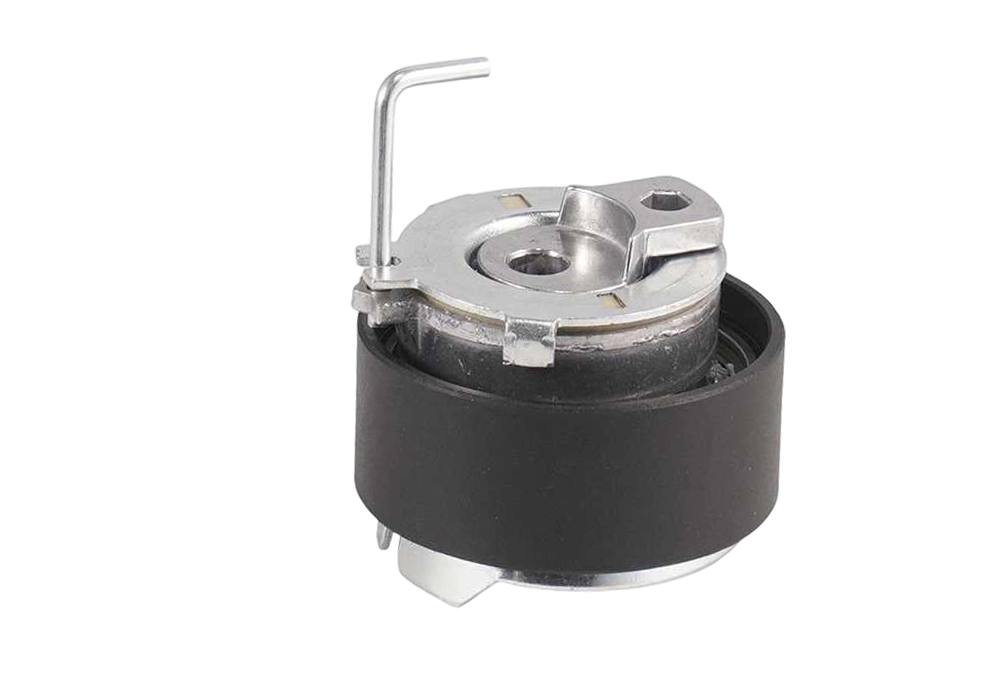
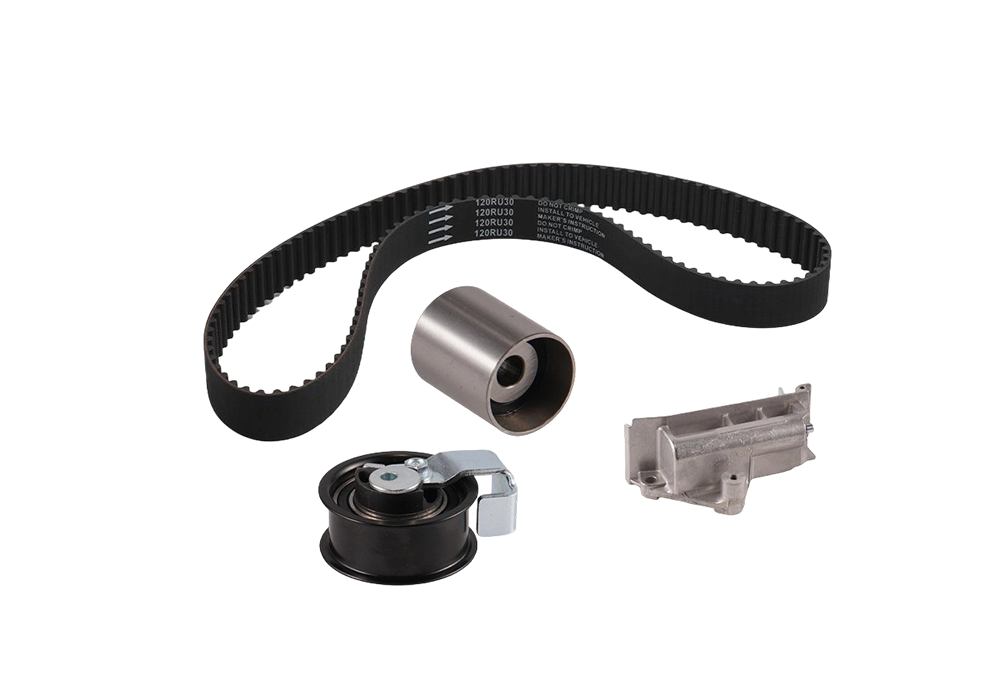
The practical conclusion is simple: replace the belt. But replace the system, not just the belt. Worn tensioners and idler pulleys are among the most common causes of premature timing belt failure. Fitting a brand-new belt around an old, worn tensioner repeats the original mistake and brings the noise back a few thousand kilometres later. That is why we build our timing drive belt kits as matched sets: belt, tensioner, and idler are selected to work together and wear together. You replace the whole system once, not one part at a time.
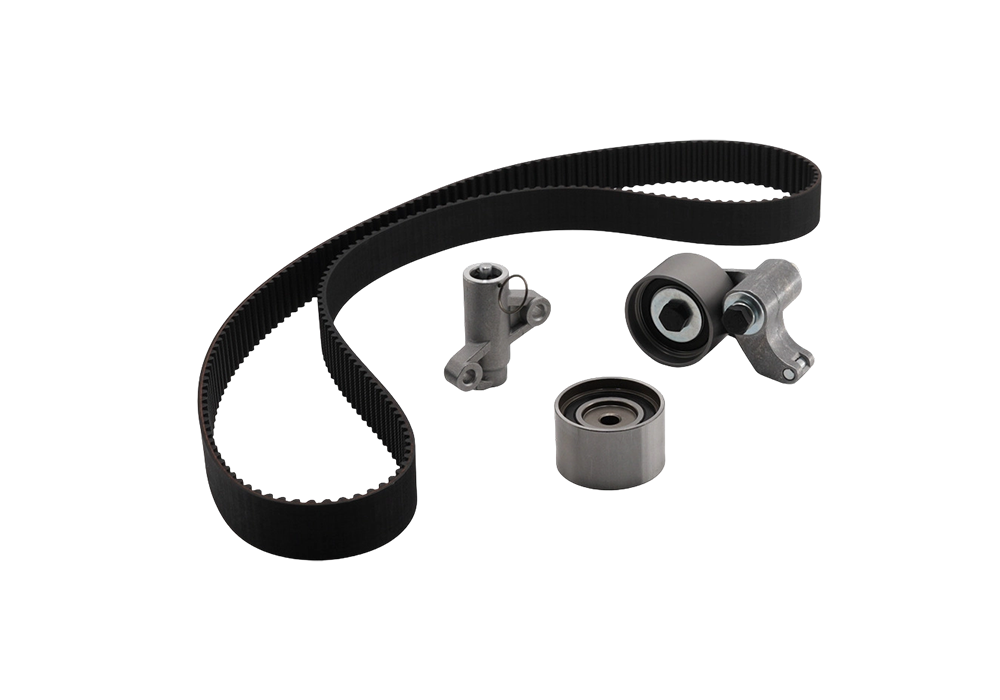 Matched Timing Drive Belt Kits for Complete ReplacementReplace the entire timing system at once with belt, tensioner, and idler selected to work together, preventing premature failure from worn components.View Product →
This is also the right point to think about belt material. We manufacture timing belts in CR and HNBR compounds, and the choice has a direct effect on service life. HNBR timing belts have superior resistance to heat, oil, and ozone, which matters in modern engine compartments where temperatures run high. A good compound is not only about longevity; it keeps the belt dimensionally stable under load, which means the timing relationship stays accurate even as the engine heats up. The cheap route can end up being the expensive route in less time than you might expect.
If you are comparing materials or trying to find the right belt for a specific application, our FAQ covers many of the questions we hear from customers.
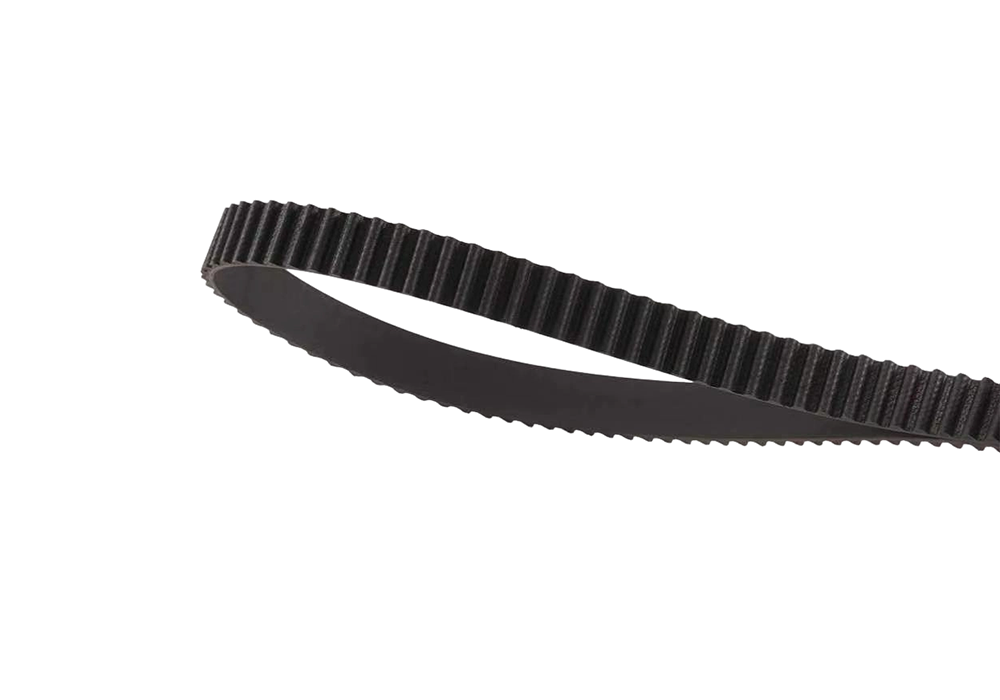 HNBR Timing Drive Belt with High Heat and Oil ResistanceThis HNBR belt handles extreme temperatures and lasts over 100,000 km, ideal for modern engines where durability and dimensional stability are key.View Product →
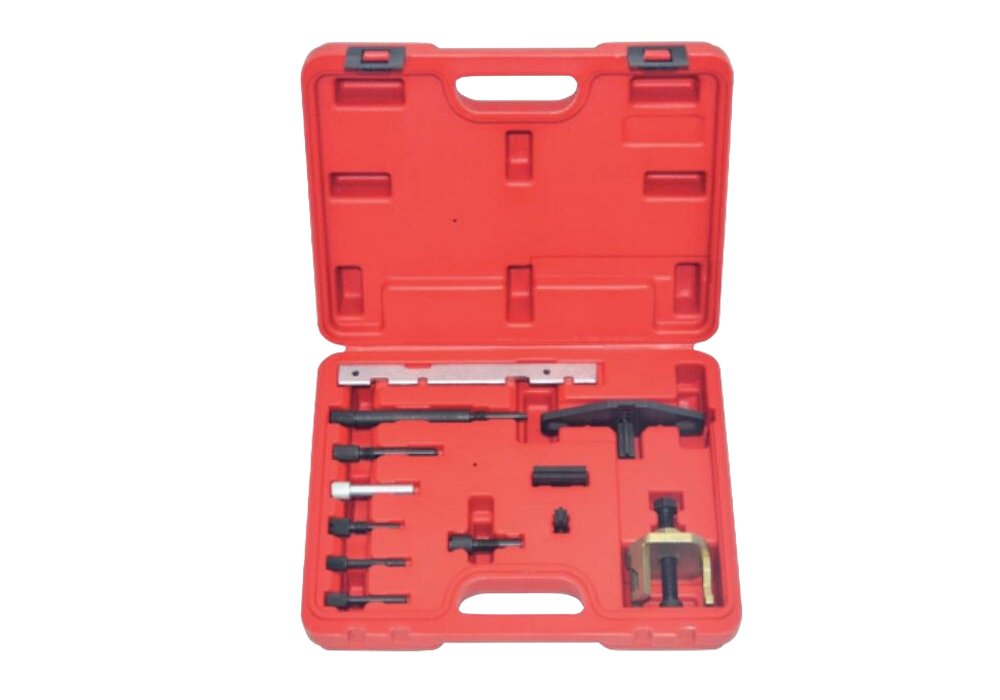
Finally, never underestimate the importance of installation. Correct tension is critical. Too tight, and the belt hums, generates heat, and overloads the bearings. Too loose, and it slaps, skips teeth, and loses precise timing. In our own instructions for rubber timing belts we emphasize the same point: lock the crankshaft and camshaft in position before removing the old belt, and use the correct tools for the engine you are working on. A dedicated timing tool set holds everything in place, eliminates guesswork, and prevents the kind of installation error that ruins new parts.
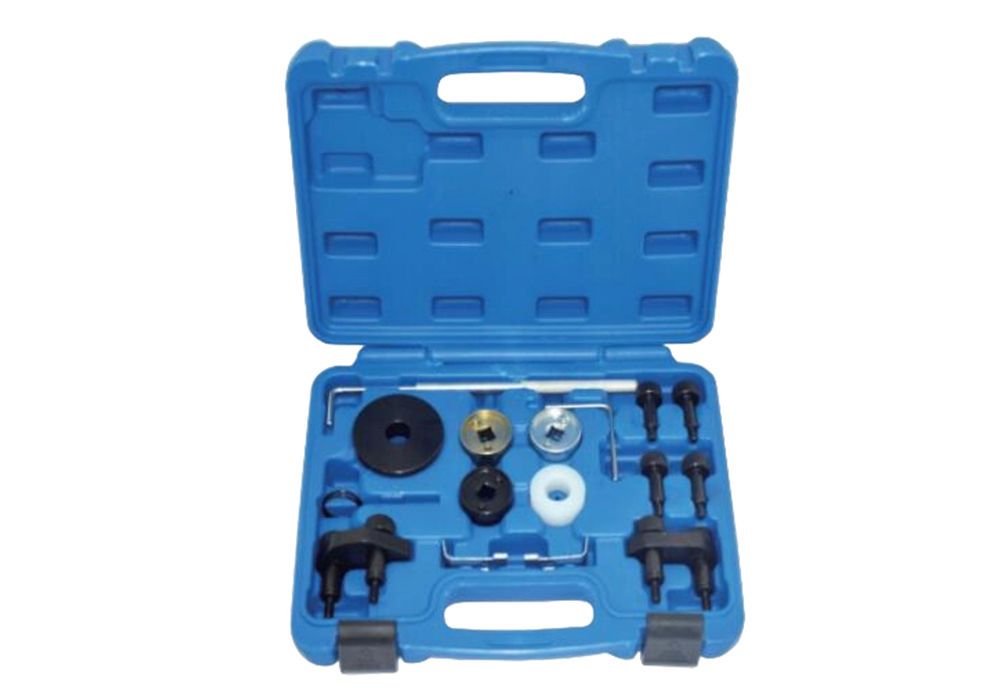 Engine Timing Tool Set for VAG EA888 EnginesAlign camshaft and crankshaft precisely during timing belt or chain work, preventing installation errors that could damage new parts.View Product →
None of this takes more time than dealing with a failed engine. A noisy timing belt is not a timer you can negotiate with. It is a request for attention. If you hear it, act. Pull over if necessary, plan the replacement, and fit parts that are designed to last the full service interval. Your engine will thank you.




 English
 Español
 Português
 عربى
