Content
If you ask five technicians how long a timing belt change takes, you will probably get five different answers. None of them are wrong. A straightforward inline four-cylinder engine can be finished in a morning, while a tightly packed V6 with seized covers can take most of a day. The honest answer is that the job is not measured by the belt alone. It is measured by access, condition, tooling, and how much related work you choose to do while everything is apart.
This guide gives you realistic workshop times, explains where the hours go, and helps you decide whether to book the job or plan a DIY weekend. It is written from the practical side of belt manufacturing and repair, not from a stopwatch.
For most passenger cars, a professional timing belt replacement takes roughly three to six hours. Simple engines with good access can be closer to two or three hours. V6 and V8 engines, transverse layouts with little clearance, and jobs that include the water pump, tensioner, idler pulleys, and camshaft seals often land between five and eight hours.
That estimate covers a proper job: setting the engine to top dead center, locking the timing, removing the old belt, inspecting the components, fitting the new belt, checking the marks after two full rotations, and reassembling the covers and accessory drive. It does not cover waiting for parts or fixing a snapped bolt.
| Vehicle or engine layout | Typical workshop time | Extra time to plan for |
|---|---|---|
| Simple inline four-cylinder, easy access | 2 to 4 hours | 30 to 60 minutes for tension checks |
| Common transverse four-cylinder | 3 to 5 hours | 1 hour if the water pump and seals are replaced |
| V6 or V8 with tight engine bay | 5 to 8 hours | 1 to 2 hours for extra covers and accessory parts |
| Diesel with pump timing checks | 5 to 8 hours | 1 to 3 hours if injection timing must be set |
| Older engine with worn fasteners | 3 to 6 hours | 1 to 2 hours for rusted bolts or damaged covers |
A timing belt change looks simple in a diagram. In the engine bay, it is a sequence of careful checks and small tasks that add up.
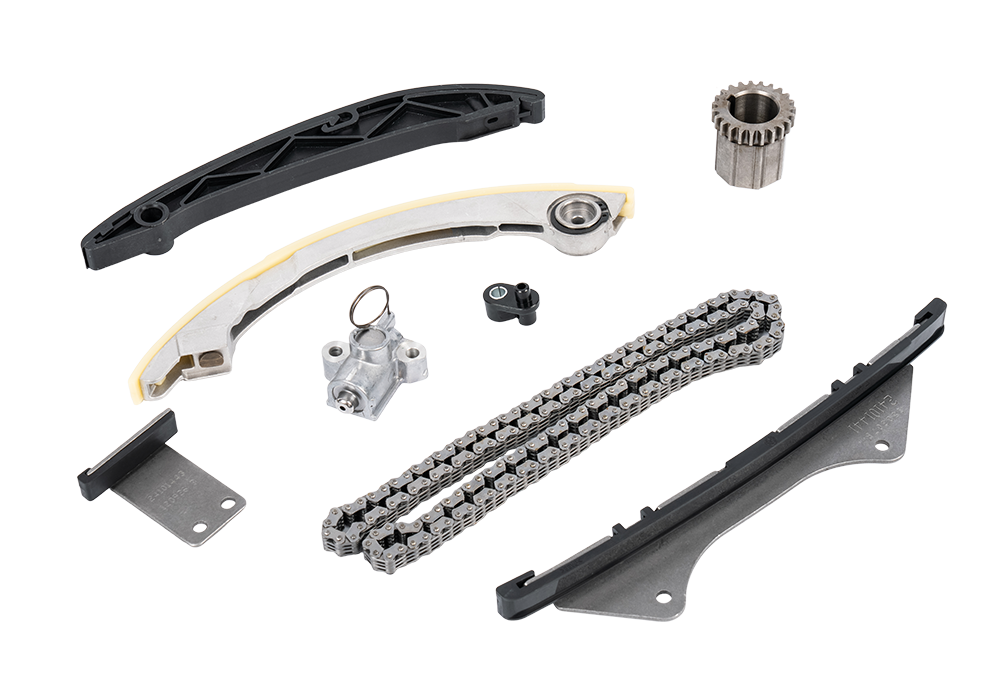
On an interference engine, the time spent checking and rechecking marks is not wasted. It is the difference between a normal repair and a bent valve. Many workshops prefer to fit a complete timing belt kit rather than a bare belt because the tensioner and idler are already accessible. The extra parts cost less than a second strip-down.
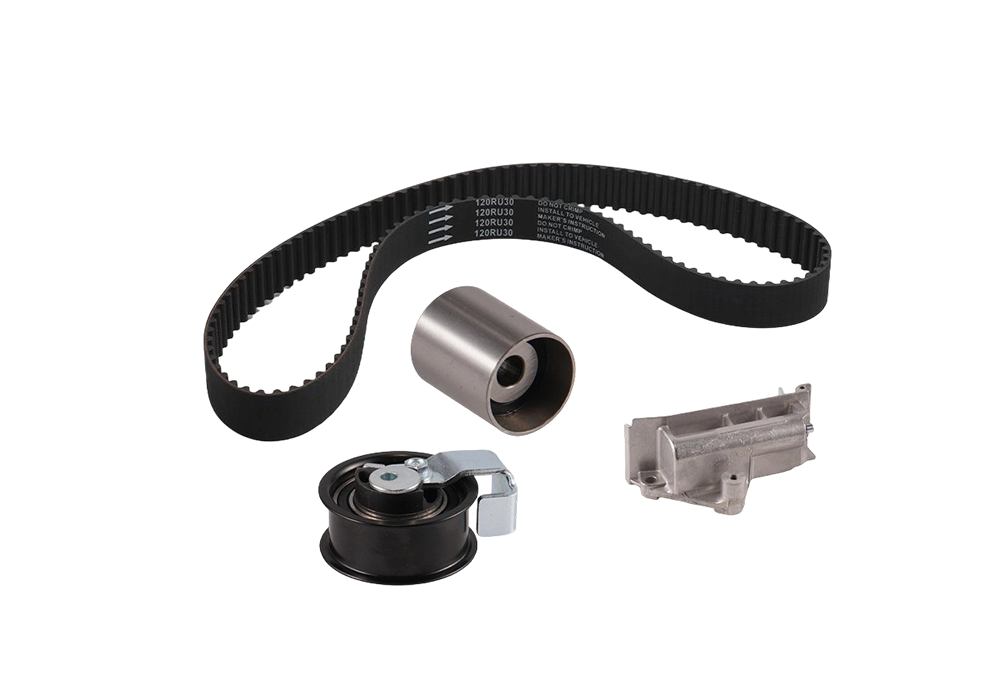
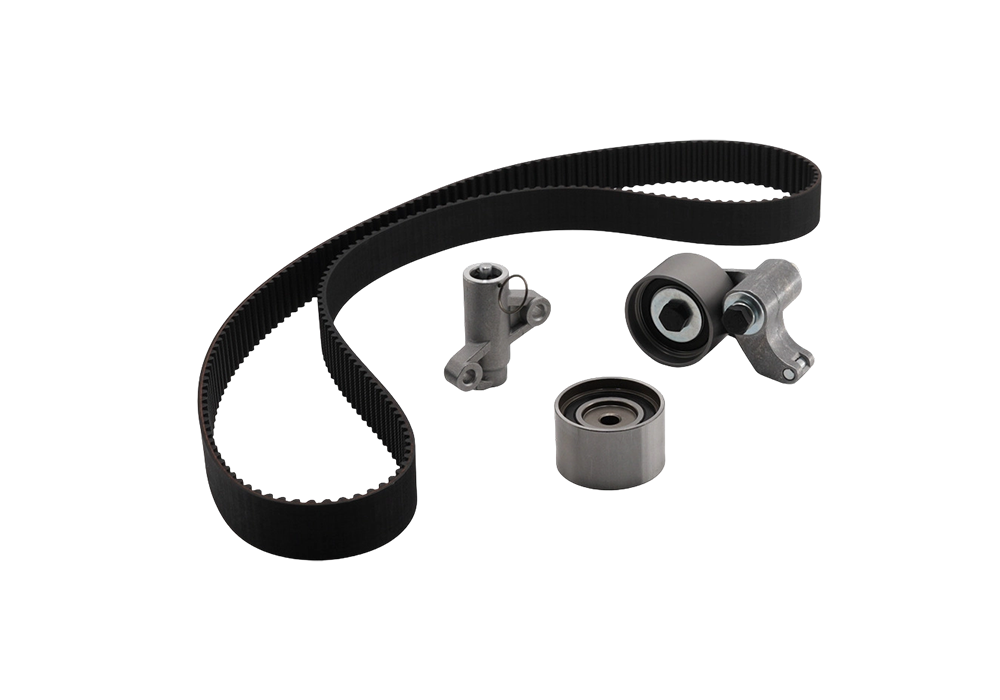 System-Matched Timing Drive Belt KitsSystem-matched timing belt kits pair belt, tensioner, and idler for interference engines, with optional water pumps and broad vehicle coverage.View Product →
A system-matched kit also removes guesswork. When the belt, tensioner, and idler are designed to work together, the installer spends less time chasing fitment issues and more time getting the timing right.
Time estimates are averages, not promises. Several practical factors can add an hour or more to the same nominal job.
A transverse four-cylinder with room around the belt is a very different job from a V6 with the belt tucked against the inner wing. Mounts, power steering lines, and air conditioning pipes can all need moving before the cover comes off.
Rusted cover bolts, seized tensioner studs, and rounded fasteners can absorb extra time. A technician who has to drill or heat a bolt is not doing the same job as one working on a clean engine.
Replacing the water pump, camshaft seals, and idler pulley while the belt is off is usually sensible. It also adds time. A water pump change might add 30 to 90 minutes depending on access. Seals and a tensioner can add another 30 to 60 minutes.
Vehicle-specific locking tools save time and prevent damage. A universal tool that almost fits often costs more time than it saves. For popular engines, a dedicated locking and cam-setting set removes the trial and error and helps the job stay on schedule.
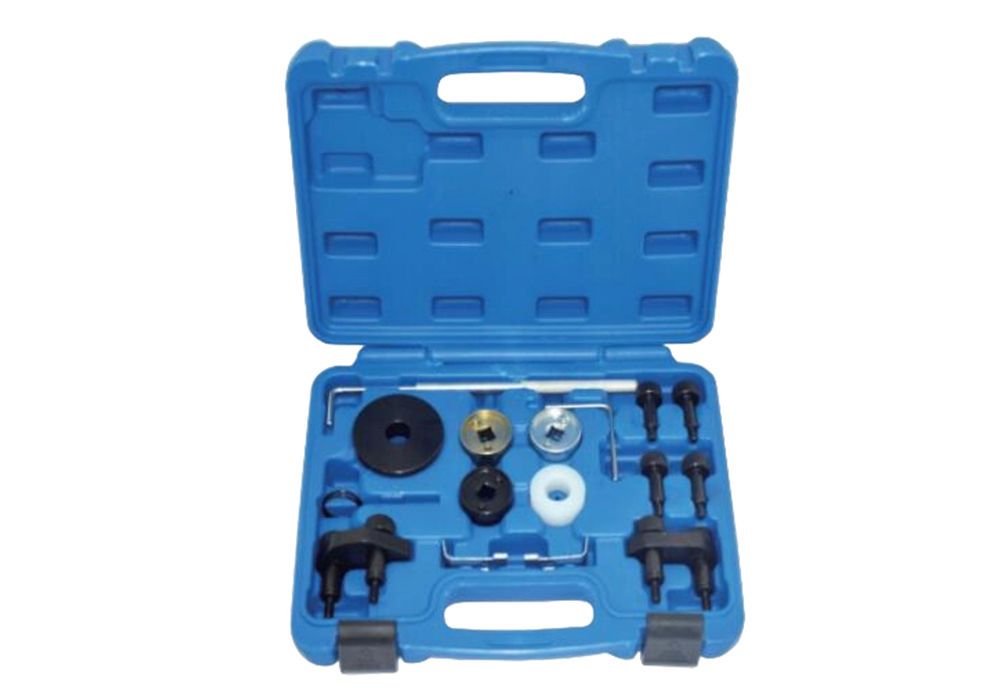 VAG 1.8/2.0 TSI/TFSI Engine Timing Tool SetVehicle-specific locking set for 2006–2013 EA888 petrol engines helps align camshaft and crankshaft during timing service and includes a durable case.View Product →
Experience matters just as much. A technician who has done the same engine family many times knows which hose can stay connected and which bolt needs a short extension. That familiarity can cut an hour from the clock without cutting corners.
A DIY timing belt change is possible, but the time comparison needs to be honest. A first-timer should not expect to match a workshop time.
If you are learning, set aside a full day, keep a second vehicle available, and do not rush the tension setting. A timing belt job rewards patience far more than speed.
Whether you are booking the work or doing it yourself, a little preparation prevents the job from turning into a two-day event.
Correct tension is not a guess. If the belt is too tight, it can whine and load the bearings. If it is too loose, it can jump teeth. Our tensioning guidance for rubber timing belts explains the basic checks, but always follow the vehicle manufacturer's specification for the final setting.
The time to change a timing belt is only half the question. The other half is when the belt actually needs replacing. Most manufacturers specify a mileage interval, a time interval, or both. A common range is 60,000 to 100,000 miles, or five to ten years, but the owner's handbook for your engine is the final authority.
A belt that looks fine from the outside can still be past its service life. Rubber ages even when the car is driven lightly, and a failure on an interference engine can be far more expensive than the replacement job.
For a typical four-cylinder car, plan on four to six hours at a professional workshop, including inspection and a road test. Allow five to eight hours for a V6 or a tightly packed engine bay, and add time if the water pump, seals, or tensioner are being replaced. A first-time DIY job should get a full day, not an afternoon.
The best way to keep the job close to the estimate is to use a complete, system-matched kit, the right locking tools, and a technician who knows the engine. That combination does not make the work instant, but it makes the time predictable and the result reliable.




 English
 Español
 Português
 عربى